-01.svg "GGI main logo")


By: Tiago Santana - Founder & CEO, Gray Group International • Serial entrepreneur and growth strategist who has built and scaled multiple companies across technology, media, and consulting. Expert in growth strategist and editorial voice for a global think tank building companies that advance the human experience
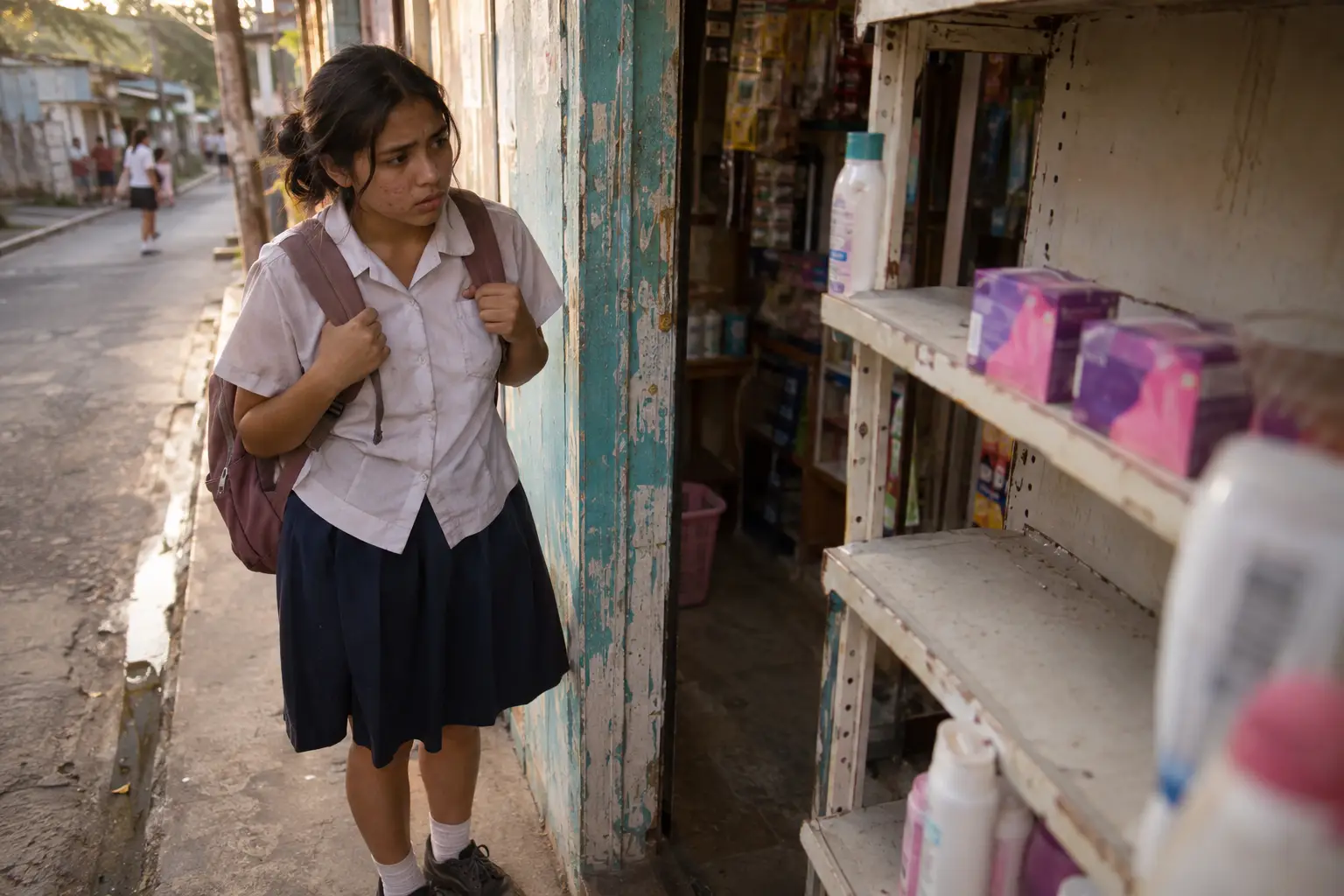
A girl can have a pad, but still miss school if no one sells it nearby. A clinic can offer advice, yet still fail if products cost too much. That gap is what period poverty looks like in practice.
Period poverty means people cannot access menstrual materials because of cost or local supply problems. The World Health Organization defines it as the lack of access to, or availability of, locally or commercially produced menstrual materials due to financial constraints. For a serious organization, the question is not just what to donate. It is how to fix access without creating another short-term patch.
Set the context for period poverty
Period poverty is a narrow term with wide effects. Used well, it helps leaders focus on a real access barrier. Used loosely, it blurs product access, health information, school attendance, and dignity into one vague idea.
That confusion costs money and time. A team may fund product distribution without checking local supply. Another may back tax reform without tracking store prices. Both actions can look good in public and still leave people stuck.
Use the WHO definition with precision
The World Health Organization defines menstrual poverty as the lack of access to, or availability of, locally or commercially produced menstrual materials due to financial constraints. That wording matters because it keeps the problem grounded in access, not just awareness.
When teams use a loose definition, they often miss the barrier they can actually change. If products are present but too costly, pricing matters. If prices are fair but stock disappears, distribution matters. If neither is true for a group, the issue may sit deeper in income, transport, or social norms.
See how access problems show up
UNICEF Middle East and North Africa reports that 30% of girls are missing some or all of school during their period, and 20% lack necessary information on periods. Those figures point to more than discomfort. They show how product gaps and knowledge gaps work together.
A reader should treat those numbers as warning signs, not isolated facts. Missing school can mean products are unavailable at home, at school, or in local shops. Lacking information can mean shame fills the gap where basic guidance should be.
What usually fails first
Most weak responses fail because they assume one fix will solve everything. It rarely does. Period poverty sits at the meeting point of markets, public policy, education, and social trust.
That is why leaders should ask four questions before acting: Can people buy products? Can they find them? Do they know what they need? Will they feel safe using support that exists? Each question points to a different fix (and a different failure mode).
Don’t confuse tax cuts with lower prices
The World Bank says a study found that removing taxes in Bangladesh, Kenya, Nigeria, and South Africa did not lead to cheaper products. That finding matters because price cuts on paper do not always reach buyers on shelves.
So tax reform may help fairness signals or reduce one cost layer, but it should not be treated as a full answer. Leaders still need to check retail pricing after policy changes. They also need to watch whether import costs, markups, or thin supply chains cancel out the benefit.
Check whether schools and shops are part of the fix
If people cannot get products where they already go each day, access stays fragile. Schools matter because students spend long hours there. Shops matter because many families buy items when they can afford them.
A practical test is simple: ask where people would actually obtain menstrual materials on an ordinary day. Then compare that answer with what your program assumes is available. If the answers do not match, your plan has a blind spot.
What helps most in practice
The best responses usually combine product access with information and local participation. That mix is less dramatic than a single big campaign, but it tends to hold up better over time.
Good programs also keep dignity in view. People do not only need materials. They need privacy, clear information, and systems that do not punish them for having periods in the first place.
Combine supply with clear information
affordable products help only when people know what they are for and how to use them safely. UNICEF’s figure that 20% of girls lack necessary information on periods shows why education cannot be an afterthought.
Practical education does not need grand language. It needs simple guidance on product choice, timing changes during menstruation (if any), and where to get help when something feels wrong. In many settings, that kind of plain talk removes fear faster than slogans do.
Build decision-making with local voices
The World Bank reports that WASH committees with at least 30% female members were established in 92 of 114 project villages in one project example. The point is not the committee itself alone. The point is who gets a say when services are designed and monitored.
That kind of participation helps teams catch real-world problems sooner. Are toilets private enough? Are supplies stocked? Do girls trust the place where support is offered? Local voices answer those questions faster than outside plans do.
How to act without wasting effort
a serious organization should start by mapping the barrier before funding a fix. Is this mainly about price? Supply? School access? Information? Trust? The right response depends on which answer comes back first.
Then measure what changes after action starts. If you remove taxes but prices stay high, adjust the plan. If you distribute products but attendance does not improve for girls who need them most (or if complaints continue), ask what part of access still breaks down. " A useful program stays honest about trade-offs too: donation drives can help fast but fade quickly; policy changes can shape markets but move slowly; education can shift behavior but cannot replace stock on shelves.
Put these ideas to work
Most articles end exactly where the real work begins. If the questions raised here matters to your organization this year, Gray Group International can help you decide what to do first, what to leave alone, and how to tell within a quarter whether the bet is paying off. We bring the outside view and the hard questions; you keep the decisions, the plan, and the credit.
Discover more insights in Humanity, our full collection of articles on this topic.
Join Disruptors Digest
Insights for a future worth creating. Sustainability, lifestyle, business, and beyond.
Gray Group International is a growth studio helping businesses attract, convert, and retain customers. Our consulting arm, gardenpatch, offers hands-on playbooks and strategy sessions.
