-01.svg "GGI main logo")


By: Tiago Santana - Founder & CEO, Gray Group International • Serial entrepreneur and growth strategist who has built and scaled multiple companies across technology, media, and consulting. Expert in growth strategist and editorial voice for a global think tank building companies that advance the human experience
A safari can look simple on a screen and still be very different in real life. The photos may be similar, but the trip design, support level, and daily effort can change a lot from one operator to the next.
The safest way to plan is to compare the trip model first. After that, look at cost basis, crowding, comfort, and how much control you want over the day. That order makes the choice clearer and helps you avoid paying for features you do not need.
Safari adventures: start with the trip model
Safari trips are not all built the same. Some are guided end to end. Some ask you to self-drive and manage more of the pace yourself. Others focus on night viewing or timed migration events, where the schedule matters as much as the location.
That is why a destination-first search can mislead you. A region may sound exciting, but the format matters more than the map. When you match the trip style to your goals, it becomes much easier to sort useful offers from poor fits.
Compare self-drive and guided options
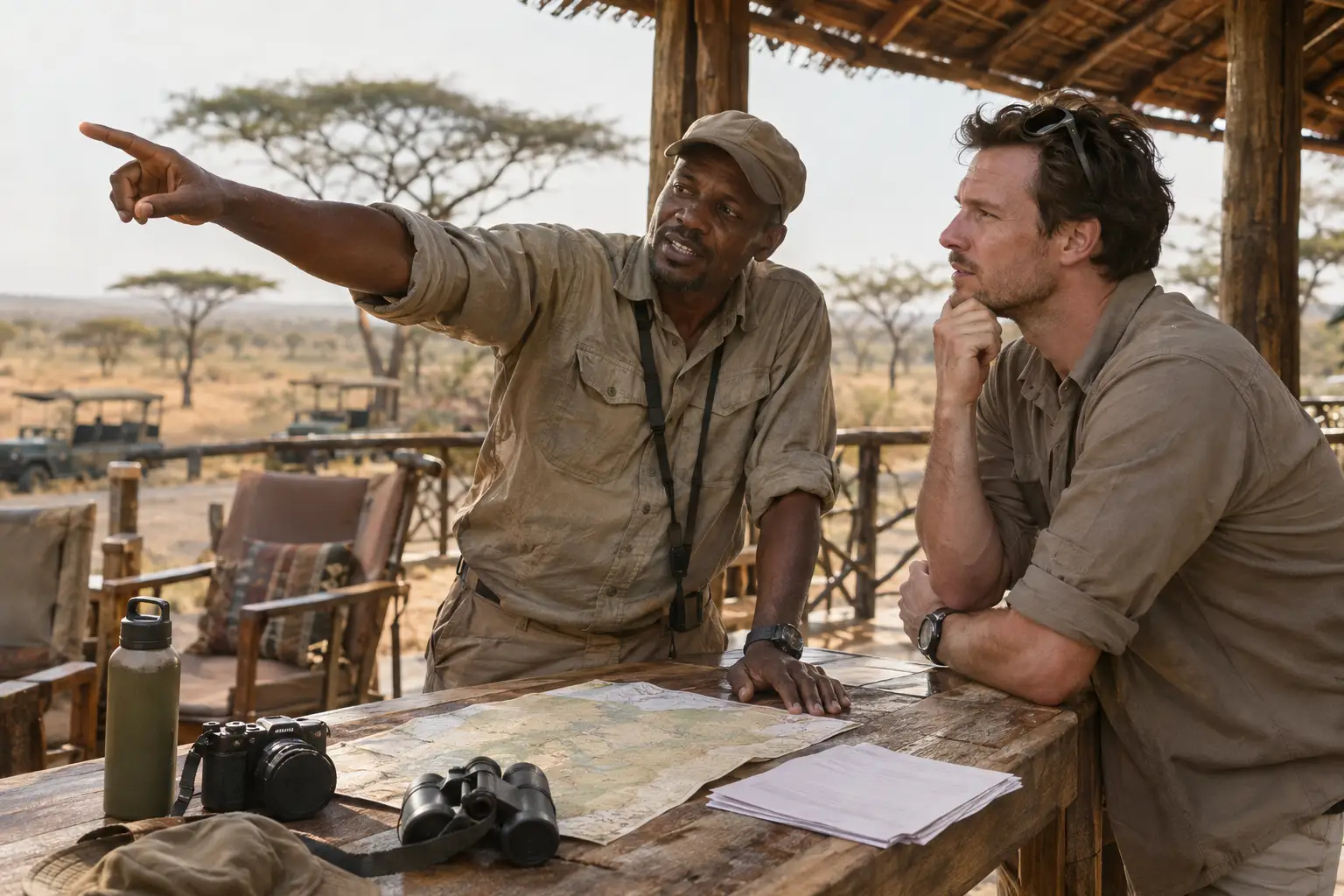
Guided safaris are often a good fit for travelers who want less planning stress and more interpretation. A guide can help explain animal behavior, choose better viewing angles, and handle timing and logistics. That support can make a shorter trip feel fuller and more relaxed.
Self-drive trips work better for people who want freedom and are comfortable handling more responsibility. National Geographic gives a clear example from Namibia, where a 16-day self-drive itinerary with guesthouses and pre-pitched camps starts from US$2,886 per person based on two sharing (National Geographic). That may be a strong value for one traveler and the wrong structure for another.
Think about pace, comfort, and effort
Comfort on safari is not only about the room or lodge. It also includes how often you move, how long transfers take, and how much uncertainty you are expected to manage. A trip with fewer frills may still be a good choice if it matches your style and energy level.
Crowding matters too. National Geographic notes that during Great Migration trips, safari vehicles can jostle for space along riverbanks as travelers compete for the best view (National Geographic). If you want a quieter trip, it helps to ask how busy the viewing areas tend to be and whether the itinerary is built around peak events.
How to compare safari quotes fairly
A higher price does not always mean a better safari. It may include more comfort, better timing, or more support, but it may also reflect a completely different trip structure. Without a fair comparison, you can end up judging two very different products as if they were the same.
The best question to ask is simple: what is this quote really built on? Once you know that, the rest of the decision becomes more practical. You can then compare what is included, who does the driving, and how much of the trip depends on your own effort.
Check what is included in the price
Start with the basics. Ask whether the quote assumes shared occupancy, what kind of lodging is used, and whether transfers, meals, or activities are included. A self-drive route with camp stays is solving a different problem than a guided lodge itinerary with more services built in.
If two offers look similar online, they may still be very different in real terms. One may ask you to plan more, drive more, and accept simpler stays. The other may include a guide and more structured support. Good operators should state those differences clearly before you book.
Watch for hidden tradeoffs
Some tradeoffs are easy to miss at first glance. A trip may look cheaper because it leaves out support that another offer includes. Or it may feel more polished because it packages many services together, even if you do not need all of them.
That is why it helps to ask direct questions. Who handles transfers? Are activities fixed or optional? How much independence is expected each day? Clear answers are a good sign. Vague answers usually mean you need to keep digging.
Planning around wildlife, timing, and ethics
Wildlife travel is shaped by more than price. Timing, animal behavior, and the way an operator handles welfare all affect the quality of the trip. If you skip those details, you may end up with an itinerary that looks exciting but does not suit your goals.
Ethics also matter because they affect both the animals and the experience. A well-run safari should feel careful, not rushed or exploitative. That is why it is worth reading beyond the sales copy and checking how the operator explains its practices.
Match timing to the experience you want
Some travelers want famous sightings and are fine with busier conditions. Others prefer a quieter route with more space and less pressure. Neither choice is wrong, but they do lead to very different trips.
Migration trips show why timing matters so much. National Geographic says lodges and camps often book up a year or more in advance for these trips (National Geographic). If you plan late, you may still find something, but your choices will likely be narrower and less flexible.
Review welfare and sustainability claims
Animal welfare should not be treated as a side note. It is part of the quality of the trip. If a company does not explain its standards clearly, that is worth noticing before you commit money.
National Geographic advises travelers to check different safari operators' itineraries and make sure their credentials on animal welfare are front and center (National Geographic). That is a useful filter because it pushes you to look for proof, not just polished wording. It also helps you judge whether the trip is designed with care.
Learn About Gray Group International Services
Practical questions to ask before you book
Once you have narrowed your options, use a simple question set to test each one. The goal is not to find the fanciest pitch. It is to see which itinerary is clear, realistic, and aligned with your priorities.
This step is where many weak proposals fall apart. If the operator cannot answer basic questions cleanly, the trip may be harder to manage than it first appears. Good planning usually comes from specific answers, not broad promises.
Use AI as a comparison tool
AI can help you organize quotes, compare inclusions, and spot missing details. It is useful for sorting notes and creating a simple side-by-side view of what each operator offers. That can save time, especially if you are reviewing several itineraries.
Still, AI should not make the final call for you. It can help with structure, but it cannot judge whether an operator is transparent, ethical, or a good fit for your travel style. Those decisions still need human review.
Ask about logistics, not just scenery
It helps to ask about the practical parts of the trip, such as vehicle sharing, night drives, park moves, and transfer times. Those details often matter more than the photos in the brochure. They tell you what your days will really feel like.
National Geographic's reporting on night safaris offers a good example. Expert-guided drives can use thermal cameras to reveal nocturnal animals such as leopards, bush babies, and owls (National Geographic). If that kind of viewing matters to you, ask whether it is included, optional, or only available on some departures.
Let's connect
Strategy is a set of choices, not a document. Gray Group International works alongside leadership teams to make their choices on this explicit, test them against the evidence, and turn them into commitments the whole organization can see and track. Whether you need a second opinion or a partner for the long haul, the first step is the same: an honest conversation about where you stand.
You Might Also Like
Discover more insights in Lifestyle, our full collection of articles on this topic.
Join Disruptors Digest
Insights for a future worth creating. Sustainability, lifestyle, business, and beyond.
Gray Group International is a growth studio helping businesses attract, convert, and retain customers. Our consulting arm, gardenpatch, offers hands-on playbooks and strategy sessions.
