-01.svg "GGI main logo")


By: Tiago Santana - Founder & CEO, Gray Group International • Serial entrepreneur and growth strategist who has built and scaled multiple companies across technology, media, and consulting. Expert in growth strategist and editorial voice for a global think tank building companies that advance the human experience
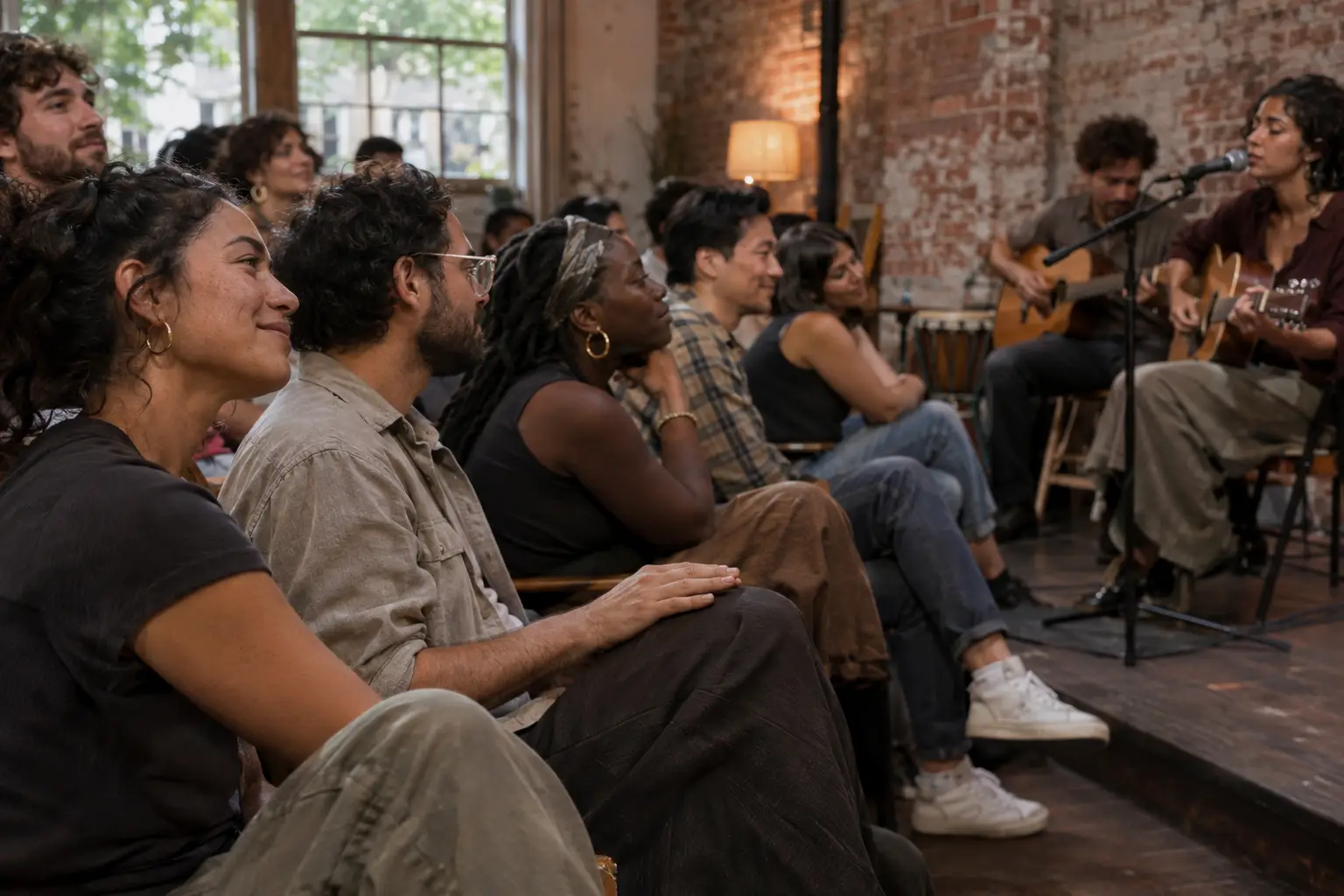
Consider a team planning a campaign, summit, or public event. They want music to bring people together, but they don't want to turn culture into backdrop. That's the real problem. Connection is easy to claim and much harder to design well.
Yes, music can help people feel linked across borders. But unity through music is not automatic. A better standard is simpler: music can create shared attention, invite dialogue. Strengthen cultural identity at the same time, if it's used with care.
Who benefits from music across borders?
People benefit when global music expands both access and understanding. That includes listeners, communities, brands, and institutions. Still, each group gains in a different way, and that difference matters when you set goals.
Music moving across borders can widen participation. It can also make room for people to hear identities that don't match their own. UNESCO puts it clearly: music "strengthens cultural identity, promotes dialogue among communities, and contributes greatly to the creative economy" (UNESCO). That line matters because it rejects a false choice. Shared experience doesn't require cultural sameness.
Why founders and changemakers should pay attention
Founders and changemakers often work in fragmented environments. Teams are spread out. Audiences come from many backgrounds. Trust is shaped by signals that feel small but aren't, like who gets represented, who gets context, and who gets heard.
Music helps most when leaders stop treating it as decoration. A playlist at an event, a performance in a campaign, or a soundtrack in a digital space all send messages about belonging. Used well, music can create a low-pressure entry point into harder conversations about identity and values.
A common mistake is assuming that if people enjoy the same moment, they now share the same meaning. They don't. One listener may hear celebration. Another may hear pride or loss. Good strategy leaves room for those meanings to stay distinct.
How purpose-driven business earns trust through culture
Purpose-driven business earns trust by showing respect before asking for engagement. In cultural work, that usually means naming origins clearly, avoiding lazy mashups. Giving audiences enough context to understand what they're hearing.
That sounds basic. It isn't.
Many public efforts flatten difference to look inclusive. The result often feels thin because audiences can tell when culture is being borrowed rather than understood. A stronger approach treats music as an invitation into dialogue, not as proof that everyone is already aligned.
For leaders building community-facing brands, that's the practical shift. Don't ask whether music makes your message feel bigger. Ask whether it helps people participate with more clarity and respect.
When does global music and unity apply?
It applies when your goal is connection with difference intact. That could mean cross-border audience building, mixed-community events, education programs, or digital products built for discovery. It applies less well when teams want to claim deep social change from one shared moment.
That distinction protects you from weak claims. Plenty of work creates temporary togetherness. Far less creates lasting cohesion. If you can't say which one you're aiming for, your message will likely drift into sentiment.
Where worldwide listening data shows demand, not proof
Demand for global listening is real. IFPI found that "57% of people say it's important to them that they can access music that comes from anywhere in the world," rising to "65% among 16-24s" (IFPI). That tells us people want reach and discovery.
It does not tell us they understand what they hear.
Access matters because it opens doors. Still, discovery alone isn't dialogue. A person can stream widely and remain shallow in engagement (many do). So if your organisation points to listening trends as evidence of unity, you're skipping a step.
Commercial growth also needs careful reading. IFPI reported that "Every region saw recorded music revenue growth in 2025 and four of these posted double-digit gains" (IFPI). That's strong market evidence. It shows worldwide appetite and industry expansion, not social cohesion by itself.
How AI and technology widen access and raise questions
Technology broadens who can find music and how fast they find it. Recommendation systems, translation tools, short-form media, and AI-assisted discovery all reduce friction. That's useful for younger audiences especially, since IFPI's data shows higher interest in worldwide access among people aged 16 to 24 (IFPI).
Yet wider access creates a second job: context.
Without context, technology can turn culture into endless sampling. People hear more but learn less about where the music comes from or why it matters to a community. For product teams and media leaders, the question isn't only how to surface global sounds. It's how to pair discovery with explanation.
A practical test helps here: if users can consume quickly but can't trace origin or meaning, you've built reach without depth.
Is it worth using music to build community?
Yes, if you're honest about what music can do well. Music can open space for participation faster than many other formats can. It lowers barriers, creates ritual, and gives strangers something shared to respond to together.
Still, credibility depends on modest claims and strong design.
The UN Office for Partnerships offers a careful example through International Jazz Day at the UN Goals Lounge. It described the celebration as "one of more than 200 events taking place worldwide" and said it "underscored the role of culture in building more inclusive and resilient communities" (UN Office for Partnerships). That's persuasive because it points to civic value without pretending one event proves long-term unity.
What growth strategy can learn from shared rituals
Shared rituals matter because people remember what they join more than what they are told. Music works inside that logic very well. It gives groups rhythm, repetition, anticipation, and emotional memory.
For growth strategy, the lesson isn't "add music." It's design moments where participation has meaning.
Consider a hypothetical organisation launching a global member gathering online and in person. If it uses one dominant musical style as shorthand for inclusion, some participants may feel unseen at once. If it instead curates distinct traditions with context and response built in, people are more likely to feel invited rather than managed.
That's a sharper model of unity. Not blending everything into one sound, but creating conditions where difference can be present without becoming division.
Let's connect
Most articles end exactly where the real work begins. If the questions raised here matters to your organization this year, Gray Group International can help you decide what to do first, what to leave alone, and how to tell within a quarter whether the bet is paying off. We bring the outside view and the hard questions; you keep the decisions, the plan, and the credit.
You Might Also Like
Discover more insights in Music, our full collection of articles on this topic.
Join Disruptors Digest
Insights for a future worth creating. Sustainability, lifestyle, business, and beyond.
Gray Group International is a growth studio helping businesses attract, convert, and retain customers. Our consulting arm, gardenpatch, offers hands-on playbooks and strategy sessions.
