-01.svg "GGI main logo")


By: Tiago Santana - Founder & CEO, Gray Group International • Serial entrepreneur and growth strategist who has built and scaled multiple companies across technology, media, and consulting. Expert in growth strategist and editorial voice for a global think tank building companies that advance the human experience
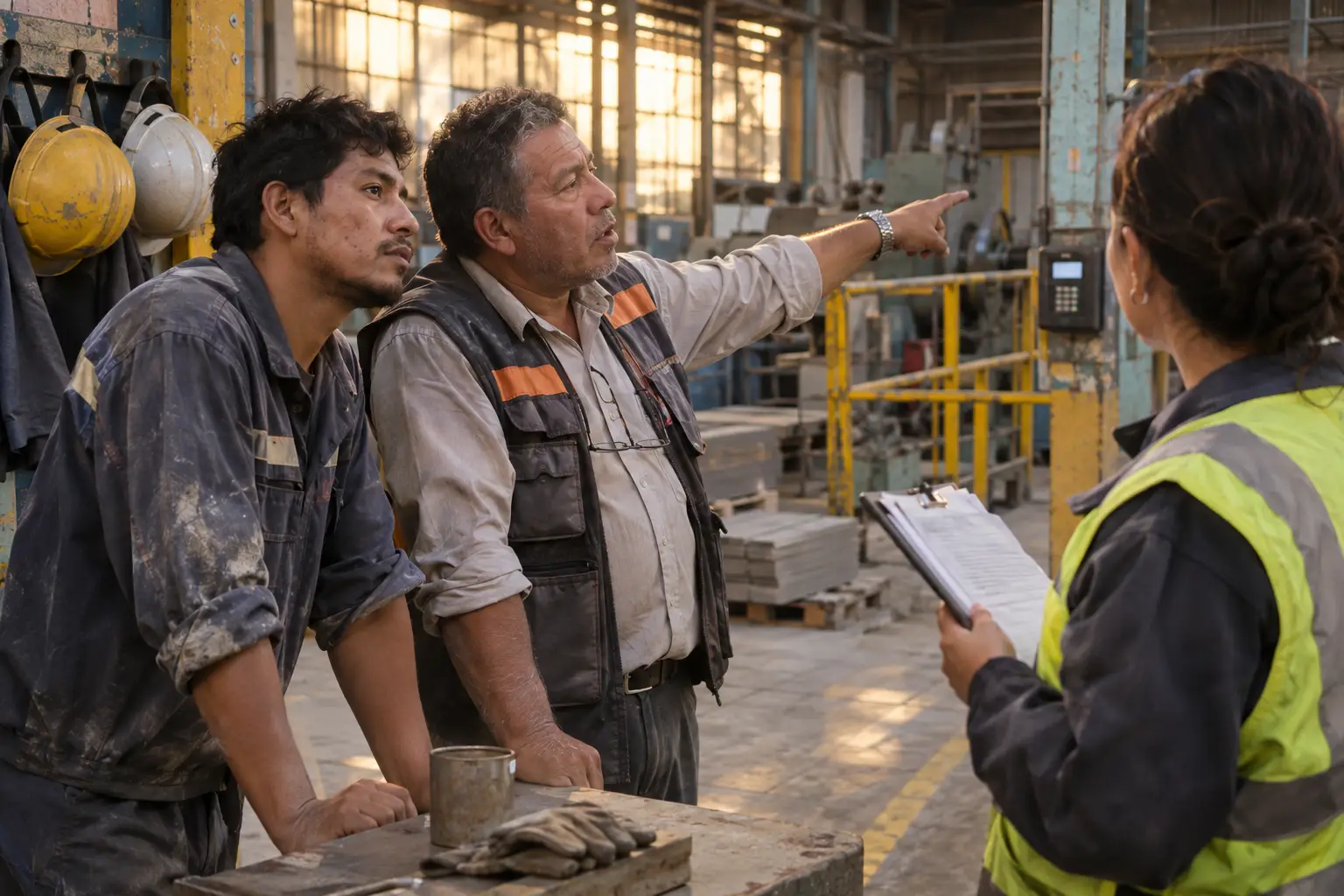
Fair work is not a values memo. It's an operating test. A company can publish strong principles and still miss unpaid wages, unsafe pace targets, or coercive recruitment in the places where work actually gets done.
Labor rights, in practical business terms, mean checking whether people are safe, paid on time, free to leave, able to speak up. Treated with dignity across your workforce and business relationships. If you lead a company, the first useful move is simple: map where your visibility ends, because that's often where risk begins.
Foundations and first principles
Labor rights are the baseline conditions people should be able to expect at work. That includes safety, timely pay, freedom from coercion, freedom from child labour and forced labour. A real way to raise concerns without fear. Leaders often know these ideas in broad terms. The harder part is turning them into checks that fit hiring, operations, procurement, product design, and growth.
A weak approach treats labor rights as a policy topic. A stronger one treats them as a question about how work is arranged day to day. That shift matters. Abuse rarely starts as a public scandal. It often starts as an ordinary workflow nobody reviewed closely enough.
What fair work means in practice
Fair work means more than legal paperwork and an employee handbook. It asks whether workers understand the job, receive agreed pay on time, can refuse unsafe tasks. Have a channel to report harm that they trust enough to use.
The details matter most where control is indirect. Consider a hypothetical company that hires through staffing partners or contractors. Payroll may sit outside finance's daily view. Recruitment may happen through third parties. Complaints may never reach leadership. On paper, the company looks distant from the problem. In practice, it still depends on that labor model.
Another point gets missed often. Remedy matters as much as rules do. A reporting channel that requires language fluency many workers don't have isn't much of a remedy. Nor is a hotline people believe will trigger retaliation.
Why founders should treat it as core risk
Founders often file labor rights under ethics or compliance. That's too narrow. The issue also affects hiring quality, supply continuity, investor trust, brand strength. Whether growth improves human life or simply extracts from it.
Risk usually appears before leaders feel legally certain about it. Stakeholders judge whether obvious questions were asked about working conditions in operations the business relies on. Low visibility doesn't mean low exposure. It usually means delayed discovery.
Safety alone should reset the conversation. The U.S. Bureau of Labor Statistics reported that a worker died every 104 minutes from a work-related injury in 2024 (U.S. Bureau of Labor Statistics). Even if your sector seems lower risk, the lesson holds: "routine" work can still hide preventable harm.
Where labor rights risks emerge today
Most labor-rights failures don't sit in one dramatic place. They spread across recruiting chains, outsourced teams, warehouses, farms, factories, logistics networks, domestic service settings, and app-based work systems. The common pattern is simple: leaders know their direct payroll better than the work just beyond it.
That gap shapes bad decisions. Teams review policy language before they map how tasks are assigned, how speed is rewarded, who handles complaints, or who can delay wages when invoices get disputed between firms.
How AI and technology can obscure abuse
Technology can improve oversight, but it can also hide harm behind dashboards and scoring systems. When software assigns tasks, ranks workers, changes access to future jobs, or adjusts pay formulas without clear explanation, control becomes harder to see but no less real.
Platform work makes this plain. Human Rights Watch found that the median wage among workers in its survey on platform work in the United States was US$5.12 per hour, while noting that its nonprobability survey "is not generalizable to other workers" (Human Rights Watch). That doesn't prove every platform underpays workers. It does show why leaders should inspect pay logic and dispute systems closely.
Product leaders should take this personally. If your software sets pace expectations or limits a worker's ability to challenge outcomes, product design belongs inside the labor discussion. It isn't separate from it.
Supply chains,sustainability,and hidden harms
Supply chain risk isn't only about distant factories. It can sit in temporary staffing for local operations, outsourced customer support, cleaning services, logistics partners, seasonal field teams, or raw material sourcing you barely see.
Child labour remains one of the clearest warning signs that visibility is too weak. UNICEF reported that nearly 138 million children were engaged in child labour in 2024, including around 54 million in hazardous work (UNICEF). Those figures are global context, not proof about any one firm. Still, they make one point hard to avoid: if young workers may be present anywhere near your value chain, assumptions aren't enough.
Sustainability claims also ring hollow when labor review stays shallow. A company can reduce waste and still tolerate exploitative recruitment or unsafe production pressure through suppliers. Environmental progress doesn't cancel human harm.
Platform work,digital transformation,and oversight
Digital transformation often changes working conditions faster than governance catches up. A business may redesign service delivery around apps and contractors while keeping old assumptions about supervision and accountability.
Worker voice is part of that picture too. The U.S. Bureau of Labor Statistics reported that 14.7 million wage and salary workers belonged to unions in 2025 and that the private-sector union membership rate was 5.9 percent (U.S. Bureau of Labor Statistics). Those numbers don't tell you whether people feel free to organise at your company or in your contractor network. They do remind leaders not to confuse silence with consent.
Control now shows up in code as much as in management charts. If workers depend on ratings they can't question or schedules they can't predict, oversight needs to follow those systems directly.
Labor rights now: a practical review
A sensible review starts with one uncomfortable question: where does your visibility stop? Don't begin with polished statements for stakeholders. Start by tracing how labor enters your business and where someone else controls recruitment, pay timing, supervision, housing, transport, safety routines, or access to remedy.
Then sort risks by concentration rather than trying to inspect everything at once. Look first at roles with high turnover, migrant dependence, seasonal spikes, complex subcontracting, tight speed incentives, limited worker voice, or software-driven task control (those are common pressure points).
What the child and forced labour data shows
The data does not support complacency. UNICEF reported nearly 138 million children in child labour in 2024 and around 54 million in hazardous work (UNICEF). United Nations Bangladesh reported that 27.6 million people were engaged in forced labour on any given day in 2021 (United Nations Bangladesh). Those figures describe different forms of exploitation and shouldn't be added together.
One more detail matters here: forced labour often looks ordinary from far away until someone asks better questions about recruitment fees, withheld documents or wages, threats tied to immigration status, or real freedom to leave. Human Rights Watch also reported cases in Saudi Arabia where workers said they had stopped working in March after being unpaid for up to eight months (Human Rights Watch). Late pay is not always forced labour on its own, but long nonpayment should trigger urgent scrutiny, not administrative shrugging.
First review steps for purpose-driven business
Start small but don't start vague. Map every worker group your model depends on. Include employees, contractors, temporary staff, supplier-linked roles, and platform participants if your system controls access to income. For each group, ask five plain questions: Who recruits them? Who pays them? Who supervises them? How do they report harm? What happens if they want to leave?
Next, test whether your complaint channels work in real conditions. Can workers use them privately? In their own language? Without digital barriers? Without fear of losing shifts or future contracts? A grievance process that looks clean from headquarters may fail completely at site level.
Board conversations should also change shape. Ask for evidence of working conditions, not just policy ownership. Request samples of pay timing issues, injury trends, vendor escalation paths, and platform appeal rates if software affects access to work. If you're building companies meant to improve the human experience, that's the standard worth using on yourself too.
If you want a sharper review of how growth systems, digital products, and operating models affect workers, Gray Group International can help frame the right questions. Schedule a strategy conversation at https://www.graygroupintl.com/contact so we can explore how your organisation can grow without losing sight of the people who make that growth possible.
You Might Also Like
- 401k Employer Match: Pros and Cons
- A Beginner's Guide to Business Liability Insurance Basics
- A Beginner's Guide to Becoming a Landlord
- Income Tax Deductions Explained
- A Beginner's Guide to Credit Card Utilization Ratio
Put these ideas to work
If you are weighing how these ideas fit into your plans, you do not have to work it out alone. Gray Group International partners with founders, executives, and boards who want a clear-eyed read on their options and a realistic path to results. We will tell you plainly what we would do in your position, including the parts that do not involve hiring us at all.
Discover more insights in Humanity, our full collection of articles on this topic.
Join Disruptors Digest
Insights for a future worth creating. Sustainability, lifestyle, business, and beyond.
Gray Group International is a growth studio helping businesses attract, convert, and retain customers. Our consulting arm, gardenpatch, offers hands-on playbooks and strategy sessions.
