-01.svg "GGI main logo")


By: Tiago Santana - Founder & CEO, Gray Group International • Serial entrepreneur and growth strategist who has built and scaled multiple companies across technology, media, and consulting. Expert in growth strategist and editorial voice for a global think tank building companies that advance the human experience
National Geographic reports that even a few sessions a week of gardening can provide moderate exercise, sensory stimulation, stress relief. A stronger sense of purpose (National Geographic). That matters because many people still treat gardening as a nice extra, not a serious practice with real personal and ecological value.
If you're wondering where to start, start with conditions, not ambition. Begin small, improve soil early, use compost correctly, and choose plants that fit your place. Those four choices do more for a new garden than buying more plants ever will.
Myth: Gardening is too complex to start
Gardening isn't one activity. It's a set of simple choices about soil, plants, water, and care. The mistake most beginners make is trying to solve all of it at once. A better approach is to pick one goal first: food, beauty, habitat, or stress relief.
That choice matters because it shapes the rest. A pollinator bed needs different plant choices than a windowsill herb setup. A compost habit serves both. Most early confusion comes from mixing goals before you've built the basic system that supports them.
Small spaces still support growth strategy
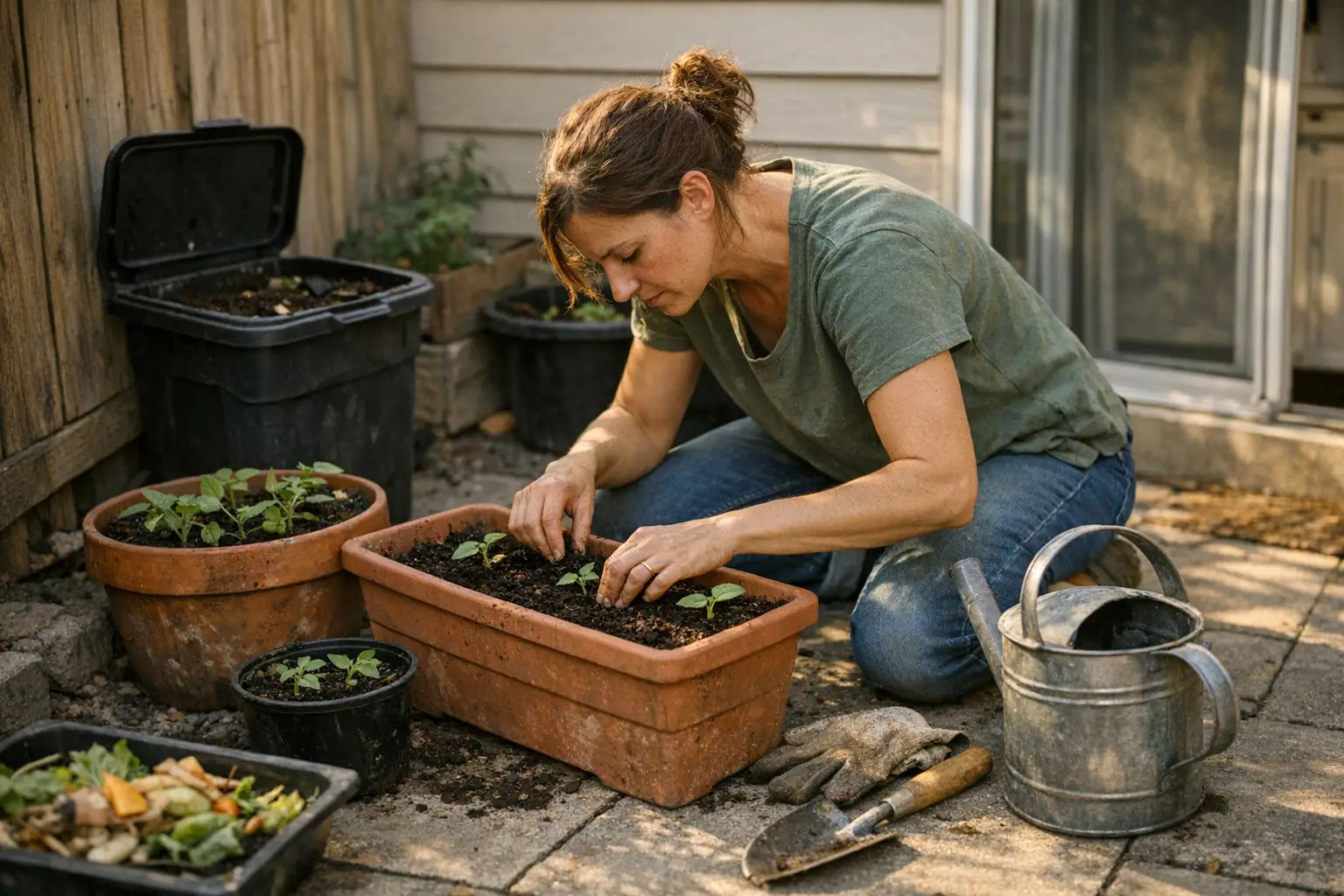
You don't need land to garden well. A few containers near a door can teach the same core lessons as a larger yard. You'll still learn what belongs in your space, what dries out fast, and what care you can repeat each week.
For busy people, that small scale is a strength. It lowers risk and keeps feedback clear. Consider a small team leader who spends all day making decisions on screens. A compact garden creates a rare kind of signal: direct cause and effect in the physical world.
That makes gardening more than decoration. It becomes practice in stewardship. You notice patterns sooner. You waste less effort. Over time, those habits carry into other parts of life and work.
Containers, light, and soil basics that matter
Most beginner problems aren't really plant problems. They're condition problems. A container in the wrong light or weak soil will struggle no matter how good the plant looked on the shelf.
Start by watching the site before buying much. Notice where light stays longest. Notice where heat builds up or wind dries things out. Then match your setup to those facts instead of forcing an idea from someone else's yard or feed.
Soil deserves special attention because it's easy to ignore until plants fail. Compost helps here, but not as magic. National Geographic notes that when compost is layered on top of soil in a garden or on a farm, the organic matter found in compost improves unhealthy soils (National Geographic). That's a steady gain, not an overnight fix.
Is it true that composting is messy and niche?
No. Composting is basic home ecology when done with simple rules and realistic expectations. The main misunderstanding is thinking compost is just old scraps in a pile. The U.S. Environmental Protection Agency defines composting as "the managed, aerobic (oxygen-required) biological decomposition of organic materials by microorganisms" (US EPA).
Two words matter there: managed and aerobic. Managed means you can't ignore it forever and expect good results. Aerobic means airflow matters because oxygen isn't optional in the process.
How composting turns waste into soil value
Composting changes how you see waste at home. Some materials that feel like trash can become future soil inputs instead. The U.S. Environmental Protection Agency says composting diverts organic materials such as food scraps, yard trimmings, wood, and manure (US EPA).
For a home gardener, that shift is practical as much as philosophical. Kitchen scraps stop being only disposal problems. Dry leaves stop being only cleanup work. Together they become part of a loop that feeds future planting rather than leaving your system as waste.
That's why composting belongs in the same conversation as gardening strategy. It connects daily habits to longer-term soil health. If you care about regeneration in any form, this is one of the clearest household examples you'll find.
EPA guidance on scraps, yard waste, and airflow
The safest starting point is also the simplest one. The U.S. Environmental Protection Agency says you can compost at home using food scraps from your kitchen and dry leaves and woody material from your yard (US EPA). For beginners, that's enough.
Keep your inputs conservative at first (especially if you're busy). Complexity tends to create neglect. A smaller system with known inputs usually teaches more than an ambitious setup full of uncertainty.
Air matters just as much as ingredients do. Because the U.S. Environmental Protection Agency defines composting as aerobic (US EPA), airflow isn't some advanced detail for later. It's part of whether the process works as intended at all.
Myth: The real gains are only personal
Gardening does help the person doing it, but that's only half the story. Done well, it also improves local conditions through better soil practices and smarter plant choices. That makes it useful for anyone who cares about stewardship beyond their own fence line.
This is where generic gardening advice often falls short. It talks about color palettes or harvest goals while skipping ecological fit. Yet local fit often determines whether a garden becomes resilient or needy over time.
Native pollinator beds support sustainability
If you want one strong default for planting decisions, choose native pollinator-friendly options suited to your region whenever you can. The U.S National Park Service offers Native Pollinator Garden Recipe Cards "designed to help you plant a beautiful, pollinator-friendly garden right at home" (U.S National Park Service).
That guidance matters because not every attractive plant serves the same ecological role everywhere. Place comes first. A smart garden works with local conditions rather than importing disconnected ideas based only on looks.
Native pollinator planting also sharpens decision-making for beginners. Instead of asking what is trending, you ask what belongs here and what supports life here. That's usually the better question in both gardens and organizations.
Let's connect
Every organization meets a question like this one differently, which is why Gray Group International never arrives with a ready-made answer. We spend the first session understanding your constraints, your numbers, and the decisions already on the table. From there we propose a handful of concrete moves and help you judge which of them are worth your time and money. You make the call; we make it easier.
You Might Also Like
Discover more insights in Lifestyle, our full collection of articles on this topic.
Join Disruptors Digest
Insights for a future worth creating. Sustainability, lifestyle, business, and beyond.
Gray Group International is a growth studio helping businesses attract, convert, and retain customers. Our consulting arm, gardenpatch, offers hands-on playbooks and strategy sessions.
