-01.svg "GGI main logo")


By: Tiago Santana - Founder & CEO, Gray Group International • Serial entrepreneur and growth strategist who has built and scaled multiple companies across technology, media, and consulting. Expert in growth strategist and editorial voice for a global think tank building companies that advance the human experience
The National Institute of Standards and Technology says uncrewed aircraft systems can improve community service by delivering rapidly deployable "Eyes in the Sky" and can reduce risk to both the public and responders (NIST, 2024-09-26). That matters because the real value isn't the aircraft. It's what better visibility lets people do next.
Drone technology makes sense when it helps you see sooner, decide faster, or act more safely than your current tools. If you're evaluating it well, you're not asking whether drones are impressive. You're asking where remote sensing or aerial action fits your mission, workflow, and risk limits.
Set the decision context for drones
Most teams start in the wrong place. They compare aircraft features before they define the problem. That usually leads to a weak pilot, because hardware can't fix a vague mission.
A better starting point is operational design. Ask what information you need, how quickly you need it, who will use it, and what action follows. Once those answers are clear, drone use becomes easier to judge. You can see whether the job is mainly about sensing, delivery, or joining several systems into one working process.
Define the full UAS system, not just the aircraft
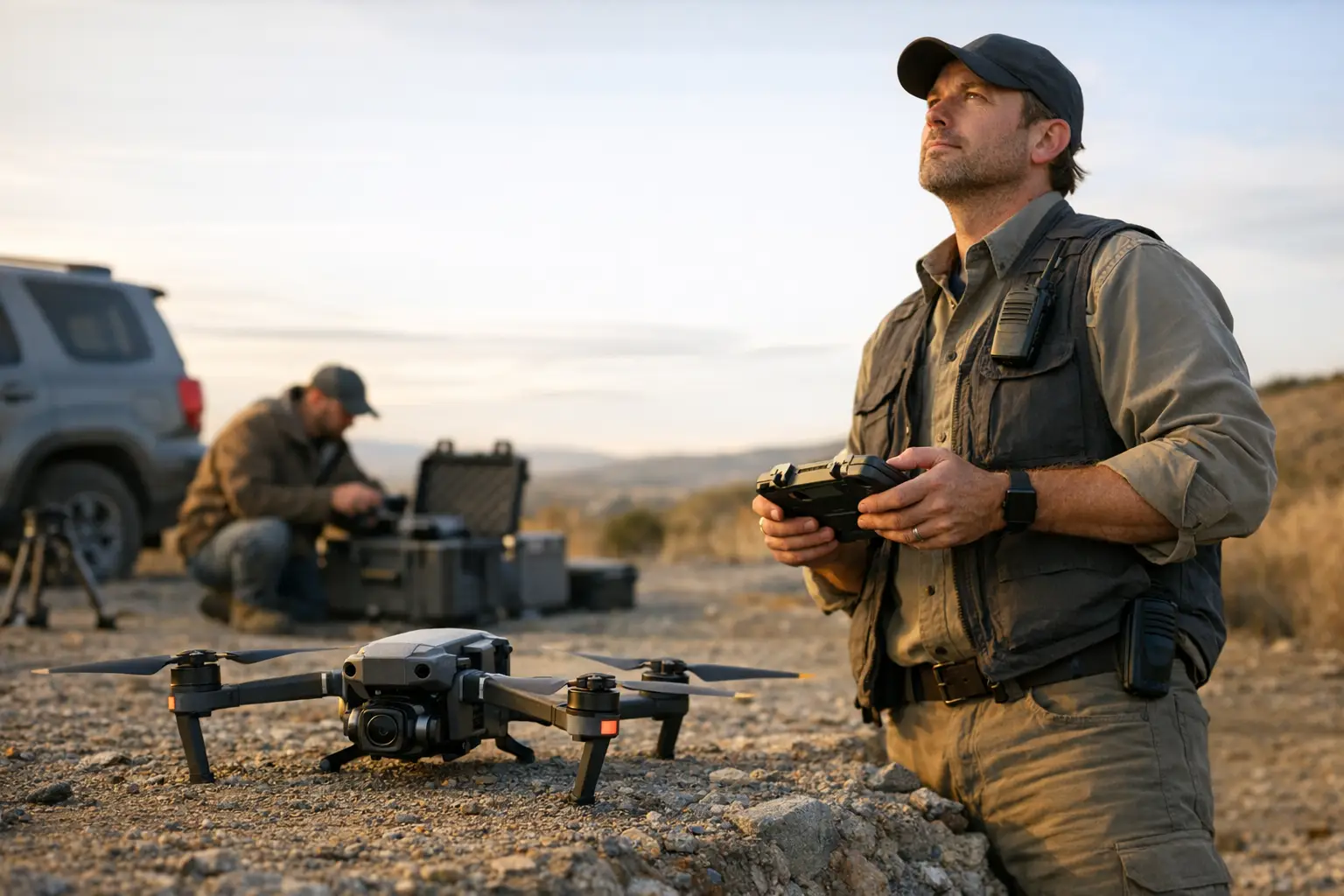
NIST uses a wider term for a reason. It defines an Uncrewed Aircraft System as an Uncrewed Aerial Vehicle plus associated systems (NIST, 2024-09-26). In plain terms, that means the aircraft is only one part of the capability.
Those associated systems usually include control tools, communications links, sensors, software, maintenance routines, data handling rules, and operator coordination. If one part fails, the mission weakens. A sharp image has little value if nobody knows who reviews it or what decision it should trigger.
That distinction changes investment logic. Buying aircraft is procurement. Building a UAS capability is operating model design. Serious leaders plan for both.
Pinpoint where faster visibility creates human value
The strongest early use cases often share one trait: speed changes outcomes. NIST's "Eyes in the Sky" framing is useful because it points to situational awareness, not novelty (NIST, 2024-09-26). When a team can understand conditions faster, it can often protect people better.
Consider a hypothetical response team facing uncertain site conditions. Sending staff in first may raise risk. A fast aerial view could help them assess access, hazards, or priorities before people move closer. In that kind of case, value comes from reduced exposure as much as from efficiency.
You'll see the same logic outside public safety. Infrastructure teams may need quick inspection across dispersed assets. Environmental programs may need timely mapping over hard-to-reach terrain. The common thread is simple: faster visibility matters when delayed understanding carries cost, danger, or missed opportunity.
Choose the right operational model
Not all drone programs solve the same problem. That's why broad claims about adoption aren't very useful. One organization needs imagery. Another needs aerial application or transport. A third needs both, tied to analysis and field action.
The practical question is where failure would happen first. If flights are easy but decisions stay slow, your problem is integration. If data quality is weak, your problem is sensing discipline. If you know what to do but can't reach the area well enough from the ground, delivery may be the real case.
Separate sensing, delivery, and integration use cases
Sensing use cases focus on seeing and understanding. Think mapping, inspection, monitoring, or rapid assessment. Success depends on image quality, timing, coverage, and clear review steps.
Delivery use cases focus on moving something through space or applying something in a defined area. Those missions are less about observation alone and more about controlled execution in field conditions.
Integration use cases are harder than they look. The World Health Organization's TDR program describes an approach in Ghana that combines aerial mapping, AI-assisted identification of mosquito aquatic habitats. Drone-based larvicide spraying (WHO TDR, 2026-07-21). That's not one task. It's a chain of tasks. Break any link and performance drops.
Match AI and technology to field workflows
AI can help classify patterns in aerial data, but only if collection standards are good enough to support trust. Poor imagery leads to weak analysis. Weak analysis leads to bad field decisions.
The Ghana example shows this clearly because AI-assisted identification sits between mapping and intervention (WHO TDR, 2026-07-21). In other words, AI isn't the product by itself. It's one step inside a larger workflow that must hold together under real conditions.
Most teams should define review rules before routine flights begin. Who checks outputs? What level of confidence triggers action? When does a human override matter? Those choices shape reliability more than software claims do.
Weigh safety, rules, and data handling worldwide
Every drone program sits inside a social system as well as a technical one. Safety rules matter. So does public trust. Data ownership matters too.
The available evidence here supports caution more than certainty on regulation detail. Specific aviation rules vary by place and aren't covered in these source passages. Still, leaders can make sound early decisions by treating compliance and governance as design inputs instead of late-stage cleanup work.
One pattern shows up often in emerging tech decisions: teams delay hard questions until after purchase. Who owns captured data? How long will it be kept? Who can access it? What happens when field teams question an AI output? Clear answers protect both operations and trust.
Measure readiness before you invest
A good pilot starts with proof conditions, not enthusiasm. Before you spend money or assign staff time, define what must be true for success to count as real progress.
That means naming the mission outcome first. Then test whether drones improve that outcome enough to justify new workflows and oversight needs. If they don't change decision speed, safety exposure, reach into difficult terrain, or targeting quality, then they may be solving the wrong problem.
Test fit with growth strategy and digital transformation
Drone adoption works best when it supports an existing strategic aim rather than creating one from scratch. Maybe you need better field visibility across physical operations. Maybe you need stronger inspection coverage without sending people into uncertain conditions first.
A simple screen helps: what data do we need; how fast do we need it; who decides from that data; what action follows; what breaks if any step fails? Those questions expose whether you're evaluating an aircraft purchase or building a new operating capability.
For founders and executives working through broader digital transformation, that distinction matters a lot (and it's easy to miss). New tools create value only when they fit handoffs between operations, analytics, leadership, and field execution.
Let's connect
The ideas above are worth very little until someone owns them. Gray Group International helps leadership teams pick the two or three moves on this subject that deserve attention now, put names and dates against each one, and build the habit of checking results rather than hoping for them. If that sounds like the kind of help your team could use, we would be glad to talk it through.
Discover more insights in Future, our full collection of articles on this topic.
Join Disruptors Digest
Insights for a future worth creating. Sustainability, lifestyle, business, and beyond.
Gray Group International is a growth studio helping businesses attract, convert, and retain customers. Our consulting arm, gardenpatch, offers hands-on playbooks and strategy sessions.
