-01.svg "GGI main logo")


By: Tiago Santana - Founder & CEO, Gray Group International • Serial entrepreneur and growth strategist who has built and scaled multiple companies across technology, media, and consulting. Expert in growth strategist and editorial voice for a global think tank building companies that advance the human experience
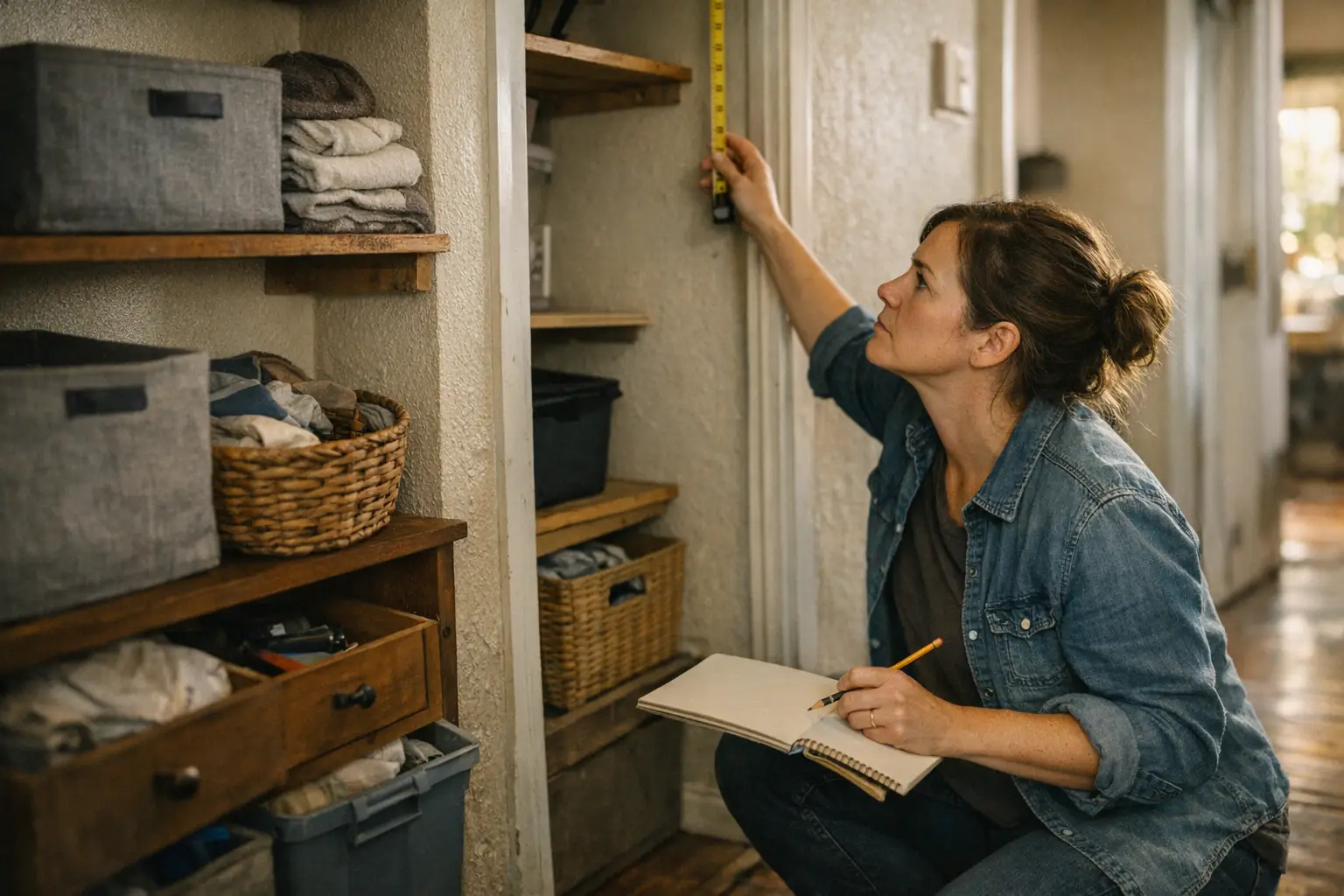
Consider two households with the same problem. One buys bins, shelves, and drawer inserts on impulse. The other measures first, maps daily use, and chooses only what fits the space and habit. The first gets more clutter in nicer containers. The second gets breathing room.
Good home storage starts with planning, not products. The right system matches what you own, how often you use it, what the room allows. How much change your life will likely absorb.
Why home storage is a design problem
Storage looks simple until daily life pushes against it. Most failures don't come from lack of effort. They come from a mismatch between space, stuff, and behavior. A shelf can be strong enough yet still be wrong if it puts heavy items too high or hides everyday tools behind seasonal gear.
That matters because storage isn't just about neatness. It's part of how a home works. It affects movement, attention, safety, and ease of care. For anyone thinking beyond décor, that's the real frame: storage is infrastructure for everyday freedom.
Daily friction, access, and behavior over time
A useful system lowers friction. You should be able to put things away fast and find them without a search mission. That sounds obvious, but many setups do the opposite. Deep bins swallow small items. High shelves turn routine tasks into lifting risks. Closed cabinets hide things people need to see.
Frequency of use should lead most decisions. Daily items belong at easy reach. Heavy items should sit where lifting strain stays low. Rarely used gear can go higher or lower, but only if access stays safe and realistic.
Behavior also changes what "organized" means. If a household won't fold every item perfectly, open baskets may work better than narrow drawers. If visual calm matters, matching containers may keep the system in use longer. A good setup respects human habits instead of trying to correct them through force.
Small spaces, work, care, and real household use
Small homes expose bad planning fast. Every corner has to carry more than one job. An entryway may hold shoes, bags, deliveries, pet gear, and charging cables at once. A dining area might double as a desk by day and family space at night.
Because of that, zoning matters more than volume alone. Start by assigning space by function: entryway items near the door, work tools near where work happens, care supplies near where they're needed most. That sounds basic, yet it's often skipped in favor of shopping by category.
Consider a hypothetical small apartment with remote work built into daily life. A sleek shelving unit may look right online but fail in practice if printer paper blocks files or cords tangle with books. In tight homes, storage has to support transitions between tasks, not just hold objects.
Choosing systems that hold up in real life
The strongest choice is usually the one that can adapt without becoming unstable or ugly six months later. Many people overvalue polish at the start and undervalue change over time. Life rarely stays still long enough for rigid systems to age well.
A better question is not "What looks finished?" It's "What can still work when routines shift?" Children grow up. Hobbies spread out. Work moves home for a season. Good storage plans assume that change will happen.
Modular versus fixed through growth strategy
Modular systems often win because they can be adjusted as needs change. Shelves can move up or down. Components can expand into new zones. Containers can be swapped without replacing the whole setup. That flexibility usually protects both money and effort over time.
Fixed systems still have a place. Built-ins can make awkward spaces useful and reduce visual noise in rooms that need calm. Yet fixed only works well when the use case is stable and the structure supports safe installation.
Custom isn't automatically smarter either (that's one of the most common myths). An unusual alcove or sloped ceiling may justify tailored work. In many homes though, careful measurement plus modular parts solves most of the problem with less lock-in.
Renter-friendly choices and sustainability tradeoffs
Renters often get poor advice because many storage ideas assume drilling is allowed. It often isn't. That doesn't mean good organization is out of reach. Freestanding units, over-door organizers, tension-based options where appropriate, and furniture with hidden storage can create order without damaging walls.
Renter-friendly should never mean flimsy. Tall pieces still need stability planning. Stackable bins still need clean sizing so they don't wobble or waste depth. Even temporary systems should match real loads and daily use patterns.
Sustainability adds another layer to the decision. Cheap fixes often become waste because they crack, sag, or stop fitting new routines quickly. Longer-lasting materials, repairable parts, adjustable layouts. Standard container sizes tend to support longer service life (which usually matters more than trendy finishes).
Where planning still breaks down
Most planning errors happen before anyone installs anything. People buy too early, measure too late, and confuse visible clutter with lack of capacity. Often the issue is poor zoning or bad placement rather than too little storage overall.
Three questions solve much of this upfront: What has to live here? How often is each item used? What does the structure allow safely? Those answers beat any style label or shopping list.
Can AI and technology improve storage planning?
Yes, but only if technology helps judgment instead of replacing it. Planning apps can help map dimensions, track categories, or label inventory across closets and cabinets. That's useful when households forget what they own or struggle with seasonal rotation.
Still, no app can fix a bad physical setup on its own. Technology can't change wall type, shelf load limits, humidity in an enclosed area, or whether a heavy object sits at an unsafe height. Digital tools work best as planning aids, not as substitutes for measuring tape and common sense.
There's also a simple test for whether tech belongs at all: does it reduce friction? If digital labels save time finding supplies in shared storage areas, great. If smart features add upkeep without solving access problems, skip them.
Let's connect
Strategy is a set of choices, not a document. Gray Group International works alongside leadership teams to make their choices on this explicit, test them against the evidence, and turn them into commitments the whole organization can see and track. Whether you need a second opinion or a partner for the long haul, the first step is the same: an honest conversation about where you stand.
You Might Also Like
Discover more insights in Lifestyle, our full collection of articles on this topic.
Join Disruptors Digest
Insights for a future worth creating. Sustainability, lifestyle, business, and beyond.
Gray Group International is a growth studio helping businesses attract, convert, and retain customers. Our consulting arm, gardenpatch, offers hands-on playbooks and strategy sessions.
