-01.svg "GGI main logo")


By: Tiago Santana - Founder & CEO, Gray Group International • Serial entrepreneur and growth strategist who has built and scaled multiple companies across technology, media, and consulting. Expert in growth strategist and editorial voice for a global think tank building companies that advance the human experience
Consider two sellers with the same home. One lists it as lived in, crowded, and hard to read in photos. The other clears surfaces, fixes flow, and shows each room's purpose fast. Both are selling space, but only one is making the value easy to see.
Yes, staging can help sell a home. But it is not always worth a full-service setup. The right answer depends on buyer fit, room clarity, budget, timing, and whether better cleaning, repairs, and layout fixes would do more than decor.
When staging a property to sell earns its keep
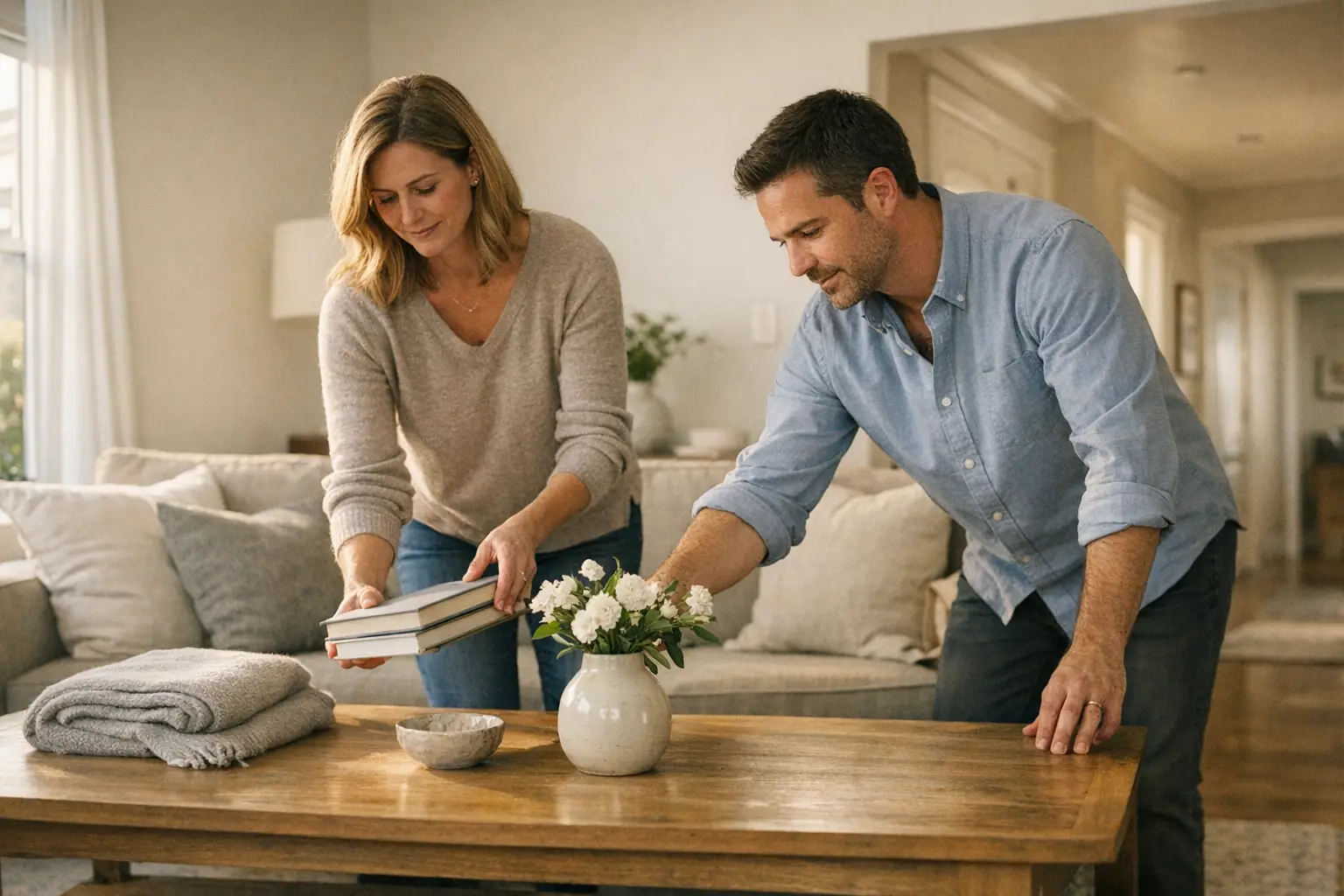
Staging tends to help most when buyers need help understanding how a space works. That often happens in vacant homes, awkward layouts, small rooms, or multi-use areas. A staged room answers silent questions fast. Where do I eat? Where do I work? Will my bed fit here?
Presentation also matters long before a showing. Buyers usually meet the property through listing photos first. If rooms look crowded, dim, or undefined online, strong fundamentals may not get a fair hearing. Staging helps when it makes the home's function obvious in both photos and walk-throughs.
A good staging plan is not about hiding the home. It is about helping the buyer read it. That is why even small changes, like moving furniture away from walk paths or reducing visual clutter, can change how a room feels. The goal is easier understanding, not a makeover.
Buyer-ready wins staging can create
The strongest gain is clarity, not glamour. Many sellers assume staging is about making a home look expensive. In most cases, it is more useful as a translation tool. It shows scale, traffic flow, storage logic, and daily use without asking buyers to imagine too much.
That matters because buyers do not inspect homes like owners do. They scan for friction. Oversized furniture can make a good room feel tight. Personal collections can hide storage capacity. An empty flex room can read as dead space unless its use is shown clearly.
A light-touch approach often works well. Consider a hypothetical occupied home with good light and solid finishes, but crowded surfaces and blocked walking paths. Removing excess items, changing lamp placement, and resetting furniture may do enough to improve both photos and showings.
How staging shapes buyer trust
Trust is an overlooked part of staging. A home that feels clean, calm, and easy to understand signals care. Buyers may not say it out loud. They notice whether doors close well, bulbs work, trim looks maintained, and pathways feel safe.
Digital presentation raises that bar further. Virtual staging can be useful for empty or confusing spaces, especially online. But disclosure matters. If edited images promise one experience and the showing delivers another, buyer confidence can drop quickly. Good staging supports truth rather than covering for problems.
That is why repairs usually come before styling touches. Fresh cushions will not offset damaged flooring or heavy wear at eye level. Buyers read those details as signs of how the property has been managed.
Where staging can miss the mark
Staging can hurt when it distracts from more important work. If a home needs deep cleaning, paint touch-ups, lighting fixes, or basic repairs, decor will not solve the real issue. Sellers sometimes spend on rented pieces while leaving visible maintenance problems untouched.
Another risk is mismatch. A style that looks polished but does not fit the likely buyer can create distance instead of connection. A compact city apartment may need simple function and open space. A family-oriented home may need clearer dining flow and bedroom usability.
There is also a timing issue. If the listing date is close, staging can create stress instead of value. When a seller is racing to market, the better choice may be a smaller set of high-impact changes that are easier to finish and maintain.
Costs and tradeoffs in staging a property to sell
The real tradeoff is not just money. It is time, effort, access, privacy, and daily disruption. Occupied homes need constant resets for showings. Families with children or pets often find that strain harder than they expected. Even strong advice can fail if the setup cannot be maintained.
Vacant homes bring different tradeoffs. Empty rooms can look smaller in photos and feel colder in person. Yet fully furnishing every area may be unnecessary. Partial staging often makes more sense when key spaces need context but secondary rooms can remain simple and clearly labeled.
Sustainability belongs in this decision too, especially if your sale sits inside wider portfolio goals. Rental furniture, reused decor, durable pieces, and lower-toxicity finishes can reduce waste while still improving presentation. Staging does not have to mean buying short-life items for a brief listing window.
When DIY prep beats professional staging
DIY prep usually wins when the home's bones are strong and the main problem is everyday clutter. If room purpose is already clear, your best return often comes from cleaning deeply, depersonalizing hard surfaces, improving lighting, and removing furniture that crowds circulation paths.
Sellers also do well with DIY when they know the buyer type well enough to simplify for that audience. A clear home office nook may matter more than extra accent chairs. An open dining area may matter more than filling every corner with decor.
Still, DIY has limits. Some layouts fight back no matter how many times you rearrange them. Vacant properties often need visual anchors that owners cannot provide alone. In competitive markets where comparable listings look highly polished online, outside help may be worth it for structure rather than style.
A practical way to choose the right level
Start with three questions: who is most likely to buy this property; what will confuse them; what must be fixed before photos? Those answers usually point toward full-service staging, partial support, DIY prep, or virtual help faster than design taste ever will. Most sellers do not need everything at once.
A practical order helps: deep clean first, repair visible wear, declutter and depersonalize, improve lighting, reset furniture for flow, stage only the rooms that shape first impressions, and use virtual support carefully where empty rooms are hard to read. That sequence keeps spending tied to buyer understanding instead of decoration for its own sake.
This approach also makes it easier to compare costs. If one simple change improves the photos and the in-person experience, there may be no need to go further. If the home still feels unclear after the basics, that is a sign to add more support where it will matter most.
Match the approach to property and market
Full-service staging tends to fit homes where scale needs help reading clearly across many rooms. Partial staging fits many vacant properties because buyers mostly need anchors in the entry, living area, kitchen-adjacent dining space, primary bedroom, and any confusing flex room. DIY preparation often fits occupied homes with decent furniture and manageable clutter levels.
Virtual staging can support online marketing when an empty room photographs poorly or has unclear use. Just keep edits honest and disclosed so digital polish does not damage in-person trust. Local conditions matter too. Seasonal weather can affect curb appeal timing, light quality inside the home, and dirt at entries. Smart sellers adjust recommendations to actual market habits instead of copying generic advice from elsewhere.
Talk to Gray Group International about staging a property to sell
Gray Group International works with leaders who want to move from reading about staging a property to sell to doing something about it. Knowing the right approach is only the start; the harder part is building the team, the process, and the decisions that actually shift results inside your own organization. That second part is where most of the value sits, and it is the part we help with every day.
Discover more insights in Lifestyle, our full collection of articles on this topic.
Join Disruptors Digest
Insights for a future worth creating. Sustainability, lifestyle, business, and beyond.
Gray Group International is a growth studio helping businesses attract, convert, and retain customers. Our consulting arm, gardenpatch, offers hands-on playbooks and strategy sessions.
