-01.svg "GGI main logo")


By: Tiago Santana - Founder & CEO, Gray Group International • Serial entrepreneur and growth strategist who has built and scaled multiple companies across technology, media, and consulting. Expert in growth strategist and editorial voice for a global think tank building companies that advance the human experience
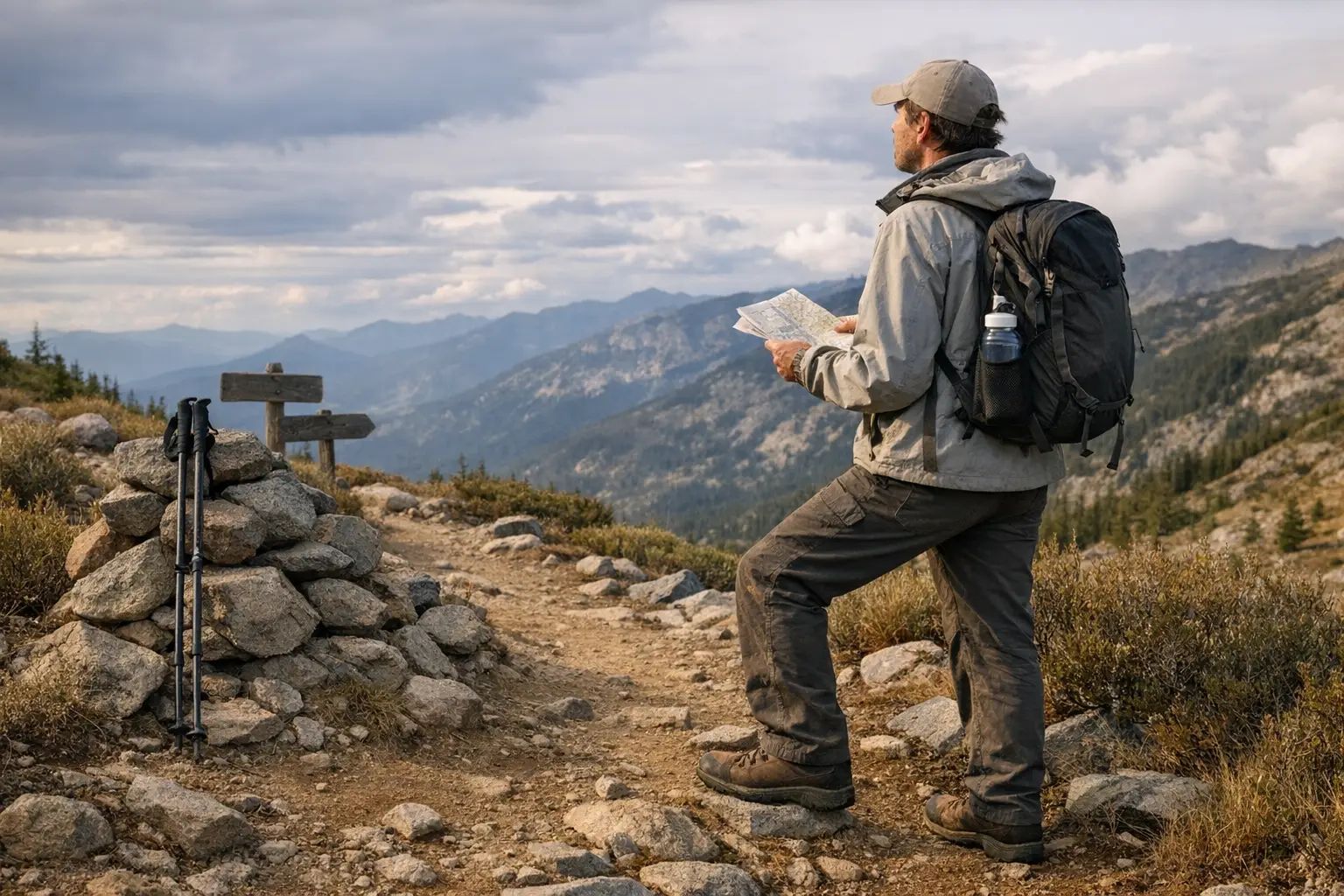
What counts as hiking, and how do you do it without turning a simple day out into a bad decision?
Hiking is walking on trails or natural ground for exercise, reflection, access, or time outside. Done well, it restores attention, builds physical resilience, and deepens respect for shared places. Done poorly, it exposes weak planning fast. The difference is rarely gear alone. It is judgment.
Hiking Explained for clearer judgment outdoors
Hiking sounds simple because the basic motion is simple. You walk. Yet the real task is matching route, weather, water, time, and effort to the day you actually have. That is why people get tripped up. They plan for distance and forget terrain, heat, or daylight.
For busy operators, that matters more than it first appears. A hike can be recovery, training, or thinking time. It can also become avoidable stress if you choose with optimism instead of facts. The U.S. National Park Service notes that there are "more than 21,000 combined miles of trails" across its system alone (U.S. National Park Service). More choice does not remove the need for discipline. It raises it.
Health gains, stress reset, and mental clarity
The personal case for hiking is strong because the return is not only physical. The U.S. National Park Service states that "Hiking is proven to have many health benefits that comes from being in nature" (U.S. National Park Service). That matters if most of your work happens indoors, on screens, and under constant decision load.
There is also a deeper benefit that generic wellness advice often misses. Hiking creates useful friction. You cannot answer every message while watching footing, checking weather shifts, and pacing your effort. That break from digital input can help reset attention in a way passive rest often does not.
Trail effort, calories, and time in the real world
Effort on a trail is not just about miles. Grade, loose ground, heat, shade, stops, and your own pace all shape how hard a hike feels. That is why mileage-only planning fails so often.
National Geographic offers a practical benchmark: "When hiking on challenging terrain, the average person can burn around 400-550 calories per hour" (National Geographic). That range is useful because it reminds you that uneven ground changes the cost of movement. A route that looks short on paper may still demand steady output.
Consider one example from the U.S. National Park Service: "The Rim Trail stretches from its beginning in the south at Bryce Point 5.5 miles (8.9 km) north to Fairyland Point" (U.S. National Park Service). For one person, that is an easy half-day outing. For another, it is enough to require careful pacing and an early turn if conditions shift.
Planning hikes with risk, impact, and local context
Good hike planning starts with constraints. Weather comes first because it changes everything else: clothing, water needs, pace, comfort, and whether the route still makes sense at all.
The U.S. National Park Service puts it plainly: "Know before you go: Check local weather forecast" (U.S. National Park Service). That is not box-checking. It is what protects your freedom later. Once you are moving within real conditions instead of wishful thinking, decisions get simpler and safer.
Route choice through weather, water, and terrain
A solid route choice answers four questions before you leave: How long will this likely take? What could slow me down? How much water do I need? When do I turn around no matter what?
Water is the easiest place to underprepare on a short outing. National Geographic says, "Forget the soda. Bring at least a liter of water" (National Geographic). Start there for a day hike baseline. In hotter weather or on longer routes, you will typically need more.
Another common mistake is assuming short means safe. It does not. National Geographic warns that "It might only be a day hike, but you could get be-nighted" (National Geographic). Delays happen through wrong turns, slower footing, extra breaks, or changing weather. Build margin into your plan before you need it.
Leave No Trace, sustainability, and shared access
Stewardship is not separate from performance outdoors. It is part of good judgment. If your route choice or behavior harms the place itself or ignores closures and local limits, you have planned poorly even if you finish the walk.
The U.S. National Park Service gives a clear baseline: "Leave nothing but footprints and take nothing but pictures" (U.S. National Park Service). In practice, that means more than not littering. Stay on established paths where relevant locally. Respect posted rules. Do not treat public land as a content set built for your use alone.
For leaders building purpose-driven companies, this point travels beyond recreation. Outdoor habits reveal values under low stakes first. Shared spaces work when people use freedom with restraint.
What to carry and how to prepare
Readiness usually breaks at ordinary points rather than dramatic ones. People leave too late. They bring too little water. They trust phone battery over time awareness. Or they assume fitness from other settings will carry over to rough ground.
That pattern matters because most preventable problems begin before the first step on trail dirt or rock. The fix is not making hiking feel extreme. It is making your defaults better.
Pack basics for day hikes
A day pack should solve likely problems without becoming dead weight. Water comes first. One light layer matters more than many people think because weather can shift or pace can drop fast near sunset.
A simple light source belongs in most day packs for the same reason National Geographic warns about getting benighted (National Geographic). So does whatever basic food helps you stay steady if the outing runs long. Keep your load plain and useful.
Phones help with maps and timing, but they change behavior too, not always for the better. People often take more risk when they assume a glowing screen equals control. Digital tools are aids; they are not judgment itself.
When tech helps and when judgment leads
Technology helps most before the hike begins. Forecast checks reduce bad assumptions early. Offline maps can lower wrong-turn risk where service drops out later. Shared plans help someone know when to worry if you are overdue.
Still, no tool cancels reality on the ground. If weather worsens faster than expected or footing feels beyond your current comfort level, turn back early without drama. That is not failure. It is range discipline.
The same principle applies to work built in fast-moving systems too. Clear constraints create better choices than inflated confidence does.
If you are thinking about how better habits support sustainable performance across work and life, Gray Group International may be useful as a partner in that conversation. We are a growth collective and think tank focused on improving the human experience in the digital age by building companies that solve important problems and enable people to live with more freedom.
Schedule a strategy conversation here: https://www.graygroupintl.com/contact
You Might Also Like
- 401k Employer Match: Pros and Cons
- A Beginner's Guide to Condo Home Buying Guide
- A Beginner's Guide to Crypto Staking Basics
- Staging a Property to Sell: Pros and Cons
- Income Tax Deductions Explained
Work with Gray Group International
Reading is cheap. Changing how an organization actually operates is not, and that gap is exactly where Gray Group International earns its keep. We help teams translate what they have learned about this topic into a sequence of decisions, owners, and checkpoints that survives contact with next quarter's priorities. If you want a sounding board before you commit budget or people, reach out and compare notes.
Discover more insights in Lifestyle, our full collection of articles on this topic.
Join Disruptors Digest
Insights for a future worth creating. Sustainability, lifestyle, business, and beyond.
Gray Group International is a growth studio helping businesses attract, convert, and retain customers. Our consulting arm, gardenpatch, offers hands-on playbooks and strategy sessions.
