-01.svg "GGI main logo")


By: Tiago Santana - Founder & CEO, Gray Group International • Serial entrepreneur and growth strategist who has built and scaled multiple companies across technology, media, and consulting. Expert in growth strategist and editorial voice for a global think tank building companies that advance the human experience
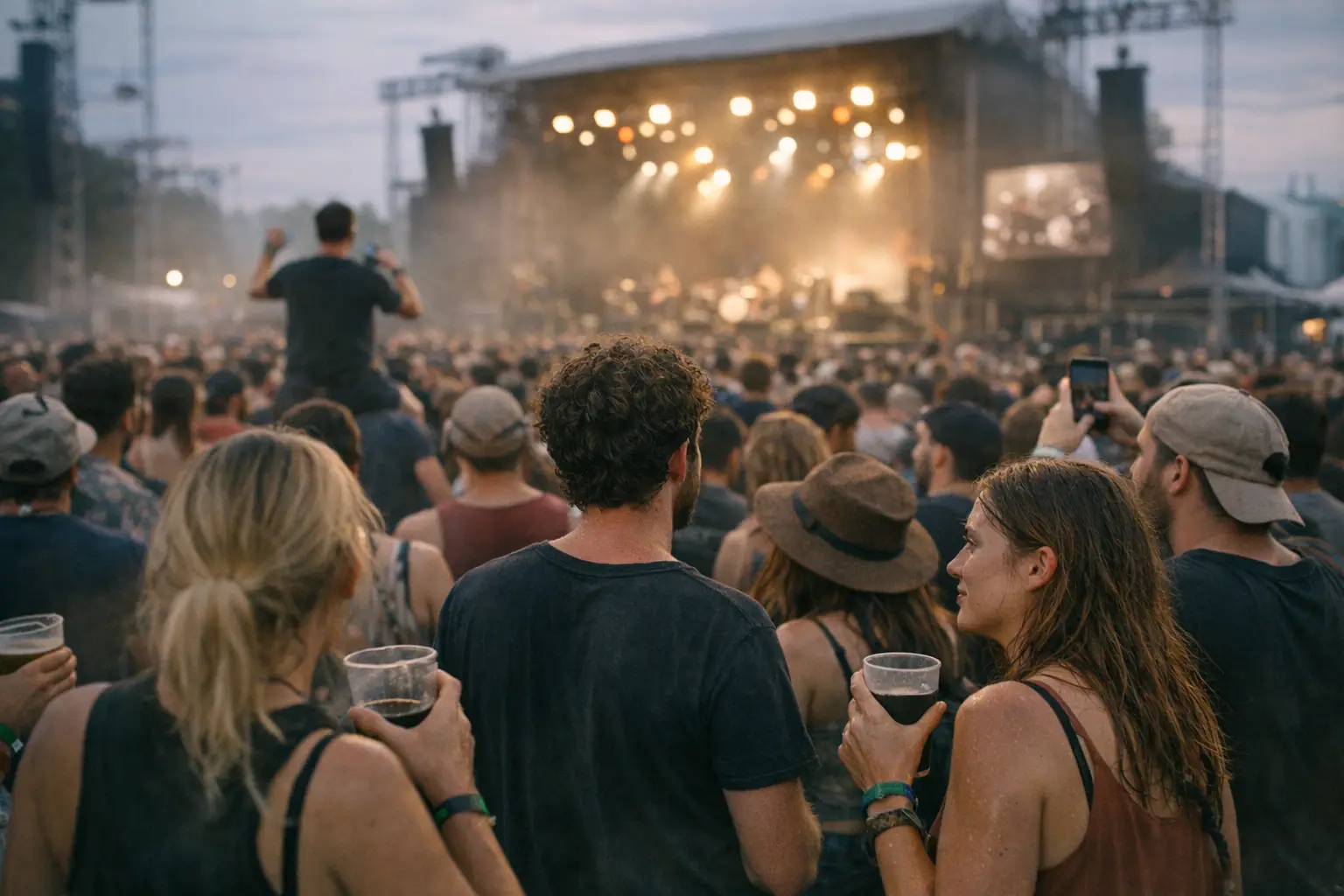
Live music is not a side show to digital culture. It's one of the clearest tests of whether people will leave home, spend real money. Trust an experience enough to share it with others. That matters because demand may be strong, but event economics are still tight.
For most builders, the right way to think about festivals and concerts is simple: they are cultural products with hard operating limits. If you're deciding whether to launch, sponsor, scale, or partner, focus on three things first. Know how demand behaves, choose the right event model, and measure value beyond ticket sales.
Set the context for live music now
Live music still matters because it sits where culture and commerce meet. A song can travel everywhere online. Attendance cannot. People have to choose a date, a price, a place, and a level of trust. That makes every event a sharper business test than many digital products.
The wider market helps explain why this category keeps attracting interest. IFPI reported that global recorded music trade revenues reached US$28.6 billion in 2023, with 10.2% year-on-year growth and a ninth consecutive year of growth (IFPI). That doesn't prove every event will work. It does show that music demand remains healthy across formats, which tends to support discovery, fandom, and touring interest.
Why shared experiences still scale worldwide
People still make room for collective experiences, even in an always-on digital age. The strongest proof is not hype. It's attendance at durable institutions. Rolling Stone (Australia) reports that Rock in Rio, held in Rio de Janeiro, Brazil, draws over 700,000 attendees for each edition and marked its 40th anniversary in 2024 (Rolling Stone (Australia)).
That kind of scale tells leaders something important. Shared experiences don't win because they are live alone. They win when they become part performance, part identity, and part ritual. A festival at that size works more like temporary civic infrastructure than a simple show.
Smaller operators should take the lesson, not copy the shape. Big attendance is usually the result of years of trust, repeat behavior, and clear positioning. A local series or brand-backed concert has different strengths. It can be more focused, more flexible, and often closer to a defined community.
How fan spending shapes event economics
Demand is real, but wallet share is limited. Billboard (Canada), citing Nielsen 360 data, reports that the average overall spend by fans annually is US$192, with concerts accounting for 30% of that spend (Billboard (Canada)). For operators, that should change pricing logic right away.
Most events don't fail because people dislike music. They fail because the offer assumes more spending room than fans actually have. If your ticket tiers, add-ons, food pricing. Sponsor expectations all depend on heavy upsell from average attendees, pressure builds fast.
Audience reach also doesn't equal revenue depth. Billboard (Canada) says 58% of Canadians surveyed attend live music events (Billboard (Canada)). That's strong participation. Yet broad participation can hide a harder truth: many attendees are selective buyers who compare events against other uses of time and money.
Choose the model behind festivals and concerts
The first strategic choice is not lineup or branding. It's model fit. A concert usually concentrates value into one performance window. A festival spreads value across multiple acts, longer dwell time, food and drink sales, sponsor presence, and place-making.
That difference changes almost everything downstream. Concerts often rise or fall on ticket conversion and artist draw. Festivals add more revenue paths but create more failure points too. Entry flow matters more. Site design matters more. Vendor operations matter more. Weather risk matters more.
A founder exploring live events should ask one direct question: do we want to produce a moment or build an environment? The wrong answer leads to expensive confusion. Teams end up planning like a festival while earning like a concert.
Build temporary cities with sustainability in mind
A festival is often a temporary city in all but name. People need ways to arrive, enter, move around, eat, rest, buy goods, find help, and leave safely. Once scale rises, those systems stop being background details and become part of the product itself.
That reality is why mega-festival examples can mislead newer operators. Rock in Rio's reported over 700,000 attendees per edition signals huge opportunity (Rolling Stone (Australia)). It also signals huge complexity. More people create more visibility, but they also multiply transport strain, waste loads, staffing needs, service bottlenecks, and safety demands.
Sustainability belongs here for practical reasons as much as moral ones. Poor site planning creates friction people remember in the wrong way. Waste piles up fast. Queues shape mood. Overbuilt experiences can hurt both margins and trust.
Use AI and technology to plan trust and flow
Technology works best in live events when it reduces uncertainty for people on site. Fancy tools matter less than clear movement through space: buying tickets without confusion, entering without chaos, finding what you paid for, getting updates quickly when plans change.
AI can help if it's aimed at decisions rather than novelty. Teams can use it to improve communication flows, predict common support questions, organize schedule changes faster, or spot weak points before gates open. Used badly, it adds noise at moments when guests need clarity most.
Trust is the real metric here. People forgive weather less than they forgive confusion poorly handled? Usually not the other way around. A smart system tells attendees what changed, what to do next, and where to go now (in plain language). That's where tools earn their place.
Measure cultural and business value over time
Strong events aren't only sold once a year. They build memory over time and turn memory into repeat demand. That means leaders should measure not just attendance but relationship strength: return intent, partner fit, artist reputation effects, community response. Operational learning from one edition to the next.
Market structure matters too. Billboard (Canada) reported that Live Nation posted another record year in 2023, with revenue up 36% to a record level (Billboard (Canada)). Large promoters have scale advantages in talent access and reach. Smaller players usually do better when they develop distinct audience value instead of copying big-event formulas.
Track growth strategy beyond ticket sales
Ticket revenue matters first because it proves core demand exists. Still, healthy growth often comes from designing an ecosystem around the event rather than squeezing harder at checkout time.
Year-round programming is one way to do that well if your audience supports it. Billboard (Canada) highlighted coverage of Halifax Jazz Fest's year-round plans within broader industry reporting (Billboard (Canada)). The idea is straightforward: reduce seasonality risk and keep your audience relationship alive between flagship dates.
Consider a mid-size brand deciding between one larger annual event or several smaller touchpoints across the year. The second option may build steadier trust. It can also reveal what audiences value before bigger bets get made.
Link social impact to purpose-driven business
Live events shape more than revenue lines. They affect who feels welcome. They influence local commerce. They show whether access, safety, inclusion, and environmental choices were treated as essentials or afterthoughts.
That's why serious operators should define success with both business and cultural measures from day one. Not because it's fashionable. Because weak social design becomes operational risk later. If people feel excluded or poorly served, word spreads quickly.
Gray Group International looks at markets through one core question: does this model improve the human experience in the digital age? Festivals and concerts are a sharp test of that standard because attention alone isn't enough. If you're weighing an event strategy, a partnership model, or a growth plan around live experiences, schedule a strategy conversation. Let's explore how your event can create lasting value without drifting into avoidable chaos or shallow imitation.
You Might Also Like
- Staging a Property to Sell: Pros and Cons
- 401k Employer Match: Pros and Cons
- A Beginner's Guide to Conventional vs FHA Loan
- Income Tax Deductions Explained
- A Beginner's Guide to Condo Home Buying Guide
Need help turning this into a plan?
Gray Group International works with leaders who want to move from reading about this topic to doing something about it. Knowing the right approach is only the start; the harder part is building the team, the process, and the decisions that actually shift results inside your own organization. That second part is where most of the value sits, and it is the part we help with every day.
Discover more insights in Music, our full collection of articles on this topic.
Join Disruptors Digest
Insights for a future worth creating. Sustainability, lifestyle, business, and beyond.
Gray Group International is a growth studio helping businesses attract, convert, and retain customers. Our consulting arm, gardenpatch, offers hands-on playbooks and strategy sessions.
