-01.svg "GGI main logo")


By: Tiago Santana - Founder & CEO, Gray Group International • Serial entrepreneur and growth strategist who has built and scaled multiple companies across technology, media, and consulting. Expert in growth strategist and editorial voice for a global think tank building companies that advance the human experience
Consider two versions of the same Saturday. In one, a small repair turns into three store trips, the wrong tool, and a half-finished wall. In the other, the job gets done in an hour because the project was sized right, the tools were basic but sound. The risky part never became a DIY experiment.
Most home projects should start with one question, not one purchase: is this a safe, sensible use of your time? If the answer is yes, begin with simple tasks and versatile tools. If the answer is unclear, slow down or call a qualified professional.
Set the case for doing it yourself
DIY can make sense when the project improves daily life without creating hidden risk. For busy people, that usually means repairs, maintenance, storage fixes, minor finish work. Small upgrades that remove friction at home. Think less about hobby culture and more about operating quality.
A useful home supports better work and better rest. That matters if your home is also where you think, lead, recover, or care for others. Small improvements can reduce low-grade stress. A door that closes well, a shelf that holds weight, or a workspace with cleaner cable management won't change your life alone. Together, they shape how a day feels.
Why home systems shape focus and recovery
Homes are full of tiny systems. Light, storage, airflow, hardware, sound control, and layout all affect attention. When those systems fail in small ways, they pull energy from more important work. DIY is often worth it when it restores order fast.
Consider a founder working from a spare room. A loose curtain rod, poor task lighting, and tangled charging cables seem minor. Yet each creates drag. Fixing those issues yourself can be rational because the work is visible, low risk, and easy to check when done.
Where sustainability and stewardship pay off
Doing work yourself can also change how you buy. Instead of replacing whole items, you repair what still has value. Instead of buying every shiny tool up front, you build slowly around repeat use. That lowers waste and reduces clutter.
Stewardship matters here more than thrift alone. A well-kept home usually costs less attention over time because fewer small failures pile up at once. Better care also leads to better judgment. Once you start maintaining things well, you're less likely to confuse novelty with need.
Choose DIY home projects with a clear filter
The fastest way to improve your results is to sort projects before you start them. Most mistakes happen early. People either take on too much too soon or buy equipment before they know what problem they're solving.
A simple filter helps: choose DIY now for low-risk visible tasks; prepare first for jobs that need learning or setup; call a professional for regulated or safety-critical work. That middle category matters most because it stops false confidence without killing momentum.
Sort tasks into now,later,or professional
"Do it now" usually covers hanging art, tightening hardware, patching minor wall wear, weather sealing, changing simple fixtures where no live system work is involved, and basic organization builds. These tasks teach repeatable skills and show quick feedback.
"Do it later" fits projects that look easy online but punish weak prep in real life. Shelving on questionable walls is one example. So is any task where you can't explain each step before starting. Delay isn't failure here. It's quality control.
"Call a professional" should be your default when live electrical work is involved, plumbing changes could hide leaks, structural elements may be altered, or permits might be required. Local rules vary. Check them before touching systems inside walls, floors, or ceilings.
Match tools to risk,time,and digital transformation
Tool choice should follow project risk and time pressure. A basic hand tool often beats a specialized gadget if the task is simple and rare. The reverse can also be true when one poor tool slows every job you do.
WIRED captures this split well with two separate frames: "30 Essential Home Repair Tools You Should Have" and "15 Design-Forward DIY Tools Worth Upgrading to This Year" (WIRED). That distinction matters because beginner needs and repeat-user needs aren't the same thing.
There's also a digital lesson hiding here. Better decisions come from better systems, not more inputs. Many people now research projects through endless tabs, videos, reviews, and product feeds. Useful information should narrow choices. If your research expands confusion instead of reducing it, stop shopping and define the job again.
Measure the tools and skills worth building
Start with capability per dollar and capability per inch of storage space. That's the right metric for most households. A compact kit used often has more value than a large kit used badly.
Seen over time, DIY skill grows in layers. First comes safe handling and clean setup. Then accuracy improves. Only after repeated use does premium equipment start making real sense for most people.
Build a starter kit for year round upkeep
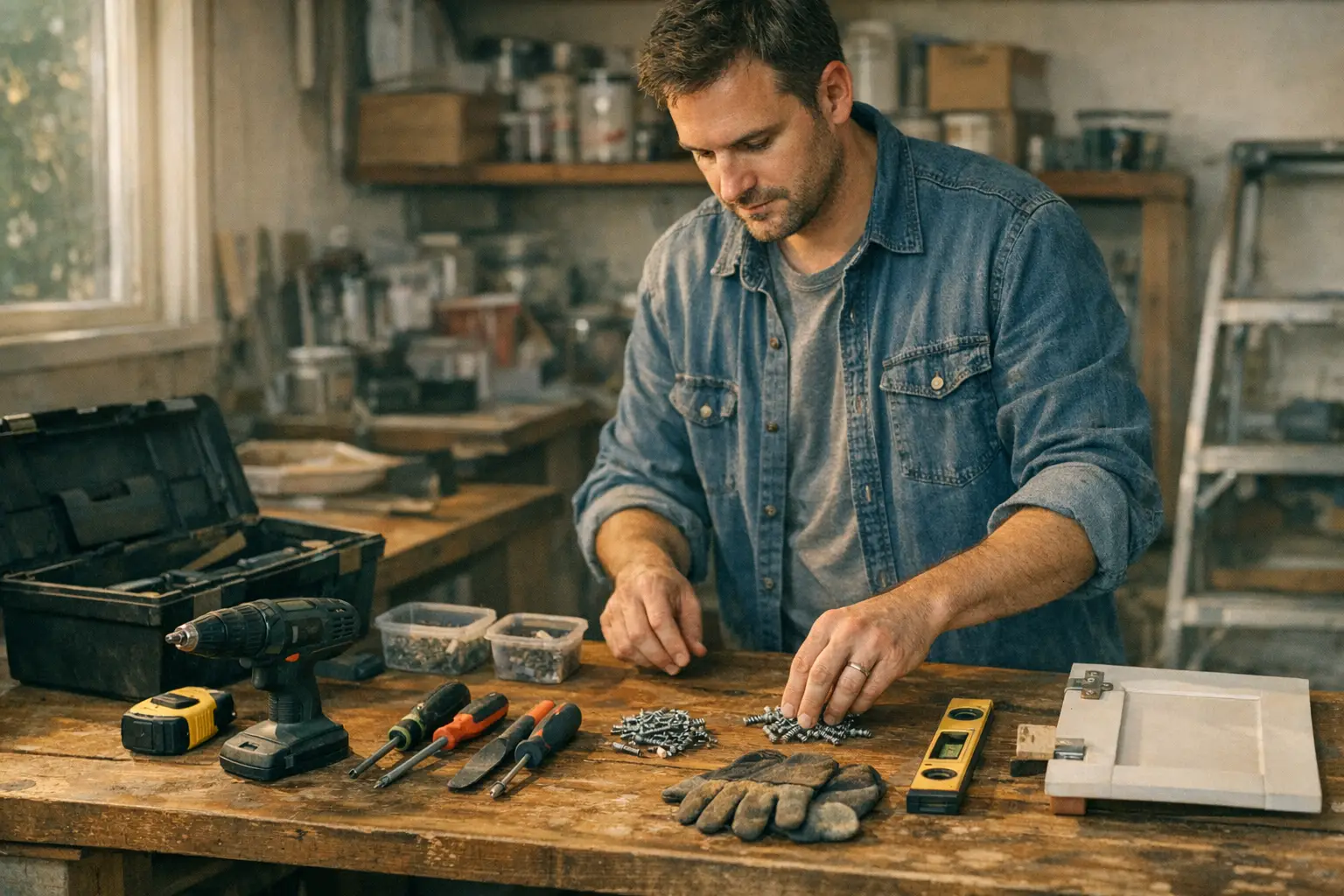
A sensible starter kit should cover fastening, measuring, cutting light materials safely, minor wall repair, basic inspection, cleanup, and PPE. Keep it tight. Gloves, eye protection, and dust masks belong in that first layer because safety isn't optional just because the project looks small.
Buy multi-purpose tools first and store them where you'll actually reach them on an ordinary weeknight. Accessibility matters more than workshop fantasy. A neat box in an easy spot will beat an elaborate setup buried behind seasonal bins every time.
One pattern shows up often: people spend too much on niche gear before they've built basic competence with universal tools. Then maintenance gets skipped because batteries are dead, blades are dull, or nothing is easy to find. Good systems are boring on purpose (and that's why they work).
Decide when upgrades support AI and technology use
Upgrade tools when friction repeats enough to cost time or quality. Poor grip comfort, hard-to-read markings, weak battery life for frequent use cases, or sloppy fit can justify moving beyond entry-level gear. Frequency should lead the decision.
That same logic applies to tech-heavy homes too. If your space supports remote work or device-heavy routines, some physical upgrades matter more than they used to. Cleaner mounting solutions, better cable access points (handled safely), improved lighting placement, or sturdier desk hardware can support digital work without turning into renovation theater.
WIRED's title "15 Design-Forward DIY Tools Worth Upgrading to This Year" points to something many buyers feel but don't name clearly (WIRED). Some tools become worth upgrading because better ergonomics make routine jobs easier to start at all.
If you're thinking about bigger changes to how people live and work at home through technology, sustainability. Better systems design, Gray Group International may be a useful partner in that conversation. We build companies focused on improving the human experience in the digital age across brands including gardenpatch, Chamomile, Petunia, Web Society (through Lattice Brands), and Impact Mart.
For leaders who want clearer decision frameworks around how spaces support performance and freedom at home or at work-adjacent environments, schedule a strategy conversation: https://www.graygroupintl.com/contact. Let's explore how smarter choices in everyday systems can support larger human outcomes without adding noise or waste.
You Might Also Like
- A Beginner's Guide to Condo Home Buying Guide
- Staging a Property to Sell: Pros and Cons
- A Beginner's Guide to Becoming a Landlord
- Curb Appeal to Sell a Property: A Step-by-Step Guide
- A Beginner's Guide to Budgeting for Irregular Income with a Savings Account
Take the next step
A single conversation with Gray Group International is often enough to see which parts of what you have just read apply to your situation and which do not. We start with where you are today, not with a framework, and we leave you with a short list of practical next steps you can run on your own or with us. There is no deck and no pitch, just a working session with people who have done this before.
Discover more insights in Lifestyle, our full collection of articles on this topic.
Join Disruptors Digest
Insights for a future worth creating. Sustainability, lifestyle, business, and beyond.
Gray Group International is a growth studio helping businesses attract, convert, and retain customers. Our consulting arm, gardenpatch, offers hands-on playbooks and strategy sessions.
