-01.svg "GGI main logo")


By: Tiago Santana - Founder & CEO, Gray Group International • Serial entrepreneur and growth strategist who has built and scaled multiple companies across technology, media, and consulting. Expert in growth strategist and editorial voice for a global think tank building companies that advance the human experience
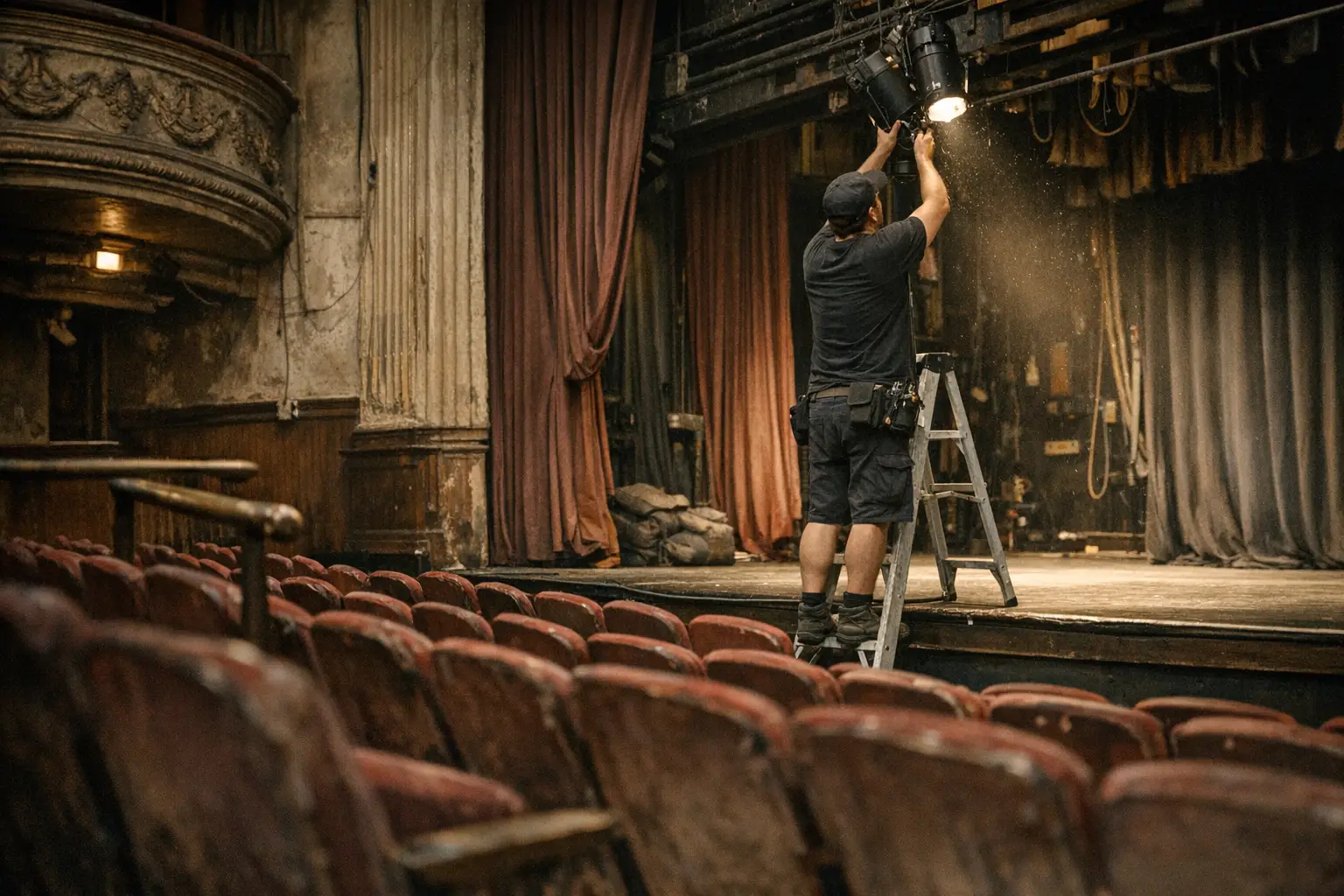
National Geographic reported in 2025 that “one of the world's oldest theaters has closed” (National Geographic). That fact should reset how leaders think about theatre. Cultural assets don't survive because people admire them. They survive because someone plans, maintains, interprets, and funds them with care.
Theatre is live performance for an audience, but it is also more than a show. It can be an art form, an institution, and a place. For leaders, that means theatre deserves strategic thought, not just affection.
Origins and early stages
Theatre began as shared live performance. Before it became a formal sector, it was already doing civic work. It gathered people in one place, held memory in public, and gave communities a way to rehearse values, fears, and hope.
That older function still matters. A live audience doesn't just consume a story. It experiences timing, tension, silence, and response together. Digital media can scale reach. Theatre still does something else better. It creates shared attention in real time.
How live performance became theatre
Live performance becomes theatre when it is shaped for an audience with intent. That intent might be artistic, ritual, educational, commercial, or civic. The point is not only that something happens on stage. The point is that meaning is built in the room between performers and people watching.
Consider a hypothetical community venue with modest resources. If it treats each event as isolated content, it may fill dates but miss its deeper role. If it sees performance as part of local memory and identity, programming choices become clearer. The venue starts asking better questions about purpose, access, and continuity.
UNESCO and the wider performing arts
UNESCO defines the performing arts as covering “theatre, dance, opera, circus, and other forms of live performances” (UNESCO). That broad definition matters because many leaders plan too narrowly. They talk about theatre as if it sits alone, when audiences often move across forms.
A sharper strategy starts with the right category. If you're planning a season, restoring a venue, or shaping public policy, use the wider performing arts frame where it fits. Doing so can open collaborations, widen audience entry points, and reduce the false choice between artistic focus and public relevance.
Modern theatre and public life
Theatre still matters because public life still needs places where people gather around meaning. Not every institution can do that well. A theatre can. It turns story into a shared event and gives abstract issues a human face.
That makes theatre useful far beyond entertainment. A city may see a venue as part of tourism. A school may see it as cultural education. A founder may see it as a partner in community trust. Each view is partial. Together they show why theatres often sit at the center of civic life.
Makers who shaped memory and meaning
Many people ask which artists shaped theatre most. That's a fair question, but for strategy the more useful question is what makers do inside society. They create memory that can be revisited together. They help communities name conflict without reducing it to slogans.
National Geographic describes kabuki as “widely regarded as the first kabuki theatre (which uses mime and music to tell historical tales)” (National Geographic). That line points to a larger truth. Theatre doesn't only present events. It carries history through form itself: gesture, sound, space, costume, and repetition over time.
AI and technology on stage and behind it
Technology changes theatre less by replacing liveness than by changing how institutions operate around it. Teams use digital tools to plan seasons, manage ticketing, explain context, archive work. Reach new audiences before they ever enter the building.
AI belongs in that support layer first. It can help draft audience communications or organize internal knowledge if used with care. Still, leaders should resist lazy substitution. In live performance, trust rests on human judgment. Technology should support artistic clarity and operational discipline, not flatten voice or weaken relationships.
Sustainability and social impact in venues
A sustainable theatre is not only one that stays open this year. It's one that protects its physical space, keeps its mission legible, and remains useful to its community over time. Those are different tasks, but they rise or fall together.
Closure risk usually builds quietly. Deferred maintenance grows in the background. Programming drifts from mission by degrees. Public meaning gets thinner when no one explains why the place matters now (not just why it mattered once). That's why stewardship has to include building care, storytelling, governance discipline, and community ties.
Theatre now for purpose-driven leaders
For purpose-driven leaders, theatre is worth attention because it reveals how institutions create freedom through shared experience. People don't only need products and services. They also need places that deepen belonging and widen imagination.
Seen that way, theatre becomes easier to evaluate strategically. You can ask whether a venue strengthens place identity. You can ask whether programming reflects mission clearly enough to build trust across audiences instead of serving only insiders.
What theatre reveals about digital transformation
Digital transformation often promises scale through speed and convenience. Theatre reminds us that some value comes from presence instead of frictionless delivery. Not everything important should be optimized into private consumption on a screen.
That's not an argument against digital tools. It's a warning against using digital logic everywhere by default. A healthy strategy knows when to scale access digitally and when to protect live encounter because the encounter itself carries the value.
Take the next step
If you are weighing how these ideas fit into your plans, you do not have to work it out alone. Gray Group International partners with founders, executives, and boards who want a clear-eyed read on their options and a realistic path to results. We will tell you plainly what we would do in your position, including the parts that do not involve hiring us at all.
Purpose-driven business and shared experience
Purpose-driven business often talks about human outcomes in abstract terms: trust, wellbeing, belonging, civic health. Theatre gives those ideas a concrete setting. It gathers strangers under one roof and asks them to attend to the same thing at once.
That matters for any leader building something meant to improve life rather than only capture demand. Gray Group International exists to fundamentally improve the human experience in the digital age by building companies that solve important problems and enable people to live with more freedom. If you're weighing Understanding Staging a Property to Sell, What You Need to Know About Staging a Property to Sell, Curb Appeal to Sell a Property Explained, or Income Tax Deductions Explained alongside venue stewardship, cultural partnerships, or growth through place-based experience. Perspective may help clarify your next move.
Schedule a strategy conversation with Gray Group International at https://www.graygroupintl.com/contact if you want to explore how theatre fits your broader mission with more rigor and less guesswork.
Discover more insights in Humanity, our full collection of articles on this topic.
Join Disruptors Digest
Insights for a future worth creating. Sustainability, lifestyle, business, and beyond.
Gray Group International is a growth studio helping businesses attract, convert, and retain customers. Our consulting arm, gardenpatch, offers hands-on playbooks and strategy sessions.
