-01.svg "GGI main logo")


By: Tiago Santana - Founder & CEO, Gray Group International • Serial entrepreneur and growth strategist who has built and scaled multiple companies across technology, media, and consulting. Expert in growth strategist and editorial voice for a global think tank building companies that advance the human experience
Consider a team deciding whether to build around a biological process. The science sounds promising. The slide deck looks clear. Then a basic question appears: does the result hold up over time, or only under one set of conditions?
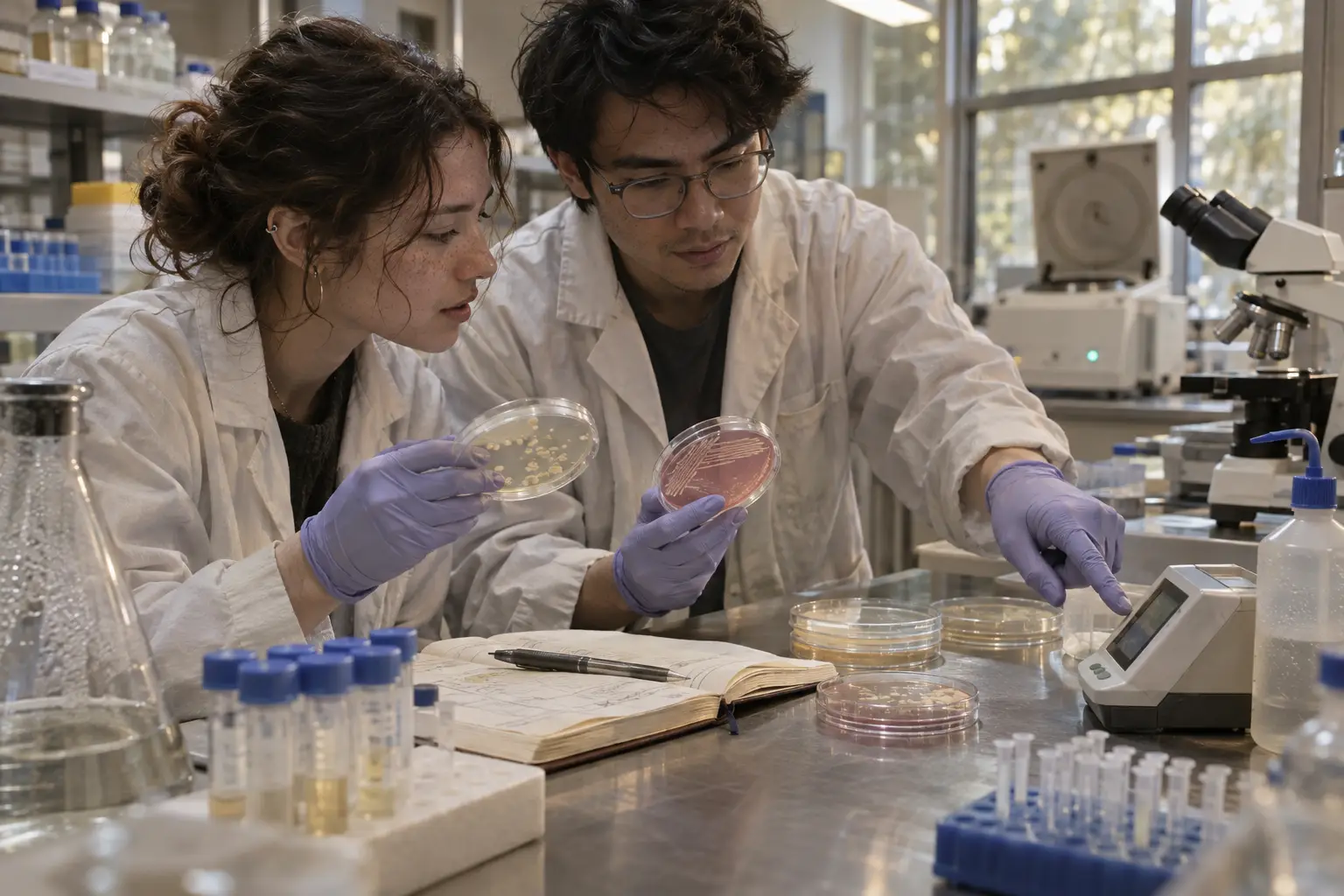
Synthetic biology is the design and engineering of biological systems for a practical goal. For decision-makers, the key issue is not only what biology can do. It is also how to judge evidence when the system being tested is alive, changing, and harder to measure than a machine.
Synthetic biology explained in business terms
Synthetic biology matters because it turns living systems into part of the design stack. That changes how leaders think about product development, proof, and risk. A biological system is not just an input. It is an active system with behavior that can shift as conditions change.
For founders and executives, that means the field is as much about decision quality as scientific ambition. A strong result may still be incomplete. A roadmap may look sound while resting on measurements that only describe a temporary state.
Biology as a design and production system
In plain language, synthetic biology treats biology as something teams can design toward an outcome. That outcome might relate to health, food, materials, agriculture, climate, or industrial production. The point is practical use, not science for its own sake.
Still, living systems do not behave like fixed parts on a factory shelf. They respond, adapt, and vary. That makes them powerful, but it also makes them harder to manage with simple product logic.
A useful mental shift helps here. Do not ask only, "Can we build this?" Ask, "What kind of evidence would show this works under real conditions?" That question usually leads to better planning much earlier.
Why measurement shapes strategy and trust
Measurement often becomes the hardest part because leaders want clean answers from changing systems. The National Institute of Standards and Technology puts the issue plainly: "Unlike static materials, biological systems and processes can be difficult to measure because they are always changing" (NIST).
That single point affects more than lab work. It shapes product claims, milestone reviews, investor updates, quality checks, and public messaging. If your measurement captures a moving target, then confidence has to be stated with care.
Many teams miss this at first. They treat one strong reading like a fixed spec. In practice, one reading may only show what happened under those exact conditions at that exact time. Over time, the signal may change, and the meaning of the data may change with it.
Comparing engineered life with software and steel
Synthetic biology differs from software and steel in one core way: the thing being built with can change while you measure it. That is why direct comparisons often fail. Familiar operating habits from digital products or traditional manufacturing do not always transfer well.
Plenty of leaders know how to assess a code release or a material test. Biology asks for a different reflex. You need to ask what changed between observations, not just whether the latest test passed.
Static inputs versus adaptive living systems
A static material usually supports repeatable testing under similar conditions. Biology complicates that expectation. NIST notes that biological systems and processes are difficult to measure because they are always changing (NIST). So variation may reflect the system itself, not simple error.
That does not make biological evidence weak by default. It means evidence needs context. Timing matters. Conditions matter. Method matters too.
Consider a hypothetical operator comparing two supply paths. One uses conventional manufactured inputs. The other depends on a living process. The second path may offer real promise, but it also asks for tighter interpretation before large commitments are made.
Evidence standards for AI and technology claims
Leaders often borrow proof standards from software or AI without noticing it. That is risky. Digital systems can be messy in their own way, but many outputs are easier to reproduce once conditions are set. Biology tends to resist that neatness.
So the better question is not whether synthetic biology is less valid than software-based innovation. It is not. The better question is whether your evidence standard fits the type of system you are judging.
We have seen a common pattern across emerging technology work: more data does not always mean more clarity. If measurements lack context, added volume can create false confidence instead of sharper judgment.
Where it fits across markets and missions
Synthetic biology fits where organizations need new ways to make or improve things tied to life systems and physical production. That includes sustainability goals, social impact work, and purpose-driven business models where outcomes matter beyond short-term efficiency.
The strategic value depends on fit. Biology should solve a real problem that other tools cannot solve well enough, or cannot solve responsibly enough under the same constraints.
Use cases in sustainability and social impact
This field gets attention in areas where resources, waste, resilience, or human well-being are central concerns. That is one reason it shows up so often in conversations about climate-linked production, food systems, health-related products, and new materials.
Even so, mission fit does not remove the need for discipline. A purpose-led story can become fragile if claims outrun proof. Good intent never substitutes for clear measurement.
A stronger approach is simple, and often overlooked. Separate promise from proof at every stage. Say what has been observed. Then say what still needs testing over time before broader claims make sense.
Fit with growth strategy and purpose-driven business
For growth strategy, synthetic biology works best when leaders treat uncertainty as part of planning rather than a flaw to hide. That affects timelines, partner selection, funding logic, brand language, and internal reporting habits.
One practical filter helps: ask whether your team is prepared to document context around every major result. If not, trust can erode later when others ask how the measurement was taken and what it truly represents.
That discipline matters most in sensitive categories such as health, food systems, environmental outcomes, and industrial applications with public-facing claims. If you are weighing those choices now, A Beginner's Guide to Business Liability Insurance Basics can help frame the strategic questions clearly across growth, communication, digital execution, and purpose-driven business design.
A thoughtful partnership starts with better questions than "Did it work?" Ask what was measured, when it was measured, and under which conditions it held up. Ask how honestly that confidence can be communicated now. That is the level where good science becomes sound strategy.
What leaders should ask before scaling
Before scaling any biological process, leaders should slow down and check the quality of the evidence. The core issue is not excitement. It is repeatability, context, and fit for purpose. If the process cannot be explained clearly, measured carefully, and monitored over time, then scale may create more risk than value.
This is where synthetic biology often separates into two tracks: the scientific track and the operational track. A team may have a real technical breakthrough but still need stronger controls, clearer documentation, and better decision rules before it can support broader use.
Questions about repeatability and context
A useful review starts with a few direct questions. What was measured? Under what conditions? How often was the result repeated? What changed between runs? These are plain questions, but they protect against overreading early data.
Context also includes who performed the measurement and how the method was defined. If the method shifts, the result may shift too. That is why biological claims should be read with the process behind them in mind.
Questions about risk and communication
Communication matters as much as lab work when a company speaks about living systems. Public claims, investor updates, and partner materials should reflect what is known, what is likely, and what still remains uncertain.
That standard helps avoid confusion later. It also builds trust with people who want the facts, not a polished but vague story. In synthetic biology, clear language is not a nice extra. It is part of responsible leadership.
You Might Also Like
- A Beginner's Guide to Crypto Staking Basics
- How Real Estate Listing Photos Works
- A Beginner's Guide to Crypto Exchange Basics
Need help turning this into a plan?
Gray Group International works with leaders who want to move from reading about this topic to doing something about it. Knowing the right approach is only the start; the harder part is building the team, the process, and the decisions that actually shift results inside your own organization. That second part is where most of the value sits, and it is the part we help with every day.
Discover more insights in Future, our full collection of articles on this topic.
Join Disruptors Digest
Insights for a future worth creating. Sustainability, lifestyle, business, and beyond.
Gray Group International is a growth studio helping businesses attract, convert, and retain customers. Our consulting arm, gardenpatch, offers hands-on playbooks and strategy sessions.
