-01.svg "GGI main logo")


By: Tiago Santana - Founder & CEO, Gray Group International • Serial entrepreneur and growth strategist who has built and scaled multiple companies across technology, media, and consulting. Expert in growth strategist and editorial voice for a global think tank building companies that advance the human experience
A factory can look busy and still bleed value through scrap, delays, and avoidable rework. The same is true in offices, warehouses, and digital teams. Resource efficiency gives leaders a clearer way to spot waste early, cut hidden costs, and make the same work with less strain on people and systems.
For many leaders, that is the real question. Is resource efficiency just another word for sustainability, or can it change how a business runs? In practice, it is a management discipline. It helps an organization create the same or greater value with fewer wasted inputs, less operational drag, and fewer unwanted effects across products, facilities, suppliers, and systems.
A product company, for example, may miss margin targets while also facing pressure to cut waste. Those problems are often linked. The choices behind packaging, scheduling, maintenance, and procurement can affect both cost and waste at the same time. When teams treat them as separate issues, they miss the chance to improve both.
Resource efficiency and the real cost of waste
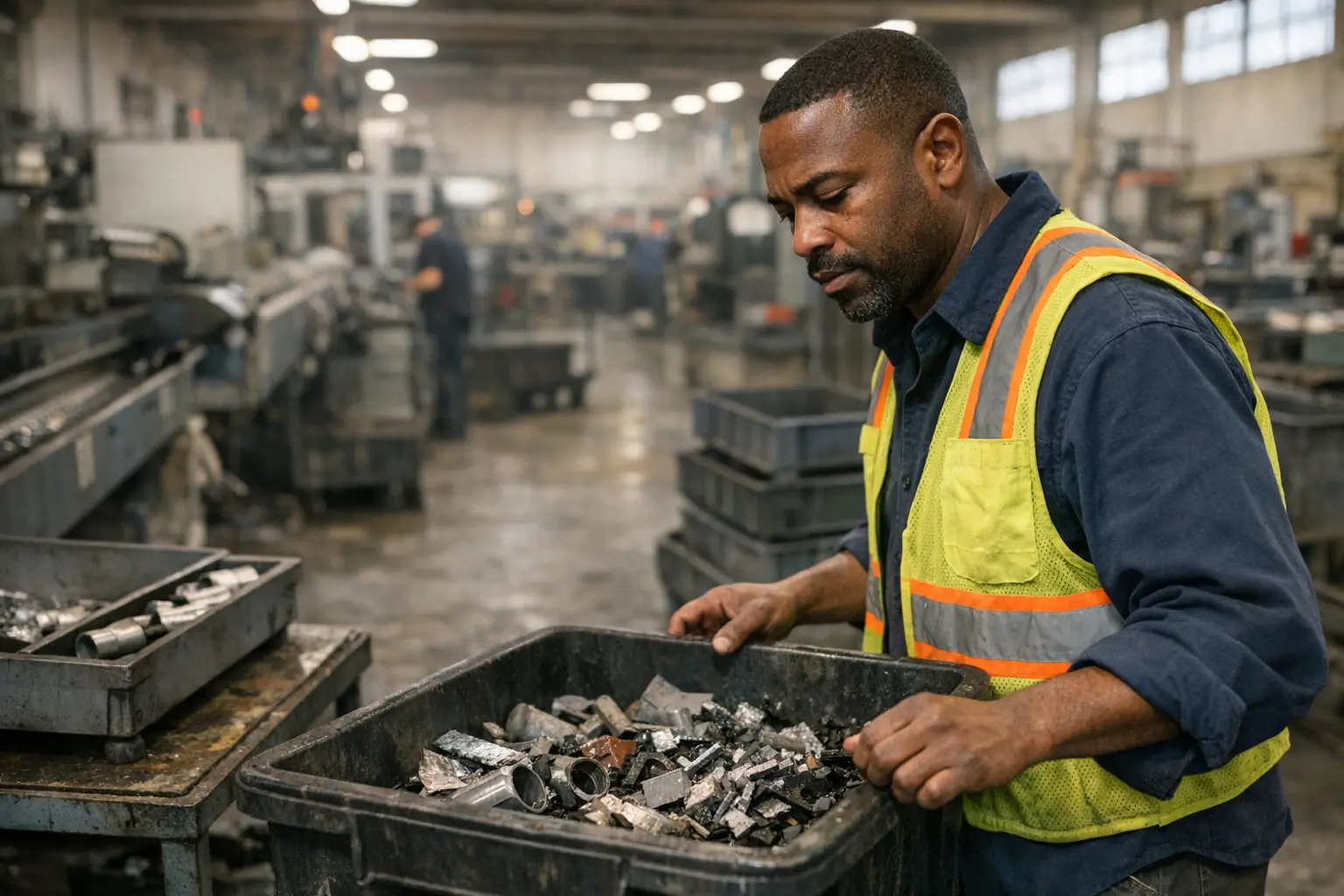
Waste is not only an environmental concern. It also shows up in rework, stock loss, avoidable downtime, overbuying, rushed shipping, excess packaging, and early asset replacement. Once you look at resource flows instead of slogans, the issue becomes practical fast. The losses are often hidden inside normal work, which is why they can last for years without being fully challenged.
Many teams do not struggle because they care too little. They struggle because the topic sounds broad and abstract. That vagueness pushes people toward visible actions while larger losses remain inside procurement rules, maintenance routines, or product specs that no one has revisited in years.
How waste reveals cost risk and weak design
Waste is often a signal before it becomes a line item. If one process uses more material than expected, something upstream may be off. Specs may be too loose. Equipment may drift out of calibration. Training may be uneven. A supplier input may not match what production assumed.
Consider a company that tracks total material use by site but not by product line. On paper, performance looks stable. In reality, one format creates repeat scrap during changeovers, and another drives returns because packaging fails under normal handling. Aggregated data hides both problems. That is why mature teams start with hotspots. They ask where materials enter, where energy spikes rise, where water use jumps, and where assets fail early.
Where it shapes product ops and digital systems
Resource efficiency is not confined to factories or utilities. Product teams shape it through durability, repair options, packaging choices, modular parts, and assumptions about how long something should last. Operations shape it through scheduling, maintenance, inventory rules, and transport patterns. Digital teams matter too.
Poor data quality creates poor allocation. If meters are missing or categories are too broad, teams cannot see where waste starts. If software reports monthly totals but not process-level variation, managers learn too late to prevent losses. Better visibility helps only when someone owns the response. Sensors without process change become decoration (expensive decoration), and dashboards without accountability just show waste more clearly.
Does efficiency always require major investment?
Usually not at first. Many gains come from better discipline before major capital enters the picture. Teams often find value in fixing leaks, tightening maintenance routines. Improving settings. Revising purchasing specs. Reducing over-processing. Or changing default replacement habits. Big investments can matter later. But early progress usually depends more on focus than spend.
If you do not know where the biggest losses sit. Expensive upgrades can lock in the wrong priorities. Start with what the current system is already telling you poorly. The key is to look for repeated loss. Not just visible breakdowns.
Low-lift gains across energy,
Water. And materials.
The easiest wins are often hidden inside ordinary operations. Compressed schedules can lead to rushed changeovers and unnecessary scrap. Weak storage practices can damage inputs before they reach production. Water use may climb because no one notices a slow failure until billing cycles roll up the problem too broadly.
Small fixes work best when they solve recurring waste at its source. Do not just tell staff to be careful. Change the setting. Spec. Routine. Or trigger that creates repeat loss in the first place. For many organizations. Benchmarking similar lines or sites helps expose odd variation quickly. One team's normal may be another team's leak. That comparison often reveals where to ask better questions before spending on new equipment.
What to measure before you spend more
Before buying new tools. Define what “less waste” means in your own operation. That might be less scrap. Fewer defects. Lower return rates. Or fewer shutdowns tied to material shortages. Without that clarity. Teams tend to buy fixes for symptoms rather than causes. A clean baseline matters more than a flashy dashboard. It tells you whether change helped or simply moved loss somewhere else.
Measure at the level where decisions happen. If managers own lines. They need line data. If supply teams control inputs. They need supplier-level detail that shows variation over time. A useful check is simple: can someone act on this number this week? If not. It may be interesting but not operationally useful yet.
Put these ideas to work
Every organization meets a question like this one differently, which is why Gray Group International never arrives with a ready-made answer. We spend the first session understanding your constraints, your numbers, and the decisions already on the table. From there we propose a handful of concrete moves and help you judge which of them are worth your time and money. You make the call; we make it easier.
Discover more insights in Sustainability, our full collection of articles on this topic.
Join Disruptors Digest
Insights for a future worth creating. Sustainability, lifestyle, business, and beyond.
Gray Group International is a growth studio helping businesses attract, convert, and retain customers. Our consulting arm, gardenpatch, offers hands-on playbooks and strategy sessions.
