-01.svg "GGI main logo")


By: Tiago Santana - Founder & CEO, Gray Group International • Serial entrepreneur and growth strategist who has built and scaled multiple companies across technology, media, and consulting. Expert in growth strategist and editorial voice for a global think tank building companies that advance the human experience
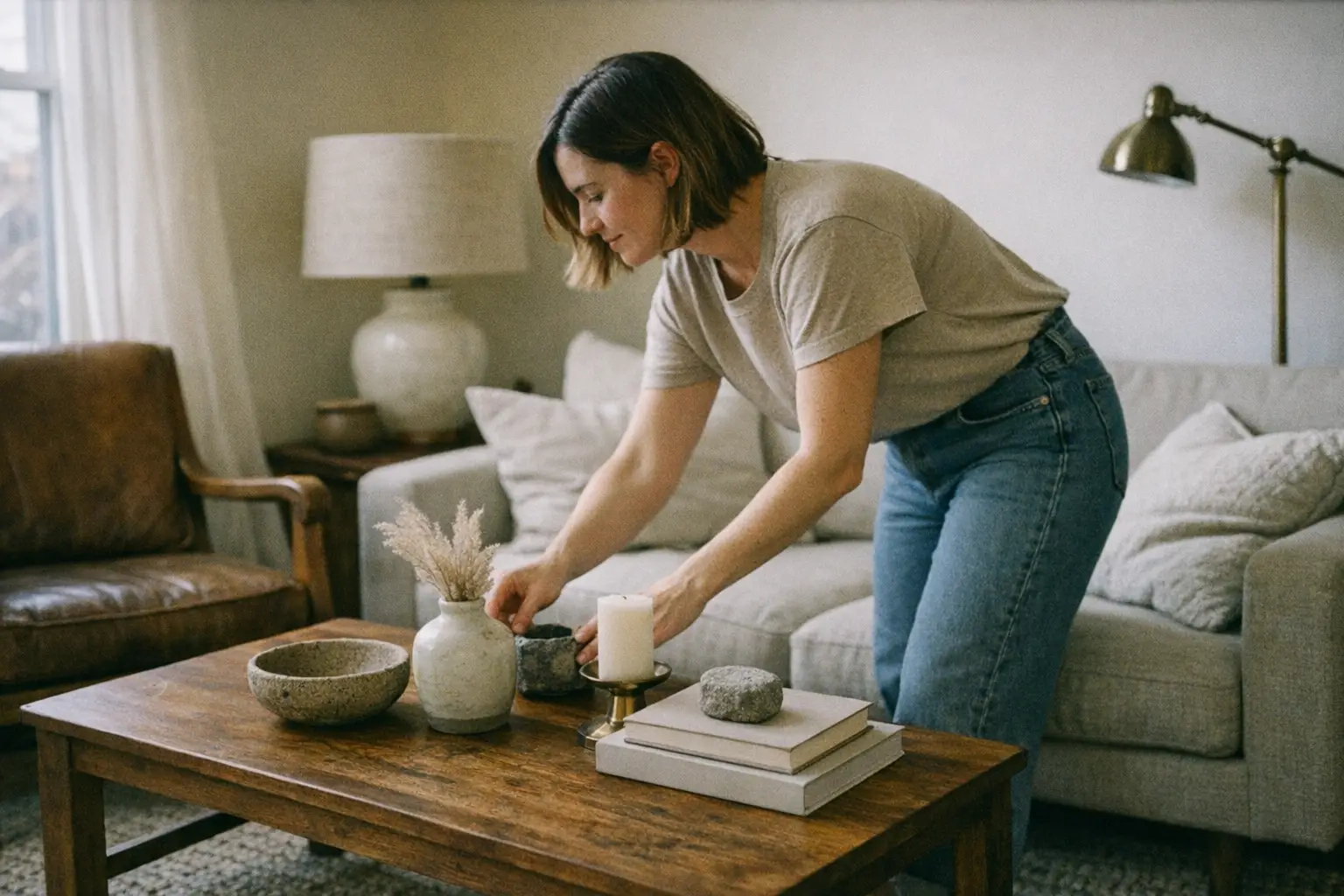
Can you mix styles in home decor without making a room feel messy? Yes, you can, but only if the differences have structure. Mixed rooms work when you decide what stays constant and what is allowed to vary. The same logic applies in digital products. A person wants a room that feels intentional.
A product team wants recommendations that feel right, not just related.
Mixing styles in home decor: the real choice
Most people think the choice is between matching and not matching. It is not. The real choice is whether you are combining pieces with a rule or just collecting things you happen to like. A room usually feels off for a simple reason: each object may work alone, but no clear relationship ties them together.
That relationship can come from shape, tone, scale, texture, or visual weight. You do not need sameness. You need enough continuity that contrast feels chosen. Generic decor advice often stops at taste, but taste is not the same as structure. Structure gives the eye a path, so the mix feels calm instead of random.
Start with one constant
Pick one feature that stays steady across the room. It might be color family, wood tone, metal finish, or a repeated shape. That constant acts like a thread. Without it, even good pieces can fight each other.
A simple test helps here. Place two items side by side and ask whether they share at least one visible trait. If they do not, the pair may still work, but the rest of the room has to do more heavy lifting. Most people get better results by limiting variation first, then adding contrast on purpose.
Use contrast with limits
Contrast gives mixed rooms energy, but too much of it breaks the room apart. A soft chair beside a hard-edged table can work well because the difference is clear and contained. The problem starts when every surface competes for attention at once.
Think of contrast as spice, not the meal itself. One strong difference can sharpen everything else around it (and make ordinary pieces look better). Too many strong differences leave no resting place for the eye.
What makes a mixed room feel intentional
Intentional rooms usually share an underlying rhythm. That rhythm may show up in repeated curves, similar proportions, or a shared level of formality. The items do not need to look alike. They only need to belong to the same conversation.
This is where many rooms fail after a shopping trip. People buy objects one by one and hope they will assemble into a whole later. Often they do not. Better results come from deciding what role each piece plays before it enters the room.
Balance matters more than perfect matching
Balance is about distribution, not symmetry alone. A heavy sofa on one side can be balanced by two lighter chairs or by art with strong visual weight on the other side. The goal is stable tension, not mirror-image design.
You can check balance by stepping back and looking for crowded corners or empty zones that feel accidental. If one side dominates too much, reduce nearby noise or repeat one element elsewhere in the room.
Repetition makes variety easier to read
Repetition helps mixed styles feel organized because it teaches the eye what to expect. A repeated black frame, for example, can tie together very different objects without flattening them into sameness.
That method also works at smaller scales than most people expect. Repeating line thickness, fabric texture, or even lamp height can create order inside a varied space. The mix still feels alive, but it no longer feels loose.
Why this logic shows up beyond interiors
The same principle appears in digital design systems and search tools that blend different inputs into one result set. In one interior design search study on arXiv, blending improved the average style similarity score of retrieved items by 11% (What Looks Good with my Sofa: Multimodal Search Engine for Interior Design, arXiv). That does not mean rooms should become uniform. It does suggest that mixing works better when some shared signal is preserved.
Another arXiv paper on MixStyle says it fits into mini-batch training perfectly and is extremely easy to implement (Domain Generalization with MixStyle, arXiv). Different field, same lesson: variation becomes useful when it sits inside a simple rule set.
What product teams can learn from rooms
A product team should ask the same question a homeowner asks: what stays fixed? In design terms, that could be layout rules, color hierarchy, or recommendation logic that keeps results coherent while still offering range.
If Gray Group International works with teams building digital products like Chamomile or Web Society projects through Lattice Brands, this kind of thinking matters early (before choices harden into clutter). The point is not to remove variety. It is to make variety legible so users trust what they see.
A practical check before you call it done
Look at the whole arrangement and ask three questions: what repeats here, what contrasts here, and what connects those two things? If you cannot answer all three quickly enough to explain them to someone else, the room may need one more anchor piece or one less competing detail.
That check keeps style mixing from becoming decoration by accident (which happens more often than people admit). When structure leads first and taste follows second,the result usually feels calmer and more durable.
Work with Gray Group International
Gray Group International works with leaders who want to move from reading about this topic to doing something about it. Knowing the right approach is only the start; the harder part is building the team, the process, and the decisions that actually shift results inside your own organization. That second part is where most of the value sits, and it is the part we help with every day.
Discover more insights in Lifestyle, our full collection of articles on this topic.
Join Disruptors Digest
Insights for a future worth creating. Sustainability, lifestyle, business, and beyond.
Gray Group International is a growth studio helping businesses attract, convert, and retain customers. Our consulting arm, gardenpatch, offers hands-on playbooks and strategy sessions.
