-01.svg "GGI main logo")


By: Tiago Santana - Founder & CEO, Gray Group International • Serial entrepreneur and growth strategist who has built and scaled multiple companies across technology, media, and consulting. Expert in growth strategist and editorial voice for a global think tank building companies that advance the human experience
National Geographic reports that slow, steady hobbies like knitting may offer brain benefits, including reduced stress and better long-term memory. It quotes Pascual-Leone saying, "If you've never knitted, then knitting is perfect" (National Geographic, 2025-07-29). That should make leaders pay attention. A practice often dismissed as quaint may be doing serious work.
In This Article:
- Knitting as Work, Not Just Pastime
- Health, Focus, and Social Value
- Sustainable Knitting Habits That Reduce Waste
- Clear Steps for Beginners and Teams
- Using Knitting in Community and Business Settings
- You Might Also Like
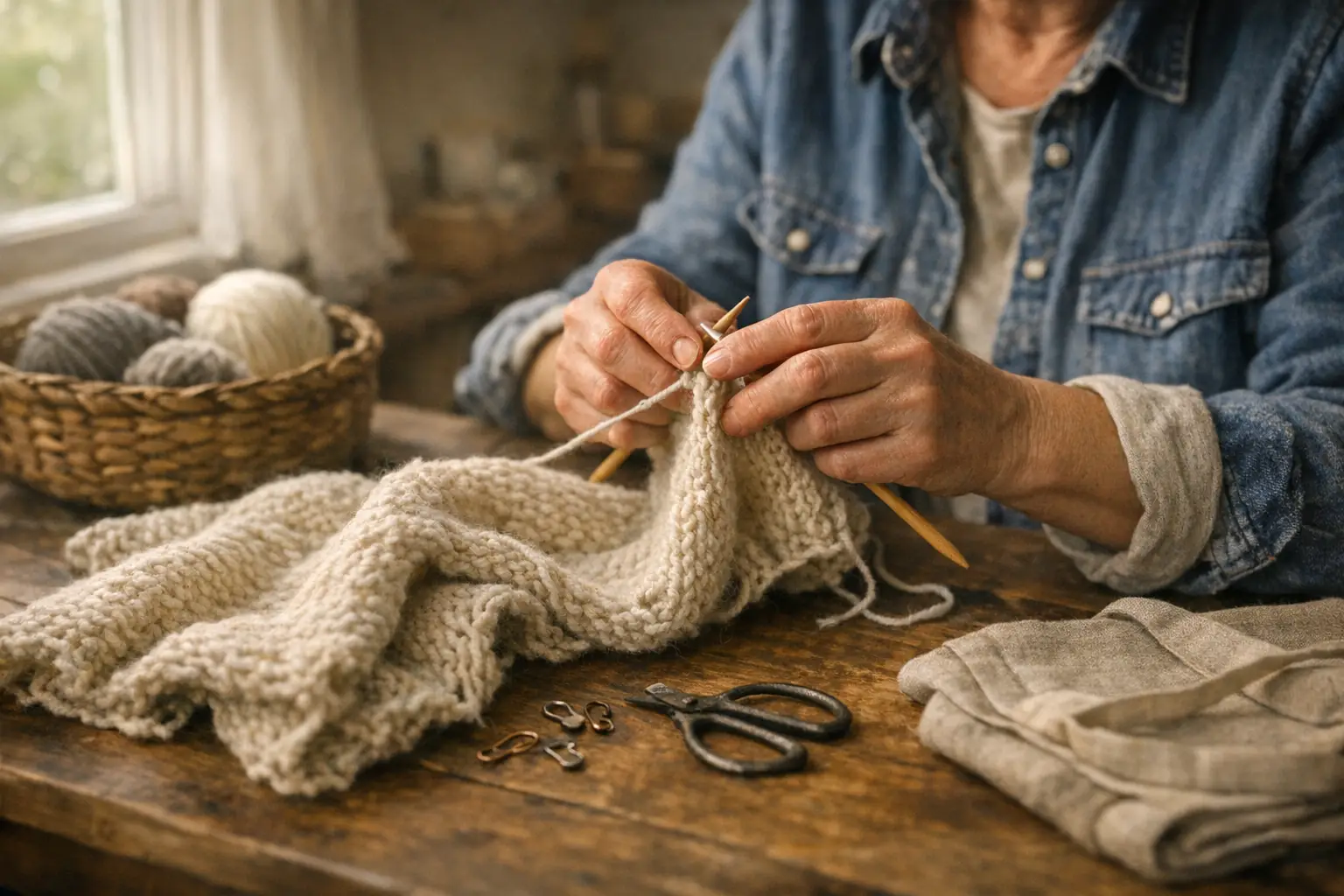
Knitting is more than a hobby. It can be a craft, a wellness practice, a community tool, and a form of economic activity. Which frame fits depends on your goal: personal restoration, public programming, education, or product making.
Knitting as Work, Not Just Pastime
That claim misses a basic fact. Knitting creates real goods, uses skill, and sits inside formal economic categories. For a founder or program designer, that changes the conversation from "nice pastime" to small-scale production with human value.
The deeper lesson is about respect. Once a practice enters public classification and institutional use, it deserves clearer language. You do not need to romanticise knitting to take it seriously. You just need to describe what it does.
How ISIC 1730 frames knitting as economic activity
The United Nations Statistics Division makes this plain through ISIC class 1730. It states that the class includes activities in which products are actually knitted or crocheted "whether by hand or with more or less complicated machines" (United Nations Statistics Division). That wording matters because it places handcraft and machine production on the same formal map.
For leaders, the point is not only taxonomy. Classification shapes how people talk about work. If you are building around craft education, maker commerce, or local production, knitting can be framed as recognised economic activity rather than only leisure.
Why small-scale making still matters
Small-scale making teaches a discipline many digital teams forget. Progress comes loop by loop. You cannot rush structure without weakening the result. That mindset travels well into product design, team learning, and service building.
A simple craft also reveals what people need now: attention they can hold, effort they can see, and outcomes they can touch. In most cases, that is why knitting keeps returning in modern life. It offers proof that useful work does not have to be loud to matter.
Health, Focus, and Social Value
Knitting's value often reaches past the object itself. It can support calm focus, social connection, and shared meaning without needing expensive equipment or expert status on day one.
That is why it appears in both media coverage about wellbeing and public programs built for participation. Those two signals together are rare. They suggest knitting works across private life and civic life.
What research says about stress and memory
National Geographic says that slow and steady hobbies "may offer surprising brain benefits, including reduced stress and better long-term memory" (National Geographic, 2025-07-29). The wording is careful, and that is useful. It points to possible benefits without turning knitting into medicine.
That restraint matters for credible communication. If you are explaining why knitting deserves space in a workplace or community setting, do not overclaim. Say what the source supports: repetitive making may help attention settle and may support memory over time (National Geographic). That is enough to justify interest.
Pascual-Leone's quote adds another useful angle: "If you've never knitted, then knitting is perfect" (National Geographic, 2025-07-29). Beginner access is part of the value. A practice does not help many people if entry feels exclusive.
How group stitching builds connection
Public institutions already use stitch-based gatherings as social infrastructure. The U.S. National Park Service invites people to "Bring your own knitting, crochet, or embroidery project, or start a new one" in its Sit and Stitch with a Ranger program (U.S. National Park Service). That format lowers pressure fast.
Another National Park Service event goes further on belonging. It describes Stitching Stories as "a community-powered knitting circle inspired by Freedom 250" (U.S. National Park Service). In other words, knitting can hold conversation, history, and public interpretation at once.
That is the strategic insight many generic craft pages miss. A stitch circle is not only about yarn. It is a low-barrier container for intergenerational learning and shared presence. Consider a team shaping museum events, employee wellbeing sessions, or neighbourhood programming. Knitting works because people can talk while their hands stay busy.
Sustainable Knitting Habits That Reduce Waste
It is not too niche if your aim is better choices at human scale. Knitting makes material decisions visible. People see fibre use, waste, time input, and repair potential more clearly than they do in most mass consumption systems.
That visibility is useful for any leader working on sustainability culture. You do not need sweeping claims to learn from it. A small practice can still train better habits around care, patience, and material awareness.
Where material choices support sustainability
The strongest claim here is a modest one: clearer choices usually lead to more thoughtful use. Knitting slows down acquisition because making takes time. That alone can change how people value an object.
Adaptability also helps reduce waste in creative systems. The U.S. National Park Service notes that its Cape Hatteras Lighthouse pattern includes "a color chart that could be adapted to other crafts like crochet and cross stitch, or even mosaic or gem painting" (U.S. National Park Service). Reuse across formats means ideas travel farther before they are discarded.
For organisations, that is an instructive model. Build assets that flex across contexts instead of designing everything from scratch each time. One pattern becoming many outputs is a craft example of practical resource thinking.
How reuse and repair improve the finish
Knitting also supports repair in a direct way. A loose seam can be mended. A worn cuff can be rebuilt. A project can be adjusted before the whole piece is finished. That kind of control is hard to match in many products made far from the user.
Better finish often comes from slower judgment, not more speed. When makers can revisit a piece, they notice fit, tension, and texture earlier. That makes the final object more usable and often longer lasting.
For people outside craft, the lesson is simple. A process that leaves room for correction tends to produce cleaner results. That is true in knitting and in many other kinds of work.
Clear Steps for Beginners and Teams
Knitting follows an honest sequence: start small, repeat well, fix errors early, then build complexity. Many teams need that reminder. Change usually fails when leaders skip basic capability and chase scale before structure exists.
A beginner knitter learns by doing simple rows first. Strong organisations often grow the same way. They choose one clear practice, make it repeatable, then expand carefully. The appeal is not nostalgia. It is operational truth dressed in wool.
A simple learning path for new knitters
The first step is to choose a basic project with a small goal. Scarves, dishcloths, and practice squares all help people learn without too much pressure. That keeps the task visible and the progress easy to measure.
Next, focus on consistency. Even stitches matter more than fancy techniques in the beginning. New knitters who repeat the same motion learn faster because their hands and eyes can track change. The result is not only a finished item but also a better sense of control.
What knitting teaches about process and patience
Knitting rewards patience because errors show up in the fabric. That may sound strict, but it is useful. A project teaches people to notice problems early and correct them before they spread.
This is why knitting fits so well into education, wellbeing, and community work. It offers a clear path from effort to result. People can see what they have done, row by row, and that makes learning feel real.
Using Knitting in Community and Business Settings
If you are building programs around wellbeing, community participation, or purpose-driven commerce, this kind of framing helps you avoid shallow storytelling. You can position knitting accurately as restorative practice, shared activity, or recognised making work without stretching the evidence.
Gray Group International exists to help build companies that improve the human experience in the digital age through brands such as gardenpatch, Chamomile, Petunia, Web Society (through Lattice Brands), and Impact Mart. If you are shaping an initiative where human attention, community design, or purposeful growth matters, schedule a strategy conversation. Let's explore how stronger framing can turn a simple practice into meaningful action.
Where knitting fits in programs and products
Knitting can fit into many settings because it is flexible and low barrier. A workplace may use it for relaxation sessions. A museum may use it for public interpretation. A local shop may use it to support maker identity. The same practice can serve different goals without losing its core value.
That flexibility makes it a useful example for planning. When one activity works across audiences, it can support both participation and consistency. It is a small craft with a broad reach.
Why better framing helps projects last
Good framing keeps expectations realistic. It helps people understand what knitting can do, and what it cannot do. That protects trust and makes the work easier to sustain.
The best use of knitting is often the simplest one. It gives people a way to make, think, and connect at the same time. That is enough to make it worth serious attention.
You Might Also Like
- A Beginner's Guide to Crypto Staking Basics
- Income Tax Deductions Explained
- A Beginner's Guide to Credit Card Rewards Basics
- A Beginner's Guide to Checking vs Savings Account
- A Beginner's Guide to Budgeting for Irregular Income with a Savings Account
Ready to act on this?
A single conversation with Gray Group International is often enough to see which parts of what you have just read apply to your situation and which do not. We start with where you are today, not with a framework, and we leave you with a short list of practical next steps you can run on your own or with us. There is no deck and no pitch, just a working session with people who have done this before.
Discover more insights in Lifestyle, our full collection of articles on this topic.
Join Disruptors Digest
Insights for a future worth creating. Sustainability, lifestyle, business, and beyond.
Gray Group International is a growth studio helping businesses attract, convert, and retain customers. Our consulting arm, gardenpatch, offers hands-on playbooks and strategy sessions.
