-01.svg "GGI main logo")


By: Tiago Santana - Founder & CEO, Gray Group International • Serial entrepreneur and growth strategist who has built and scaled multiple companies across technology, media, and consulting. Expert in growth strategist and editorial voice for a global think tank building companies that advance the human experience
Should you handle a home decor project yourself, or could a small change create bigger problems than it solves?
Yes, many DIY decor updates are worth doing yourself. Start with low-risk changes that don't disturb old painted surfaces. If your home may be pre-1978, pause before sanding, scraping, or drilling into painted areas. And if comfort is the goal, focus on stopping heat buildup before it starts.
Who benefits most from DIY home decor guide choices?
DIY decor helps most when home needs to do more than look good. For many people, it now has to support work, rest, and recovery in the same week. That changes what counts as a smart project.
A busy founder doesn't need a craft hobby. They need a room that reduces friction. A calmer layout, better light control. Less visual clutter can support clearer thinking without turning the house into a renovation site.
Better focus and recovery in hybrid routines
Hybrid life has raised the stakes for ordinary rooms. A dining table might become a desk by day and family space by night. In that setting, decor isn't just style. It's operating design for daily life.
Small shifts often do the most. Move seating to reduce glare during calls. Use softer materials to cut echo. Create one closed-storage zone so work tools disappear after hours. Those choices don't just change appearance. They help your brain switch modes faster.
We've found that strong rooms usually do two jobs well: they support attention when needed, then make it easier to recover later. That often comes from subtraction, not more stuff.
Sustainability gains from low waste materials
A thoughtful DIY approach can also reduce waste. Start with what you already own. Reuse furniture in new positions. Add removable layers before replacing built-in elements. That's often cheaper, but the deeper value is restraint.
Many decor mistakes come from solving discomfort with more buying. Yet a room can feel better through editing, repairing, and rebalancing what is already there. That mindset fits people who care about purpose, not just appearance.
Material choice still matters. Favor durable textiles, simple storage pieces, and updates you can reverse if they don't work. In most cases, low-waste choices also keep your options open.
Which updates improve style without adding risk?
The safest decor upgrades are non-invasive ones. If a project leaves existing painted surfaces alone, risk usually stays lower. That includes layout changes, textiles, lighting swaps within your skill level, and movable storage.
Trouble starts when "decor" quietly becomes renovation. Prep work is where many people misjudge scope. Sanding trim for a cleaner finish may sound minor. In an older home, it may not be minor at all.
Paint and textiles with safer decision making
Paint can refresh a room fast, but old surfaces change the math. The U.S. Environmental Protection Agency says, "Any renovation, repair, or painting (RRP) project in a pre-1978 home that has lead-based paint can easily create dangerous lead dust" (US EPA).
That means the real question isn't "Do I want a new color?" It's "Will this project disturb existing paint?" If the answer is yes, caution comes before style ambition.
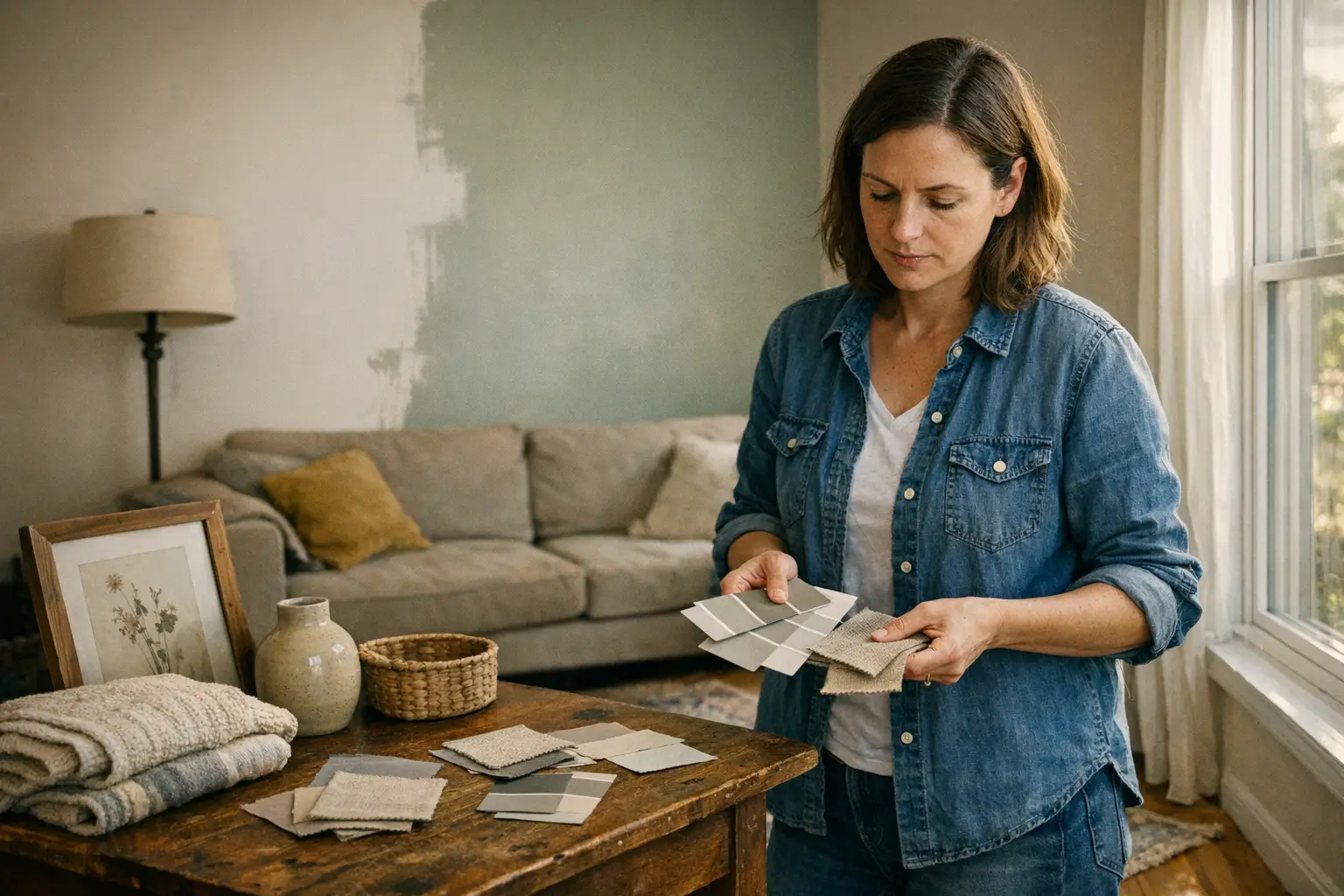
Textiles are often the smarter first move. Curtains can soften light and reduce glare. Rugs can warm up sound and feel underfoot. Bedding and throws can shift mood without touching risky surfaces at all.
Layout changes that support digital transformation
Layout is one of the most overlooked upgrades because it feels too simple to matter. Yet room position shapes light exposure, screen visibility, movement flow, and stress levels all day.
Consider a hypothetical home office in a heat-prone room. Turning a desk away from direct afternoon sun may improve comfort faster than adding more gear later. Moving reflective decor away from bright windows can also reduce glare during calls.
Good layouts support how digital life really works now. You need charging access where you sit. You need background control for video meetings. You need enough open space to shift between focused work and ordinary living without constant reset.
Storage upgrades for calmer daily operations
Storage works best when it removes decisions from your day. Open shelves can look good, but they also keep every object visible. Closed storage often does more for calm because it lowers visual noise quickly.
Use storage to support behavior, not just tidiness. Place baskets where clutter forms naturally. Add concealed bins near entry points or desks (where paper tends to gather). Keep daily tools close and low-value visual clutter out of sight.
That approach helps rooms stay useful under pressure. A beautiful system that takes too much effort won't last long for busy people.
Is it worth doing yourself or bringing in help?
Use one filter first: will this project disturb painted surfaces? If no, you're likely looking at true decor work. If yes, especially in an older home, you're moving into a different category with higher stakes.
Comfort goals need the same honesty. Some improvements are squarely DIY-friendly. Others depend on building-level changes that call for outside help or at least better planning.
Older painted surfaces and when caution matters
Older homes deserve slower decisions. The US EPA recommends homeowners hire lead-safe certified contractors for all RRP projects in pre-1978 homes because DIY projects can easily create dangerous lead dust (US EPA).
That's not alarmism. It's basic risk management.
The agency also says its Steps to Lead Safe Renovation, Repair and Painting pamphlet gives contractors and homeowners information on how to plan for and complete renovation, repair, or painting projects in pre-1978 housing and child-occupied facilities using lead-safe work practices (US EPA). That document was updated in March 2026 (US EPA).
So where's the line? Repainting over stable surfaces is one thing to think through carefully. Sanding peeling trim, scraping old paint, or opening up wall areas is another level entirely. If you're unsure whether your idea counts as simple decor or RRP work, treat uncertainty as a warning sign.
Comfort upgrades that prevent heat buildup first
Most people respond to heat too late. They cool the room after it gets uncomfortable instead of asking why it overheats in the first place.
National Geographic puts it clearly: "Instead of cooling the hot air in your house, try to prevent heat from accumulating in the first place" (National Geographic). That's the right frame for DIY comfort choices too.
Start with shading logic and room timing. Notice which spaces heat up by hour, not just by season. Use window coverings that manage brightness and sun exposure well enough for actual use patterns (not just looks). Move work zones away from peak solar gain if you can.
Some ideas sit beyond normal decor scope but still matter conceptually. National Geographic notes that roofs covered in gardens and foliage can help keep buildings cool and reduce the need for air conditioning (National Geographic). Most readers won't build a green roof themselves. The deeper lesson is upstream thinking: prevent heat gain before trying to fight it later.
Put these ideas to work
If you are weighing how these ideas fit into your plans, you do not have to work it out alone. Gray Group International partners with founders, executives, and boards who want a clear-eyed read on their options and a realistic path to results. We will tell you plainly what we would do in your position, including the parts that do not involve hiring us at all.
Discover more insights in Lifestyle, our full collection of articles on this topic.
Join Disruptors Digest
Insights for a future worth creating. Sustainability, lifestyle, business, and beyond.
Gray Group International is a growth studio helping businesses attract, convert, and retain customers. Our consulting arm, gardenpatch, offers hands-on playbooks and strategy sessions.
