-01.svg "GGI main logo")


By: Tiago Santana - Founder & CEO, Gray Group International • Serial entrepreneur and growth strategist who has built and scaled multiple companies across technology, media, and consulting. Expert in growth strategist and editorial voice for a global think tank building companies that advance the human experience
Are standard audits enough to rule out child labor in your supply chain? Usually, no. If your view stops at payroll records and factory floors, you'll miss where risk often hides.
A credible response starts with better definitions, then moves to sharper risk priority. Global estimates show the scale is still severe. Our World in Data says 138 million children were in child labor in 2024, using UN definitions applied to household survey data. It also reports 54 million children were in hazardous work. For leaders, that means one thing: low visibility is not low risk.
What child labor elimination in supply chains means
Child labor elimination in supply chains means finding, preventing, and remediating harmful child work tied to what your company buys. That includes direct suppliers, subcontracted work, farms, workshops, and home-based production. A narrow factory-only view won't do the job.
For executives, this is not just a values statement. It sits inside procurement design, legal exposure, operating discipline, and brand trust. UNICEF's position is plain: companies need business accountability across supply chains to help end exploitation and protect children (UNICEF).
UN definitions and the measurement gap
The headline global figure has a specific meaning. Our World in Data explains that 138 million children were in child labor in 2024 by applying UN rules to household survey data (Our World in Data). That method is not the same as a company audit program.
That gap matters more than many teams admit. A supplier may report no cases. An audit may find nothing. Yet those tools measure only what they can see. Household surveys capture a broader social reality. So a corporate "zero findings" result doesn't prove zero harm. It often proves only that your lens was narrow.
Why hazardous work drives risk worldwide
Not all child labor carries the same immediate danger. Under the same UN-based breakdown, 54 million children were in hazardous work (Our World in Data). That should shape how leaders set priorities.
In practice, hazardous work deserves first attention because the risk of direct harm is higher. If your team has limited time or budget, don't spread effort evenly across every supplier on paper. Go deeper where dangerous tasks or unsafe conditions are most likely. Breadth has value, but triage matters more when safety is at stake.
How risk hides in sourcing systems
Risk often hides outside formal employment records. That's why many well-meaning programs miss it for years while still passing routine checks.
Our World in Data notes that most working children are unpaid family workers. That single fact changes the whole operating model for due diligence. If most affected children are not on payrolls, then payroll checks alone can't tell you much about total exposure.
Subcontracting, farms, and home-based production
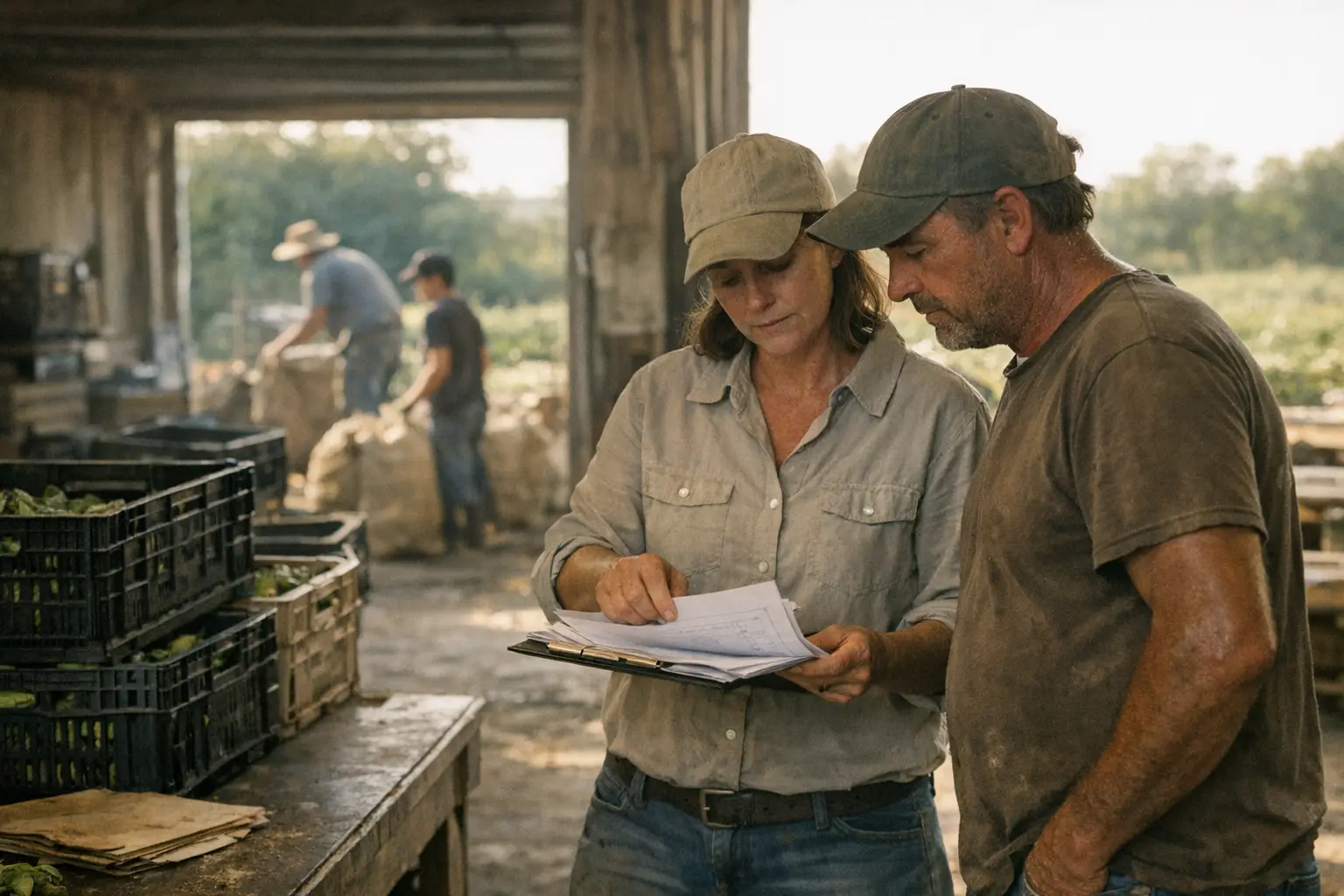
Consider a buyer with clean reports from direct suppliers but weak visibility upstream. On paper, everything looks controlled. In reality, some production steps may sit with farms, family workshops, or home-based overflow work that never appears in standard records.
That's where many detection systems fail. Unpaid family work can sit beyond formal contracts and beyond normal HR controls. So leaders need to ask different questions. Where does overflow go during peak demand? Who performs seasonal tasks? Which inputs rely on informal production? Those questions often reveal more than another form does.
Procurement design, growth strategy, and blind spots
A company doesn't need bad intent to create bad pressure. Tight lead times, thin margins, rushed forecasts, and weak escalation paths can push strain down the chain fast. Vulnerable households often absorb that strain off-book.
Seen this way, child labor risk is not only a compliance issue. It's also a design issue inside growth strategy and procurement choices. If buyers reward speed without checking how work gets done, policy statements won't hold up for long. Values usually fail where incentives say otherwise.
AI and technology for traceability and limits
Technology can help spot patterns faster. It can map supplier relationships, flag missing data, and show where visibility drops between tiers. Used well, digital tools make it easier to focus human review where risk is most likely.
Still, tools have limits (and they're easy to oversell). They don't replace judgment on hidden household work or local conditions that never enter a database. A dashboard can organize signals. It can't by itself confirm whether children are doing harmful work out of sight. Treat technology as support for accountability, not proof of it.
What credible action changes for leaders
A credible response changes how decisions get made before a crisis hits. It sets clear terms for procurement teams, clear escalation routes for suspected harm. Clear standards for what happens after discovery.
This is also where many firms split into two weak camps. One treats the issue as paperwork. The other treats it as abstract ethics with no operating plan attached. Neither works well when certainty is incomplete and real people may be at risk.
Remediation, accountability, and social impact
Remediation should stop harm safely without pushing it into darker corners of the chain. Immediate supplier termination may sometimes be necessary, especially where danger is acute or legal duties require it. But termination alone can also hide the issue rather than solve it.
A stronger response asks four practical questions at once: Is there immediate danger? What protection is needed now? What legal duties apply? How will recurrence be reduced? UNICEF's call to enforce laws and business accountability across supply chains points toward this combined approach (UNICEF). Law matters. So does operational follow-through.
Ready to take your child labor elimination in supply chains strategy further?
Strategy is a set of choices, not a document. Gray Group International works alongside leadership teams to make their choices on child labor elimination in supply chains explicit, test them against the evidence, and turn them into commitments the whole organization can see and track. Whether you need a second opinion or a partner for the long haul, the first step is the same: an honest conversation about where you stand.
You Might Also Like
If you want more practical guidance after this topic, these related pieces cover common tax questions and filing basics in plain language. They are useful next reads if you are sorting out deductions, self-employment filing, or paycheck withholding.
- A Beginner's Guide to Income Tax Deductions
- The Complete Guide to Income Tax Deductions
- Understanding Income Tax Deductions
- A Beginner's Guide to Tax Filing for the Self Employed
- Tax Withholding on a Paycheck: A Step-by-Step Guide
Discover more insights in Sustainability, our full collection of articles on this topic.
Join Disruptors Digest
Insights for a future worth creating. Sustainability, lifestyle, business, and beyond.
Gray Group International is a growth studio helping businesses attract, convert, and retain customers. Our consulting arm, gardenpatch, offers hands-on playbooks and strategy sessions.
