-01.svg "GGI main logo")


By: Tiago Santana - Founder & CEO, Gray Group International • Serial entrepreneur and growth strategist who has built and scaled multiple companies across technology, media, and consulting. Expert in growth strategist and editorial voice for a global think tank building companies that advance the human experience
Key takeaways
- Strong brunch restaurants win on habit, not just attention. Guests return because the place feels distinct and dependable.
- A focused menu often works better than a huge one. It keeps the concept easier to remember and easier to run.
- Weekend service shapes the whole experience. Small delays, refill gaps, and weak pacing stand out fast.
- National Geographic’s Des Moines example shows how a house specialty can help a spot stay relevant over time.
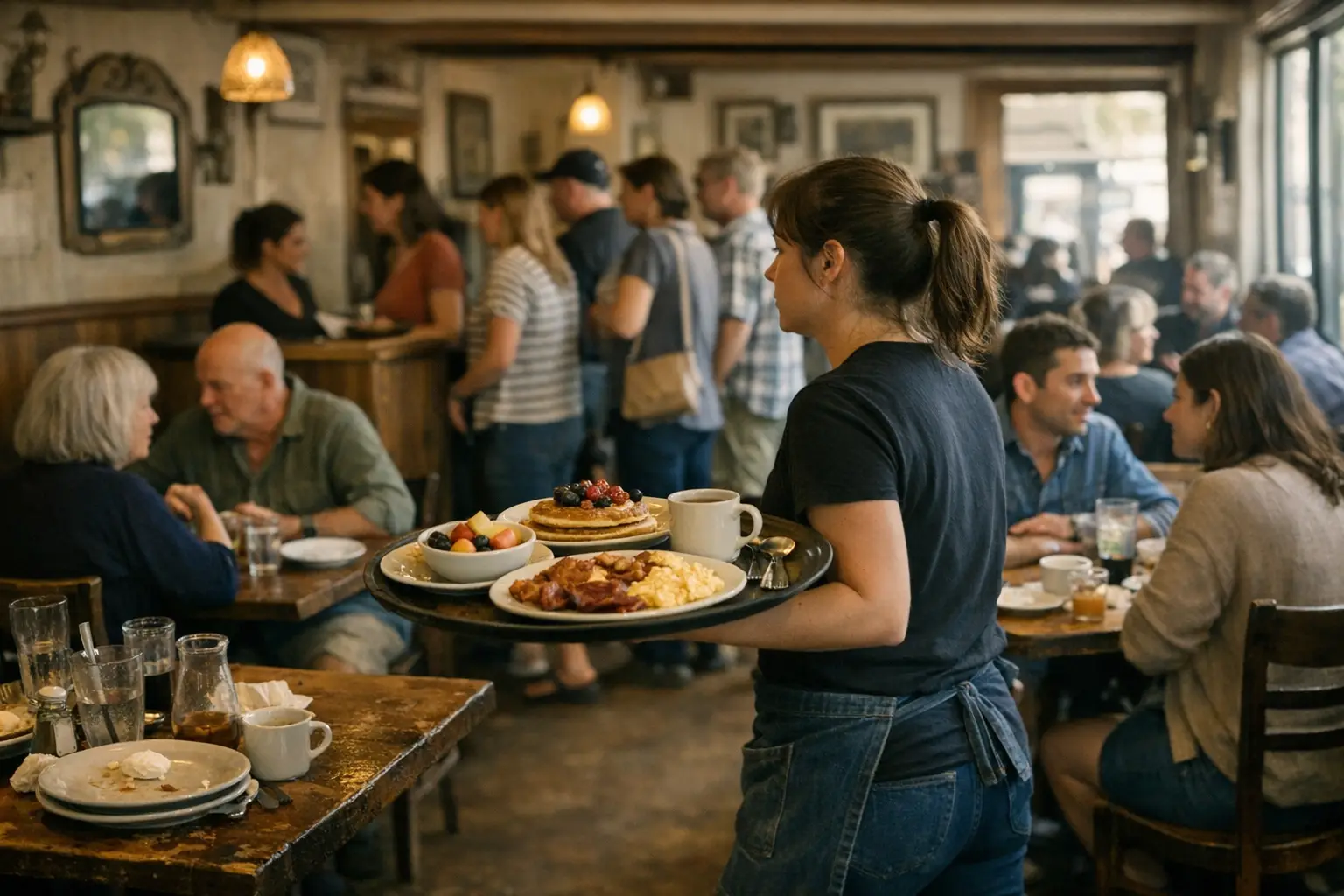
Picking a brunch restaurant looks easy until the tradeoffs show up. A founder may care about concept strength. An executive may need a calm client setting. A local diner wants food that feels worth the wait. The best brunch places hold a clear identity while still handling busy weekend rushes well.
What shaped the early brunch restaurant era?
In short: Brunch grew because it solved a social need.
Brunch grew because it solved a social need. People wanted a meal that fit slower mornings and longer conversations. That made brunch less about the clock and more about permission to linger.
Many operators still miss that point. They treat brunch like breakfast served later, then wonder why the room feels flat. Guests want comfort, choice, and enough flexibility to match appetite and mood. Those needs shape the whole offer.
How did breakfast and lunch merge?
Breakfast brought familiar staples and routine. Lunch brought broader choice and a more social frame. Brunch sat between them, so diners could get both comfort and range without needing a formal setting.
From a practical view, that mix does more than fill seats. It creates an occasion people can use for different reasons at once. One table may want fuel for the day, while another wants time to talk without hurry.
Why did weekends become the main ritual?
Weekends gave brunch its natural home because people had more time and fewer constraints. Brunch fits leisure better than speed, so guests stay longer and often order more slowly.
That shift raises pressure on operators. Weekend demand lands in short windows, so delays feel bigger and small mistakes stand out faster. A common mistake is underplanning the rush and hoping charm will cover weak pacing.
TL;DR: Brunch became popular because it served both comfort and social time. Weekends matter because they match how people actually use the meal.
What makes a brunch restaurant memorable?
In short: A memorable brunch restaurant gives people one clear thing to repeat in their heads later.
A memorable brunch restaurant gives people one clear thing to repeat in their heads later. That might be a signature dish, a strong house drink, or a very specific sense of place. Without that hook, even good food can blur together after one visit.
National Geographic’s report on Waveland in Des Moines shows this well. Though Des Moines has many trendy brunch spots, Waveland remains one of the places people go for weekend brunch (National Geographic, 2007-10-24). Its fiery Bloody Mary is the house specialty, with horseradish and spicy pickled okra (National Geographic, 2007-10-24).
Why do signature items matter so much?
Signature items give guests something easy to remember and recommend. They also help staff steer ordering during busy periods, which matters when service speed starts to slip.
What many decision-makers don’t realize is that a signature item does two jobs at once. It creates brand memory for guests and operational focus for the kitchen. That combination is harder to copy than décor or plating style.
Can atmosphere carry the whole concept?
Atmosphere helps, but it rarely carries everything by itself. Guests notice lighting, noise level, seating comfort, and whether the room feels intentional. Still, if the food has no clear point of view, visual polish only goes so far.
In our experience, weak concepts often rely on mood shots instead of menu depth. That works until competitors offer similar photos with better execution. Then the original place loses its edge quickly.
TL;DR: Memorability usually comes from one repeatable idea guests can name later. A signature item plus steady service beats style alone in most cases.
Learn About Gray Group International Services
How do strong brunch operations handle weekend pressure?
In short: Strong brunch operations plan around peak demand instead of reacting to it late.
Strong brunch operations plan around peak demand instead of reacting to it late. That means pacing orders well, protecting table flow, and making sure high-demand items do not slow everything else down.
A common mistake is assuming weekend crowds are only about volume. They are also about timing pressure. Guests expect faster decisions during shorter visits, which makes small bottlenecks feel larger than they would on weekday meals.
What should operators check before opening?
Operators should check menu complexity first. Too many options can slow ordering and stress the kitchen during rushes unless prep systems are very tight.
They should also check whether signature dishes actually hold up under pressure (not just in quiet hours). If one item drives demand but slows service too much, it may help marketing while hurting guest flow.
A second check involves staffing rhythm. The goal is not simply having more people present; it is putting support in the right places at the right times so refills, clearing tables, and ticket flow stay smooth.
How do guests judge value during brunch?
Guests judge value through a mix of wait time, food clarity, service pace, and whether the visit felt purposeful enough to justify it all again later.
That is why some places can stay popular even with strong competition nearby (like Waveland in Des Moines). The visit offers something repeatable and recognizable rather than just another stylish meal (National Geographic, 2007-10-24).
TL;DR: Weekend execution matters because brunch demand comes fast and compresses mistakes into short windows. Operators should watch menu load, staffing rhythm, and service pace together.
What separates trend-led spots from lasting ones?
In short: a trend-led spot often wins attention first but struggles to explain why it exists six months later.
A trend-led spot often wins attention first but struggles to explain why it exists six months later. Lasting places usually give guests one or two fixed reasons to come back again without needing constant reinvention.
A common mistake is chasing novelty every season while losing the parts customers already trust. Constant change can confuse regulars if there is no stable core underneath it.
Ready to act on this?
Gray Group International works with business leaders to turn insight into action. Reading about the right approach is one thing; building the team, processes, and decisions that actually move metrics inside your specific organization is another. That second part is where most of the value lives, and it's where we focus.
Every engagement starts with a working session, not a deck. We listen to where you are today, look at the data and constraints with you, and propose the next two or three concrete moves that we believe will produce the most leverage. You leave with a plan you can act on whether or not you continue to work with us.
What should owners measure informally?
Owners should listen for what guests repeat after leaving: the dish name they mention most often, whether they describe service as smooth or rushed, and whether they talk about coming back soon without prompting.
Those are simple checks (not fancy ones), but they reveal whether memory formed around something solid. If people cannot describe what makes the place different without pointing at décor first, positioning may be too thin.
A final practical test is whether staff can explain the concept in one short sentence without drifting into vague language. If they cannot do that easily, guests usually cannot either.
Tl;dr: Long-lasting brunch spots usually have local fit plus one clear reason people return. Trend alone fades when there is no stable core underneath it.
Discover more insights in Blog, our full collection of articles on this topic.
Join Disruptors Digest
Insights for a future worth creating. Sustainability, lifestyle, business, and beyond.
Gray Group International is a growth studio helping businesses attract, convert, and retain customers. Our consulting arm, gardenpatch, offers hands-on playbooks and strategy sessions.
