-01.svg "GGI main logo")


By: Tiago Santana - Founder & CEO, Gray Group International • Serial entrepreneur and growth strategist who has built and scaled multiple companies across technology, media, and consulting. Expert in growth strategist and editorial voice for a global think tank building companies that advance the human experience
Key takeaways
- Air pollution isn't only a big-city issue. Transported smoke, ozone, and fine particles can affect places far from obvious sources.
- Clear skies do not prove safe air. Harmful exposure can remain invisible.
- Some groups face higher risk. The U.S. Environmental Protection Agency says children, older adults, and people in areas with high pollution are especially susceptible.
- Small changes matter when they lower repeated exposure during daily routines.
Air pollution is outdoor air contamination that can harm health. Leaders should treat it as a human risk issue, not just an environmental one. The World Health Organization estimates ambient outdoor air pollution caused 4.2 million premature deaths worldwide in 2019, while Our World in Data says air pollution has contributed to one in ten deaths globally in recent.
Air pollution exposure is not just an urban issue
Air pollution moves across borders, neighborhoods, and county lines. That means exposure can affect people far from traffic corridors or factory zones. For everyday life, the important question is not just where pollution starts. It is where it travels, who is there, and when people are outside the most. That simple shift helps turn a vague concern into a practical plan.
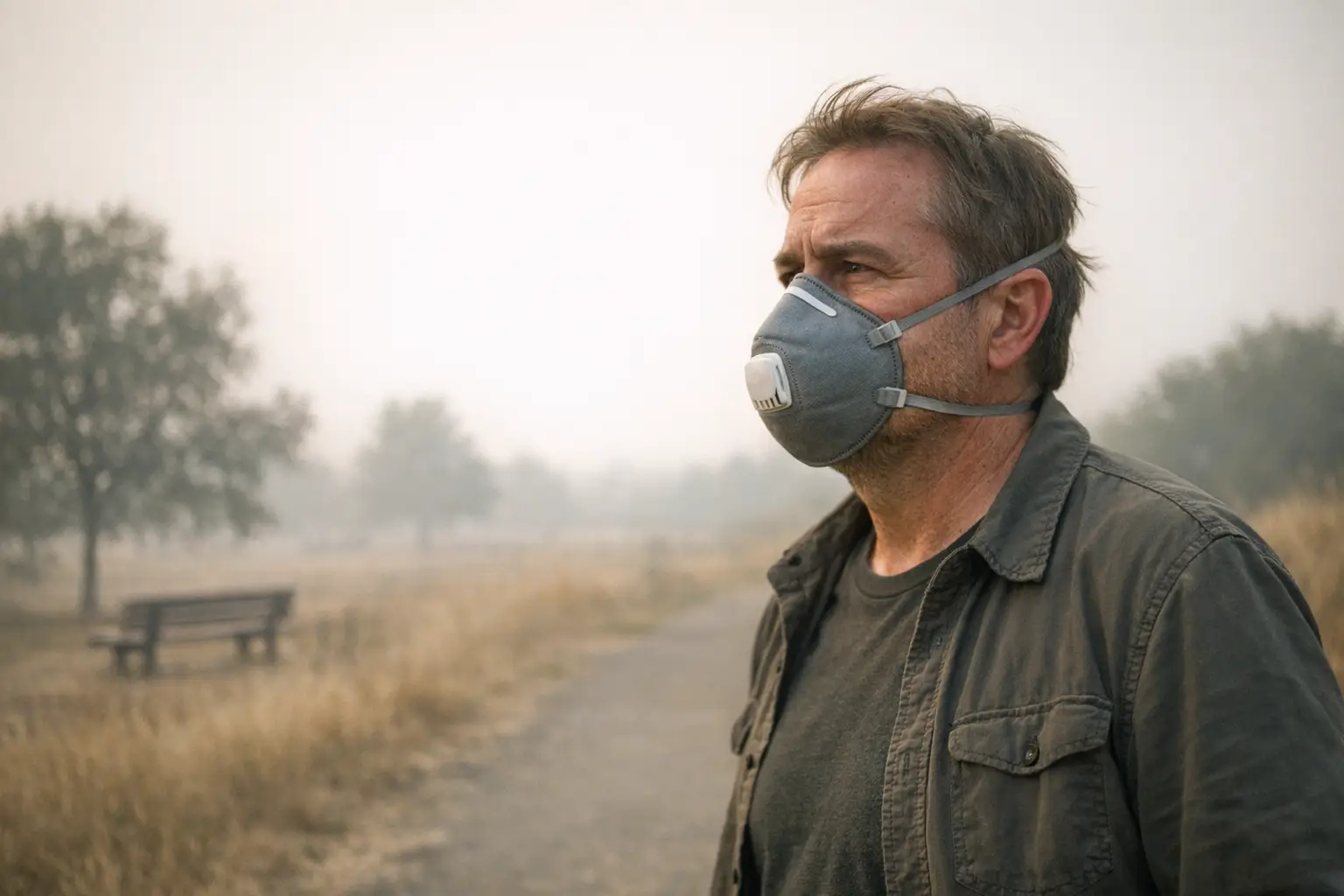
A clear-sky day can also create a false sense of safety. Some pollutants are not easy to see, and they may still affect breathing and overall health. If you manage a team, a school program, or a public-facing site, build your plan around exposure pathways, not just a map label like city or rural.
Do rural areas face particulate matter too?
Yes. Rural areas can still face fine particles from wildfire smoke, dust, or pollution that travels from other regions. Fewer local sources do not mean low exposure all day or all year. People who work outdoors for long hours may face meaningful risk even when the local air looks clean.
A useful habit is to ask what reaches the area, not only what sits nearby. If a site has weak monitoring or seasonal smoke, do not assume it is safe just because the road is quiet. Rural settings need the same kind of attention to air quality as busy cities do.
How ozone and wildfire smoke travel far
Some pollutants travel long distances, and that makes location alone a weak shield. Wildfire smoke can spread far from the fire itself. Ozone also forms and moves in ways that can affect areas with no obvious source nearby. This matters for commuting, outdoor work, and events that depend on stable conditions.
A simple rule helps: if the air is changing across a region, your site may be part of the same event even if it is not near the source. That is why planning should include alerts, timing changes, and backup options for outdoor activity.
Is it true that healthy adults have little to worry about?
No. Healthy adults may handle some exposures better than others, but that does not make the issue minor. The World Health Organization says ambient outdoor air pollution caused 4.2 million premature deaths worldwide in 2019. That scale shows the problem is not limited to people with known medical conditions.
It is also a mistake to split people into only two groups: vulnerable and everyone else. Risk is not equal, but broad harm still matters. For daily life, the practical goal is not to panic. It is to lower repeated exposure where you can and to protect those with less margin first.
Why cardiovascular health is affected too
Air pollution is often discussed as a lung issue, but the harm is broader than that. Fine particles and other pollutants can affect the heart and blood vessels as well. That is one reason the public health burden is so large. Exposure can influence whole-person health, not only breathing comfort.
For decision-makers, this means air quality should be part of routine health planning, not an afterthought. If your work involves outdoor activity, commuting, or customer-facing spaces, reduce exposure when conditions worsen and use clear communication so people know what to do.
Which groups face higher exposure risk?
The U.S. Environmental Protection Agency says children, older adults, and people living in areas with high levels of air pollution are especially susceptible. That should shape who gets extra protection first when choices are limited. Averages can hide the people most likely to be harmed sooner.
In practice, start with the people who have the least margin for repeated exposure. That may include children on school routes, older adults with more time outdoors, or workers who spend long shifts near traffic. Good planning begins with those groups, not with the average case.
Clear air is not always safe air
Clear-looking air can still carry harmful pollution. Visual checks are poor evidence because many pollutants are too small to see. If a day looks calm, people often relax too soon. That is understandable, but it can lead to weak choices at the exact time when measured data would be more useful.
This is why air quality planning should rely on indicators, not appearances. If you are deciding whether to hold an outdoor event, send children outside, or plan a long walk, check the data first. A visible blue sky does not answer the health question on its own.
Can PM2.5 stay harmful when skies look blue?
Yes. Fine particles can remain harmful even when the sky looks clear. PM2.5 is small enough that it may not create obvious haze, yet it can still matter for repeated exposure. That is why the absence of visible smog does not mean the absence of risk.
A simple habit can help: use measured air quality before outdoor exercise or long errands when conditions may change. If your area has poor monitoring, treat that as a reason for more caution, not less.
Talk to Gray Group International
Gray Group International works with business leaders to turn insight into action. Reading about the right approach is one thing; building the team, processes, and decisions that actually move metrics inside your specific organization is another. That second part is where most of the value lives, and it's where we focus.
Every engagement starts with a working session, not a deck. We listen to where you are today, look at the data and constraints with you, and propose the next two or three concrete moves we think will make the biggest difference. You leave with a plan you can act on whether or not you continue to work with us.
Everyday habits can reduce exposure
You cannot remove all outdoor pollution from modern life, but you can reduce avoidable exposure. That matters because fatalism leads to inaction. Small changes may not solve the larger problem, yet they can lower repeated contact over time. For most people, that is a meaningful health gain.
The goal is to make safer choices easier. Adjusting timing, changing routes, and checking air quality before outdoor plans are all simple steps. They do not require perfect data. They only require a habit of asking.
Discover more insights in Blog, our full collection of articles on this topic.
Join Disruptors Digest
Insights for a future worth creating. Sustainability, lifestyle, business, and beyond.
Gray Group International is a growth studio helping businesses attract, convert, and retain customers. Our consulting arm, gardenpatch, offers hands-on playbooks and strategy sessions.
