-01.svg "GGI main logo")


By: Tiago Santana - Founder & CEO, Gray Group International • Serial entrepreneur and growth strategist who has built and scaled multiple companies across technology, media, and consulting. Expert in growth strategist and editorial voice for a global think tank building companies that advance the human experience
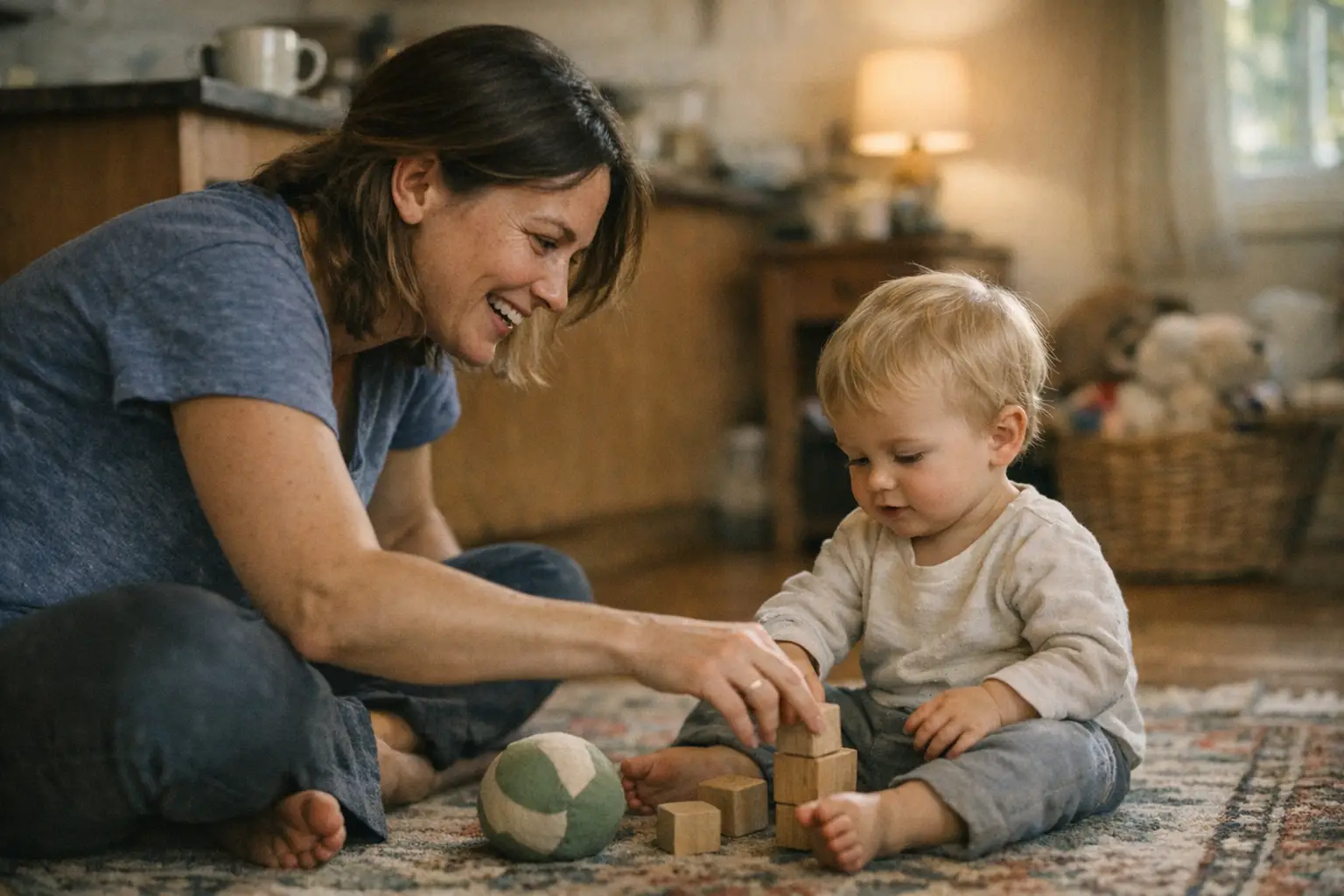
Play is not a bonus for young children. It is part of the work of growing up. The strongest public guidance treats talk, movement, attention, and safe exploration as daily needs, not extras.
So what should busy adults do? Keep it simple and regular. Build short bursts of talk, movement, and shared attention into ordinary routines, protect time from screens early on, and aim for safe play that fits real life.
Why early play matters now
For many adults, the real problem isn't whether play matters. It's how to act on that belief when work is loud, time is thin, and devices are always nearby. That tension matters because young children don't learn in neat categories. They learn through repeated contact with people, places, and routines.
The World Health Organization ties healthy development to "nurturing care," which includes good health, safety. Opportunities for learning from birth (WHO). That framing is useful because it moves play out of the toy aisle and into daily life. A walk counts. A conversation counts. So does a few minutes of floor time with full attention.
WHO and UNICEF guidance in plain language
The clearest standard is refreshingly basic. WHO says to talk to a newborn and young child, give them full attention, spend as much time as possible doing enjoyable things, and encourage play, learning, and physical activity (WHO). That is not fancy advice. It's a daily operating system.
WHO also gives hard limits where many parents want clarity. Infants should be physically active every day for at least 30 minutes, according to WHO. Older young children should be physically active for 180 minutes throughout the day, also according to WHO. For screens, WHO advises avoiding time sitting watching a screen for children less than 2 years and limiting screen time to 60 minutes for older children.
UNICEF adds an important point often missed in productivity-minded homes. In the first two years, babies don't just benefit from adult interaction. They need it. UNICEF says the child has two ways to play early on, and one depends on "the adult's action," including talking, singing, laughing, and telling stories (UNICEF).
Attention beats apps in the first two years
That idea changes the usual question from "Which content is good?" to "Who is with the child?" For babies and very young toddlers, adult presence does more than entertain. It helps shape language, trust, rhythm, and early curiosity.
A busy parent may worry that ten distracted minutes equals ten focused minutes. Usually it doesn't. Full attention matters because it turns small moments into learning moments. A diaper change with eye contact and song can do more than passive media in the background (even if the media seems educational).
UNICEF also notes that these early forms of play prepare children for symbolic play after age two (UNICEF). In plain terms, pretend play later starts with human connection now. That's why conversation at home isn't soft advice. It's developmental groundwork.
Building Parenting and Family into daily life
You do not need a separate block called "enrichment" to support healthy development. WHO says play should be built into daily routines and that children need safe spaces to explore, engage, and be creative (WHO). That means routine is not the enemy of play. Done well, it's where play lives.
This matters for adults with heavy calendars. If you wait for ideal conditions, you may miss the windows you already have. Five minutes while getting dressed. Ten during dinner prep. A short dance break between calls. Children respond to repetition more than novelty.
Routines that support growth strategy at home
Think in anchors, not events. Morning can include naming objects while dressing a baby or walking like animals with a toddler from bed to bathroom. Mealtime can include counting bites or describing colors and textures. Bedtime can include storytelling without a book if that's what the night allows.
One reason this works is that routines reduce decision fatigue for adults too. You don't have to invent new games each day. You repeat simple patterns until they become part of family culture. Over time, children come to expect talk, movement, songs, laughter, and safe exploration as normal parts of home life.
For indoor days, UNICEF makes a helpful point: there are many ways to play and learn right at home (UNICEF). Limited space doesn't end the job. It simply changes the format toward movement breaks, hide-and-seek with objects, imitation games, songs with actions, or storytelling on the floor.
Simple moments over more stuff and more screens
Many households overestimate gear and underestimate presence. Expensive toys can be fine, but they are not the core input named by WHO or UNICEF. Human interaction is.
National Geographic puts it simply: play boosts learning skills, increases social skills, and can help ease stress (National Geographic). Notice what isn't required in that claim: more purchases. In most cases, what helps most is not adding products but removing friction between child and caregiver attention.
Consider a hypothetical founder finishing messages at home while a toddler circles nearby. One choice is to hand over a screen by default. Another is to set a ten-minute timer first for blocks on the floor, hallway races, or naming household objects together. The second option won't solve every evening. Still, it protects connection before convenience takes over.
What lasts for families today
Good family systems make clear tradeoffs visible. If young children need movement each day and very limited screens early on (WHO), then every home has to decide what gets protected when schedules tighten. Values show up here faster than intentions do.
That larger view matters beyond one household. Early childhood habits shape how people relate to attention later in life. Families are not just managing bedtime better. They are setting norms about presence, distraction, patience, risk, comfort, and care.
AI and technology boundaries that protect connection
Technology isn't the enemy here. Unexamined use is the problem.
WHO's screen guidance gives families a clean starting line: avoid screen watching for children under 2 years old and limit older children's screen time to 60 minutes (WHO). Use that baseline before debating which app claims educational value or which device feels harmless because it's common.
A practical rule helps: let technology serve adults' planning more than children's passive consumption. Use reminders to prompt outdoor time or story time if needed. Don't let devices replace adult action where UNICEF says adult action matters most in the first two years (UNICEF). If a tool saves time elsewhere in your day so you can be more present later, that's a healthier use case.
Work with Gray Group International
Strategy is a set of choices, not a document. Gray Group International works alongside leadership teams to make their choices on this explicit, test them against the evidence, and turn them into commitments the whole organization can see and track. Whether you need a second opinion or a partner for the long haul, the first step is the same: an honest conversation about where you stand.
You Might Also Like
Discover more insights in Humanity, our full collection of articles on this topic.
Join Disruptors Digest
Insights for a future worth creating. Sustainability, lifestyle, business, and beyond.
Gray Group International is a growth studio helping businesses attract, convert, and retain customers. Our consulting arm, gardenpatch, offers hands-on playbooks and strategy sessions.
