-01.svg "GGI main logo")


By: Tiago Santana - Founder & CEO, Gray Group International • Serial entrepreneur and growth strategist who has built and scaled multiple companies across technology, media, and consulting. Expert in growth strategist and editorial voice for a global think tank building companies that advance the human experience
If you're building a brand, product, or community, the hard part isn't seeing that music matters. It's knowing what to do with that fact. Many leaders still treat music as background culture, when it now shapes discovery, belonging, and attention across borders.
Global music means more than music from many places. It means songs now move through platforms, fan networks, and markets without staying inside one language or country. For leaders, that changes how audience growth, partnerships, and cultural trust work.
Myth: Global music is a niche trend
That idea is outdated. Global listening is now normal behavior, not a side interest for specialists. A listener can hear a local sound in one moment and share it worldwide in the next.
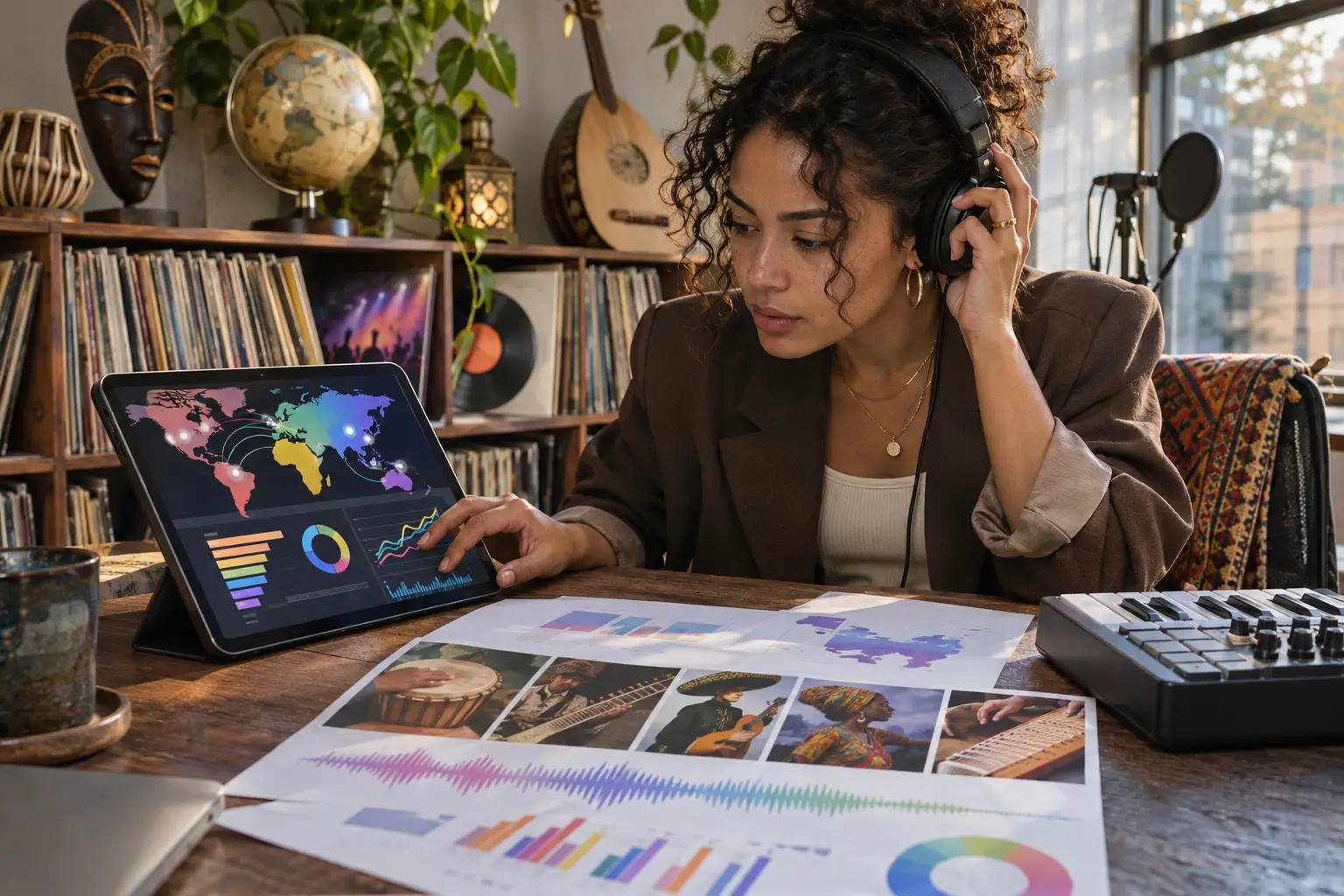
The market data backs that up. IFPI said global recorded music revenues grew 6.4% to reach US$31.7 billion in 2025. The same report said streaming revenues passed US$22 billion and made up 69.6% of global recorded music income (IFPI, Global Music Report 2026). That scale matters because it shows global circulation is built into the business model, not added on later.
A common mistake follows from the niche myth. Leaders assume "global" means broad but shallow appeal. In practice, the opposite is often true. Music travels because it feels real to people first, then portable across contexts second.
Streaming turned local scenes into worldwide markets
Streaming lowered the cost of discovery for listeners almost everywhere. That doesn't mean every song becomes global. It does mean a song no longer needs old gatekeepers to reach people outside its home market.
Consumer behavior shows how deep that shift goes. IFPI found that 73% of people say they listen to music through licensed audio streaming services (IFPI, Global Study, 2023). Once licensed streaming becomes routine, cross-border listening becomes routine too. Discovery stops being tied to local radio, retail shelves, or national media alone.
That changes strategy well beyond the music business. If you run a platform, brand, or community product, you should assume your audience already lives in a mixed cultural feed. Their tastes are shaped by recommendation systems, fandoms, short-form clips, and peer sharing at the same time.
Why non English hits now travel farther
Language still matters. Context still matters too. But language is less of a wall than it used to be because people often connect with mood, rhythm, identity. Social meaning before they translate every word.
A clear signal came from IFPI's report on Rosé and Bruno Mars' "APT." It was named the biggest-selling global single of 2025. IFPI said it was the first time a winning single has featured non-English lyrics (IFPI, 2026). That's not just trivia. It shows multilingual listening has moved closer to the center of mainstream demand.
Founders should read that carefully. The lesson isn't "make everything borderless." The lesson is that specificity can scale when distribution is wide and emotional connection is strong. Generic content often travels worse because it gives people less reason to care.
Is it true that music is just culture,not strategy?
No. Music is culture, but culture shapes hard business outcomes. Sound affects memory, trust, identity, mood, and participation. Those aren't soft extras if your work depends on attention or loyalty.
That's why music belongs in strategic thinking early. If your team waits until campaign launch to think about sound or creator partnerships, you've probably missed the deeper question. What kinds of feeling and belonging does your product invite across different audiences?
Brand identity and community move through sound
Most brands think visually first. Audiences don't always respond that way. People often build attachment through repeated listening habits, shared references, and the sense that "these people get my world."
Consider a hypothetical consumer brand entering several markets at once. If it uses music only as a final ad choice, it may look polished but feel empty. If it treats sound as part of community design from the start, it can create stronger recognition and more honest participation.
Music also carries values fast. A careless use of style can flatten culture into decoration. A thoughtful use can signal respect, curiosity, and point of view without overexplaining itself.
Growth strategy meets platform economics
Music now sits inside platform logic as much as artistic logic. Recommendation systems reward repeat listening signals. Fan communities extend attention spans. Social sharing can turn one moment into many touchpoints across channels.
That means growth teams should study how cultural participation works, not just how impressions work. A song's spread may come from playlists or clips at first. Lasting traction usually depends on whether people make it part of their own identity and routines.
One pattern keeps showing up in digital markets: participation often beats interruption. Brands and products earn more trust when they join existing cultural behavior with care instead of forcing themselves into it.
AI and technology reshape discovery and creation
Technology has widened access to production tools and discovery channels. That's real progress for many creators and audiences. Still, wider access doesn't erase the need for human judgment.
IFPI's 2023 Global Study found 79% agree that human creativity is essential to the creation of music (IFPI, 2023). That matters because audiences are drawing a line. They welcome convenience and innovation, but they don't want meaning stripped out of creative work.
For executives using AI tools, that's the strategic point. Speed helps with testing and scale. Human authorship still anchors trust (especially in culture-led products). If you're designing anything around sound or creators, treat technology as support for expression rather than a substitute for it.
What evidence about global music actually holds up
A few claims are solid enough to guide decisions now. Streaming is dominant in recorded revenue. Licensed streaming is mainstream consumer behavior. Human creativity remains central in public opinion. Non-English songs can win at the highest level of global sales.
Put together, those facts show a system with two forces moving at once. Distribution keeps widening through digital platforms. Meaning still depends on people, context, and authorship.
Sustainability and creator livelihoods across borders
Cross-border reach can open real opportunity for creators. It can also spread value unevenly if rights, credit, pay, or visibility aren't handled well. That's where many purpose-led teams get tested.
A stronger approach starts with simple questions. Who benefits when culture travels? Who gets named? Who gets paid? Which communities are treated as partners rather than raw material? Those questions matter whether you're building a media product or planning a brand collaboration.
Standards can help frame those choices without turning them into slogans. UNESCO cultural frameworks can support thinking about cultural diversity and expression in general terms. Broader responsibility frameworks such as Income Tax Deductions Explained or A Beginner's Guide to Business Liability Insurance Basics can also guide decisions about transparency, labor practices. Community impact when organizations work across borders.
Digital transformation changed distribution at scale
The biggest shift isn't just that more music exists online. It's that distribution now behaves like infrastructure for culture itself (always on, searchable, shareable, recombined). That changes what "market entry" means for creators and companies alike.
IFPI's figures make that plain: streaming accounted for 69 - ?
You Might Also Like
- A Beginner's Guide to Appraisal Gap in Real Estate
- A Beginner's Guide to Credit Card Rewards Basics
- A Beginner's Guide to Crypto Exchange Basics
Put these ideas to work
Gray Group International exists to help good ideas survive the gap between the page and the organization. If reading about this topic raised questions about your own situation, that is a useful place to start. We are happy to compare notes, share what has worked elsewhere, and be honest about what will not, so you can act with more confidence and fewer expensive detours.
Discover more insights in Music, our full collection of articles on this topic.
Join Disruptors Digest
Insights for a future worth creating. Sustainability, lifestyle, business, and beyond.
Gray Group International is a growth studio helping businesses attract, convert, and retain customers. Our consulting arm, gardenpatch, offers hands-on playbooks and strategy sessions.
