-01.svg "GGI main logo")


By: Tiago Santana - Founder & CEO, Gray Group International • Serial entrepreneur and growth strategist who has built and scaled multiple companies across technology, media, and consulting. Expert in growth strategist and editorial voice for a global think tank building companies that advance the human experience
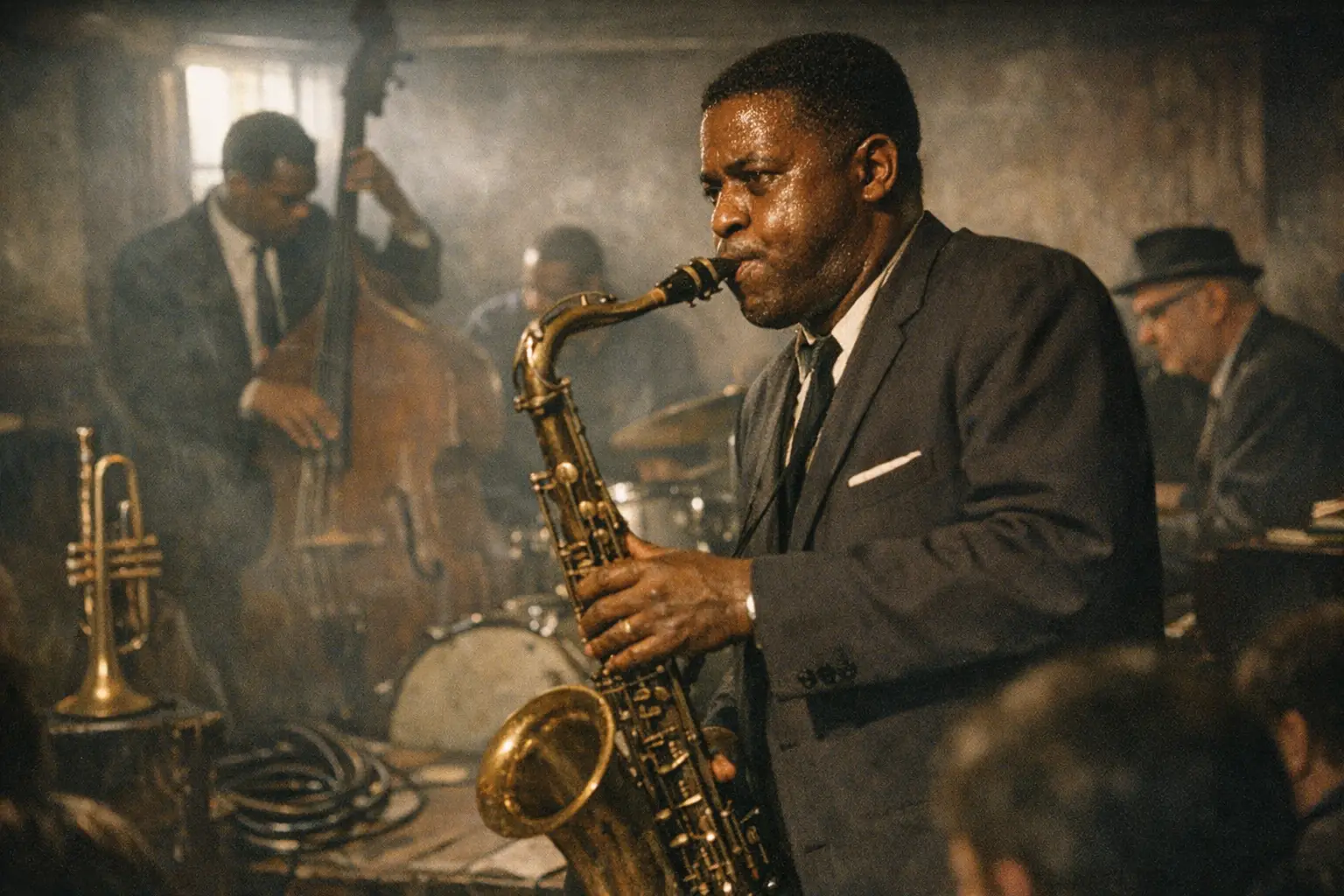
What do people usually mean by "60s jazz"? They usually mean a decade when jazz split into bold new paths without cutting itself off from its roots.
In plain terms, 1960s jazz was a period of hard experimentation inside an old tradition. Jazz had been founded by Black musicians in New Orleans in the late 19th century, according to The Recording Academy. It later became, in the U.S. National Park Service's words, "the unchallenged popular music of America" during the Swing era of the 1930s and 1940s. By the 1960s, newer forms were pushing much further out.
Comparing the era's key creative paths
The main way to understand the decade is to stop treating it like one sound. It wasn't. Different artists asked different questions about freedom, structure, belief, and social life. Some stretched older forms. Others broke them open.
That makes the era useful beyond music. Many leaders face the same choice. Do you refine a proven model, or do you build a new one? The strongest work of the period suggests that real change often needs both instincts at once.
Hard bop roots versus free jazz rupture
One path kept a clearer link to established jazz language. Another pushed hard against fixed harmony and form. The contrast matters because people often hear only rebellion when they talk about the decade.
The U.S. National Park Service notes that bebop in the 1940s and avant-garde work in the 1960s departed further from New Orleans tradition. That doesn't mean earlier ideas vanished. It means the center of gravity shifted. Players were still working inside jazz history, even when they were arguing with it.
Pitchfork says free jazz was introduced by Ornette Coleman in 1959 and codified in 1961 with an album bearing that name. Pitchfork also explains what made that break so sharp: by abandoning chords, free jazz opened new avenues for improvisation while also suggesting chaos to many listeners. That's the key tension. Freedom expanded possibility, but it also removed familiar guardrails.
A useful correction sits right here. "Free" did not mean careless. Pitchfork notes that the term "free jazz" was imposed on Coleman's music by Atlantic Records. Already tells you labels can distort what creators are doing. Public categories often lag behind real practice.
Spiritual jazz and social impact in sound
Another major current aimed less at rupture for its own sake and more at transcendence. Pitchfork describes John Coltrane as leading a 1960s movement in which artists pushed beyond jazz's constraints and sought spiritual transcendence amid great cultural change.
That goal changed how listeners heard intensity. Long forms, open structures, and searching tones were not just style choices. They carried moral weight for many artists and audiences. Sound became a way to ask larger questions about freedom, suffering, faith, and human connection.
Pitchfork also notes that free jazz became closely identified over time with the black liberation movement. That doesn't reduce every record to politics. It does show that form can carry social meaning without needing a slogan attached to it.
Pharoah Sanders is a good example of range inside this current. Pitchfork says he brought Coltrane's universalist vision toward fruition by drawing on free jazz along with African highlife, Arabic folk music, Afro-Cuban music, Indian classical music, gospel, and R&B. Serious originality rarely comes from purity alone.
Decision axes across the decade
If you want to understand the era well, don't sort it only by artist names or album covers. Sort it by decisions. How much structure stayed in place? How much risk could an ensemble hold? What kind of future was each group trying to make audible?
Seen that way, 1960s jazz becomes less like a museum shelf and more like a live strategy lab. Different scenes tested different answers under pressure.
Artistic risk, discipline, and growth strategy
The lazy reading of experimental art is that it's just chaos with good branding. The record says otherwise. Pitchfork points to the "sure-footed rapport" of Ornette Coleman's early quartet with Billy Higgins, Charlie Haden, and Don Cherry.
That phrase matters because it gets at how innovation really works. From outside the room, bold work often looks messy. Inside the room, it usually depends on trust, shared language, timing. Strong limits that may not be obvious at first listen.
Consider a small team building a product no one fully understands yet. If members share deep craft and clear intent, they can test strange ideas without falling apart. If they don't, experimentation turns into drift fast. Coleman's quartet helps separate those two states.
AI and technology analogies for new forms
The cleanest analogy here is not "disruption." It's model choice under changing conditions. Some builders keep old structures and improve performance within them. Others remove core assumptions so new behavior becomes possible.
Free jazz did something like that with harmony. Pitchfork says abandoning chords opened new avenues for improvisation. In technology terms, that's less like adding features and more like changing the system rules so different outputs can emerge.
There's a warning built into that comparison too. Removing structure doesn't automatically create value. It creates possibility. What happens next depends on whether people inside the system can still hear each other clearly (musicians in an ensemble or teams shipping something new).
Sustainability of scenes, labels, and live circuits
Creative breakthroughs don't survive on ideas alone. They need scenes where people can play together often enough to develop common language. They also need labels, venues, critics, and audiences willing to stay with work that may feel difficult at first.
Pitchfork's account of Albert Ayler places him in Harlem in the summer of 1963 during what it calls a tumultuous time for jazz as it was "splintering into fragments." That image matters because fragmentation cuts both ways. It creates fresh forms while making shared infrastructure harder to maintain.
Founders will recognize that pattern quickly. A field can be culturally alive yet economically fragile at the same time. That's true in music scenes, startup ecosystems, and mission-driven markets alike.
Which albums and artists fit which lens?
If you're choosing where to start, match your entry point to your question rather than chasing a generic essentials list. Are you trying to hear structural freedom? Start with Coleman as a study in disciplined looseness (as Pitchfork frames him). Are you trying to hear spiritual reach? Follow Coltrane into that lane.
That method tends to work better because it trains your ear around purpose instead of prestige alone.
Coltrane, Coleman, and purpose-driven business
Coleman and Coltrane are often grouped together as innovators, but they model different kinds of change. Coleman helps explain what happens when creators strip away accepted rules to unlock new motion inside a form. Coltrane helps explain what happens when expansion serves a larger search for meaning.
For builders working on purpose-driven companies or institutions, that's not a small difference. Some ventures need rule-breaking because old systems block progress outright. Others need depth of intention so growth doesn't outrun mission.
At Gray Group International, we think those distinctions matter because building something useful in the digital age asks for more than novelty alone.
Take the next step
If you are weighing how these ideas fit into your plans, you do not have to work it out alone. Gray Group International partners with founders, executives, and boards who want a clear-eyed read on their options and a realistic path to results. We will tell you plainly what we would do in your position, including the parts that do not involve hiring us at all.
You Might Also Like
Discover more insights in Music, our full collection of articles on this topic.
Join Disruptors Digest
Insights for a future worth creating. Sustainability, lifestyle, business, and beyond.
Gray Group International is a growth studio helping businesses attract, convert, and retain customers. Our consulting arm, gardenpatch, offers hands-on playbooks and strategy sessions.
